Athletic Directors Toolbox

  • Home
  • Leadership
  • Mental Toughness
    • Mental Skills
  • Motivation
  • Professional Development
  • Program Building
  • Sports Performance
  • Team Building

The Art of Leadership

May 19, 2018 by

This article is also found on the Coaches Toolbox, a collection of free resources for coaches of all sports.

The success of any institution, organization, group, or team, is grounded in the effective application of leadership.

By Cory Dobbs, Ed.D.

Lessons from the Art Studio

“Students who are truly student-athletes have a chance for a life-transforming, life-shaping experience. I can tell you how thankful I am for having had that experience and how it’s shaped me in countless ways. It’s an absolutely formative experience.” –
U.S. Secretary of Education Arne Duncan,
Speaker at the 2010 NCAA National Convention in Atlanta, Ga.

Leadership is one of the most important topics of our time. And it’s likely one of the most important attributes for effectiveness in any human endeavor. The success of any institution, organization, group, or team, is grounded in the effective application of leadership. For any organization to sustain success it must invest in the development of leaders—current and future— to avoid a regression towards mediocrity.

Since the dawn of civilization, groups have utilized leadership for various purposes beginning with the need for survival. Organizations today view leadership as a necessity for success and it is hard to find a person today who does not give at least lip service to the importance of developing leaders.

Yet despite this apparent intent to nurture the development of leaders, we still find ourselves desperately searching for leaders that can create and sustain success. Perhaps part of the problem is the way we teach leadership.

I teach leadership courses in two different graduate colleges for the same university. Different students, same classroom. The classroom consists of a podium, tables with chairs and a white board. The rooms are designed for teachers to stand and students to sit.

However, the classroom in which my colleague teaches art is quite different. In her art studio she often does not stand and students don’t sit. The simple reversal of classroom roles leads to a different mode of learning. Students in the art classroom poke around, observing the work of their fellow students. They ask questions, share stories, exchange insights, and offer praise or constructive critiques.

I’ve learned some powerful lessons from studying learning in the art studio. Two, of them in particular have reshaped the way I approach leadership development.

1. Anything worth doing is worth doing badly.
2. The fear of failure will guarantee failure.

Anything Worth Doing is Worth Doing Badly
Not the orthodox way of looking at excellence. However, leadership is a messy proposition for anyone learning to lead. Since leadership is a social process, it follows that team leaders will need to experiment with such things as peer accountability. Invariably, the beginning leader will stumble. Encourage your student-athletes to get going, start leading, and take the lumps that come with learning to lead.

The art studio encourages the student to explore. Taking risks—experimentation—and being willing to do leadership badly are part of the learning process. In the art studio students are encouraged when they do something badly. They quickly look at the bad product and figure out how to improve upon their work. Poor outcomes are not seen as failures. Rather, the art student returns to the canvas to try again.

To offer some real-world perspective on bad leadership as a learning opportunity, take a quick look backwards to when you took your first coaching job. Who among us can’t look back and see incompetence and failure in some leadership efforts during our formative years? I’m on pretty safe ground here knowing that all competent coaches attended Hard Knocks University.

Here’s a simple way for you to guide your student-athletes to face the fact that risk is necessary for them to fully develop as a leader. Have them set up a matrix that involves listing leadership goals on one side of the ledger with possible risks on the other.

Sample Leadership Goal

To promote team unity through a weekly players only meeting.

Risk

One or more team members do not want  to attend and see the leaders as “better than them”

Fear of Failure Will Guarantee Failure
While the artist’s palette contains a wide-array of vibrant colors, the only color emerging leaders see is gray. Nothing appears to be black and white for the beginning leader. She’s not sure where to start, what to do, how to take leadership action. Fear of failure is real.

Failure often affects confidence and self-esteem. However, failure is not fatal. Giving your leaders the license to fail is a starting point. Creating a learner-centered approach to leader development can help the novice and the experienced team leader. Artists that persevere face their fear of failure. Failure in the art studio is guaranteed. Perfection is desired, but failure is acknowledged as part of the process.

I’ve noticed far too many young leaders fearful of leaving their comfort zones, clinging to what is comfortable and secure. The art student is encouraged to venture out and explore new styles and tools. In the art studio it is folly to discount mistakes and failure.

In the art studio, students are confronted with reality. What they put on canvas is available for all to see. Sometimes the visible picture doesn’t match the artist’s heart and effort. Such moments can be both disheartening and empowering. Vulnerability is a vital part of learning to become an artist—and a team leader.

Leadership certainly can begin to be taught in a classroom. Yet conventional methods of leadership training often fail to prepare students for the messiness of leadership. The art studio provides another model to explore as a bold approach for developing your team leaders. Experimentation, exploration, and action will involve mistakes and failure. Guiding your young leaders through the risks of leadership may well be the most important role you assume as a leadership educator.

 

To find out more about and order Sport Leadership Books authored by Dr. Dobbs including Coaching for Leadership, click this link: The Academy for Sport Leadership Books

About the Author

A former basketball coach, Cory’s coaching background includes experience at the NCAA DII, NJCAA, and high school levels of competition. While coaching, he researched and developed the transformative Becoming a Team Leader program for student-athletes. Cory has worked with professional athletes, collegiate athletic programs and high schools teaching leadership as a part of the sports experience and education process. Cory cut his teeth as a corporate leader with Fortune 500 member, The Dial Corp. As a consultant and trainer Dr. Dobbs has worked with such organizations as American Express, Honeywell, and Avnet.

Cory has taught a variety of courses on leadership and change for the following universities:

Northern Arizona University (Graduate Schools of Business and Education)

Ohio University (Graduate School of Education / Management and Leadership in Sport)

Grand Canyon University (Sports Marketing and Sports Management in the Colangelo School of Sports Business)

Visit www.corydobbs.com to read Cory’s leadership blog.

Filed Under: Leadership

The Invisible Barrier to Learning: Question Your Assumptions

May 2, 2018 by

These two articles on self-reflection and leadership were submitted by Dr. Cory Dobbs of The Academy for Sport Leadership

The Invisible Barrier to Learning: Question Your Assumptions

What if we—you, me, and the next guy—really understood how little we know. Oh, we might have some subject matter expertise. But that only counts for a small sliver of life. Yet I consistently find that people, either because of a predisposition to self-protection (preservation) or self-promotion (preference) are slow to learn that it’s okay not to know everything.

In meeting after meeting I’ve noticed a favored declaration by the participants is “I already know that.” This message is often communicated explicitly by uttering the words, but more often the “I already know that” takes shape in nodding of the head back and forth designed to communicate this “fact”.

Why is it so worrisome to hear those words? Well, it suggests that the individual believes that their state of knowledge on that topic or subject is settled and complete. Therefore, they might not be open to learning new things, to questioning their assumptions, or considering the fact that they just might be wrong. Yet if you ask the head nodder if they are open-minded, you’ll get a continuation of the forward-backward nod to signify “of course I’m open to learning.”

The truth is this habit is hard to break. However, the curious mind is often found in the beginner, the one that is eager to learn about how things work. It’s often said that in the beginners mind there are many possibilities, in the expert there are few. Once you know this you can enter meetings with the mind of a beginner. New ideas, thoughts, or insights emerge not by chance, but by embracing and studying the challenges we encounter each and every day. You can begin learning at a deeper level by getting rid of the words “I already know that.”

Article #2: Mindset: Are You Satisficing or Maximizing?

The knowledge monopoly on “X” and “O’s” has been shattered. New coaching web sites pop up every day offering to you, the coach, all you need to master the technical and tactical parts of coaching your sport. And that’s great; tools for new coaches to get up to speed and veteran’s to quickly learn a new wrinkle.

But what about leadership development for you and your student-athletes?

In general, my research reveals two mindsets when it comes to leadership development; the maximizing mindset (searching for something that is “best”) vs. the satisficing mindset (searching for something that is “good enough”). Leadership is about relationships, it’s about expectations, preferences and an over-arching ideology. Great coaches don’t take leadership lightly. They deliberately develop team leaders and simultaneously grow themselves as leaders.

“Tell me and I’ll forget. Show me and I may remember. Involve me and I will care.” -Your Student-Athlete The world of coaching is changing. In Coaching for Leadership you’ll discover the foundations for designing, building, and sustaining a leadership focused culture for building a high-performance team. To find out more about and order Sport Leadership Books authored by Dr. Dobbs including Coaching for Leadership, click this link: The Academy for Sport Leadership Books

Dr. Dobbs recently joined Jamy Bechler on the “Success is a Choice” Podcast – hear his thoughts on team leadership and developing a leader in every locker here.

Filed Under: Leadership

Loyalty and Leadership

April 17, 2018 by

This article was written and submitted by retired High School Coach Dave Millhollin.

Two types of loyalty; (one genuine, one obligatory):

Freely given type (genuine loyalty):

This kind of loyalty is given to a caring authority by members of the group based on trust.  The authority figure expects results for the benefit of the institution as well as the group and all of its members. Group members are valued and recognized for exceptional performance. This creates an environment where group members want to produce expected results; they feel like they are working with their leaders.  A culture of shared accountability exists and leaders are respected.

Demanded type (obligatory loyalty):

This kind of loyalty is taken from members of the group by a demanding authority using intimidation and manipulation based on creating fear.  The authority figure expects results for institutional or selfish reasons.  The purpose of the group’s members is to serve the authority and the institution. Group members are taken for granted, they feel like they are working for their leaders and they are afraid of consequences for sub-standard performance. A culture of top down authority based accountability exists and leaders are often resented.

Which kind of loyalty do you want for your program?

What kind of leader and authority figure do you want to be?

Filed Under: Leadership

The Introverted Team Leader

April 15, 2018 by

Leading with Quiet Strength

By Dr. Cory Dobbs, President, The Academy for Sport Leadership

Editor’s This was written about a basketball team, and is offered as food for thought for your program, regardless of the sport.

On an unusually warm morning, sometime in October, the head coach of a successful basketball program looked at me and said, “He just doesn’t get it. He can’t help us. He simply does not know how to lead this team!” As an invited guest I listened and observed. And listened. And observed some more.

This was a return visit by me to evaluate the team’s culture. A couple of months earlier I’d spent several weeks during the off-season working with the staff and players to build a leader in every locker culture.

My visit was part research—to evaluate how “sticky” is our Teamwork Intelligence program (created by The Academy for Sport Leadership), and part coaching—to come back and revisit some of the key practices of the Teamwork Intelligence program with the coaches and players.

The player that caused the coach’s rant was a returning point guard of whom much was expected. In the past, all the point guards the coach deployed were boisterous, passionate, and outwardly emotional. This point guard, however, was unusually quiet on the floor, off the floor, and in the
classroom.

Conversations with him are always lop‐sided, others doing the talking. The head coach was frustrated that after two years in the program the player had yet to come out of his “shell.”

Introversion and extroversion are complex concepts about the determinants of behavior.

A person’s choice of interpersonal interaction sometimes offers clues to a deeper driving force—such as introversion or extroversion. One’s inclination to extroversion or introversion can quickly be determined by what I call the “crowded party effect.”

The introvert at a crowded party is likely to find a comfortable seat from which to observe the activity of others. Introverts are inclined to “be quiet” and are drained by such social encounters, while the “party animal” extrovert is energized by such activity and seeks out people to charge their batteries.

Several years ago, Susan Cain, a Harvard Business School professor, delivered one of the most well‐received Ted Talks of all time. Today the YouTube video counts more than 18 million views of her talk on introversion. Cain wrote, the 2012 book “Quiet: The Power of Introverts in a World That Can’t
Stop Talking,” which has sold two million copies worldwide. With the Ted Talk and book, Susan Cain has single‐handedly triggered a deeper awareness of and appreciation for the many facets of introversion. She’s introduced a myth-shattering perspective that has transformed the way we view introversion and introverts.

Far more than we are consciously aware of, we live in a society dominated by extroverts. Cain’s research points out that the American culture glorifies extroversion. Sports stars and movie stars are highly paid and followed, and social media thrives on people exposing their innermost thoughts and feelings. Extroverts are highly visible in most settings and situations. Bold personalities are rewarded.

Cain writes, “We’re told that to be great is to be bold, to be happy is to be sociable. We see ourselves as a nation of extroverts—which means that we’ve lost sight of who we really are.” In fact, she notes, one‐third to one‐half of Americans are introverts. So if you’re not one yourself, she often advises audiences, “You’re probably raising or managing or married to one.”

The quiet and reserved point guard that so frustrated the coach, it turns out, was an introvert. A stone cold introvert. After practice the head coach set the stage. Before examining the practice session we sipped iced‐tea—a kind of cooling off period.

Introversion in Action: On the surface, introversion looks a lot like shyness; both effect social interaction, but for differing reasons. The shy find socializing difficult. On the other hand, an introvert simply prefers to spend time alone. Introverts are collectors of thoughts, and solitude is where the collection is curated and rearranged to help them make sense of their thoughts.

Our conversation was soon set in motion. The head coach opened our post‐practice conversation with a “See. I told you so,” reinforcing a tight grip on his perspective. My observation of the practice session that day was, however, quite different.

During the practice I counted 18 personal touches (such as grasping a teammate’s elbow in order to pull the teammate in to hear him speak)—micro acts of leadership—by the point guard. The coach looked at me in a curious way when I stated this fact. So I explained. Each touch by the point guard was a leadership act. A player threw an errant pass that was taken by the opposing squad down the floor for a quick score. Knowing and sensing his teammate’s anger the quiet leader simply walked over and literally lifted his teammate’s head—softly but authoritatively. The teammate immediately shifted back into a positive mode. Such behavior happened at the most appropriate times. During a stop in action the quiet leader walked over to a teammate and softly spoke words of instruction—never calling attention to himself. Rather, in a calm and nonchalant manner the quiet point guard curiously found all kinds of quiet moments in which to take action and provide leadership.

The seemingly reticent team leader was completely in tune with his teammates. The head coach, however, not looking at these micro‐actions as leadership moments, simply could not see what was right in front of him. The team manager loaded up the video of the practice, allowing me to show
display evidence of the “non‐leader” leading.

Most people are comfortable thinking of leaders as being outgoing, visible, and charismatic. Such a perspective is overly narrow.

Scientists now know that, extroverts have no special advantage in leadership. Yes, they tend to be more visible, and assertive, but those are situational advantages.

Quiet Strength: The effective introverted leader turns what might be considered weakness into a strength. Introverts tend to be more empathetic, humble, and focus on relationships.

Introverts tend to process more information and do so accurately as they are often able to mitigate the influence of emotion. Further, introverts seldom need the emotional stimuli that an extrovert requires. They do best in quiet environments where they can interact one-on‐one, or in small groups. Knowing who the team’s introverts and extroverts are can go a long way in building deep and durable interpersonal relationships.

The specter of the introverted team leader touches on a fundamental distinction between action and reflection. When we think of team leaders, we usually envision someone like Tom Brady, LeBron James, Carli Lloyd or Julie Foudy. The image of a team leader is one of action; rare is it when
reflection is considered a co‐equal quality. But action without reflection is a suboptimal way of building a cohesive team.

These two aspects of human dynamics, action and reflection, establish the essential elements of leadership. Everything a leader does involves some degree of action on the ground and reflection distilled in making sense of events, incidents, and relationships. As one expert said, “Action
without reflection is thoughtless; reflection without action is passive.”

Accordingly, it is no longer impossible to have introverts participate in team leadership. A reorientation to use action (read extrovert) and reflection (read introvert) in creative ways is to ensure a healthy climate conducive to building a high‐performance team culture. To put it
simply, if we recognize ways to include the introvert along with the extrovert in team leadership, we can create a leader in every locker.

The Academy for Sport Leadership’s Coaching for Leadership Approach: Our approach to team building is rooted in the belief that leadership is a powerful force for shaping a team’s culture, influencing the growth and development of student-athletes. We find that and those coaches that practice deep leadership, and a deep commitment to Coaching for Leadership, stand above and apart from others in the profession.

COACHING FOR LEADERSHIP RESOURCE

Coaching for Leadership: How to Develop a Leader in Every Locker. ($24.99)

The Academy for Sport Leadership  

About the Author

Dr. Cory Dobbs is a national expert on sport leadership and team building and is the founder of The Academy for Sport Leadership.  A teacher, speaker, consultant, and writer, Dr. Dobbs has worked with professional, collegiate, and high school athletes and coaches teaching leadership as a part of the sports experience.  He facilitates workshops, seminars, and consults with a wide-range of professional organizations and teams.  Dr. Dobbs previously taught in the graduate colleges of business and education at Northern Arizona University, Sport Management and Leadership at Ohio University, and the Jerry Colangelo College of Sports Business at Grand Canyon University.

Contact Information for Dr. Cory Dobbs:
(623) 330.3831 (call or text)

Filed Under: Leadership

3 Questions that Turn Losing into Learning

April 9, 2018 by

What to do after a tough loss? Ask these three simple questions after a tough loss and/or a disappointing performance What went well?What needs work? What did we learn?

By John  O’Sullivan, Founder of Changing the Game Project,   a site that is your one stop shopping for  the latest and greatest information, research, and best practices regarding high performance, motivation, Long Term Athletic Development, fitness, nutrition, college recruiting, and more.“Do you want to win every game you play for the rest of your life?”

That was a question that Olympic gold medalist and current USA Women’s Volleyball team head coach Karch Kiraly asked his team as they prepared for the 2014 World Championships.

“Because we can,” he told them. They could schedule easy opponents, play overmatched foes, and play in friendly instead of hostile environments. But then what? Would they be challenged? Would they be pushed? Would they be bored? Of course. Deep down no one wants to win all the rest of their games. You must lose sometimes, and they did as they prepared in 2014..

Kiraly’s team went on to claim the World Championship, and is a favorite for gold in Rio this summer, because they continually challenge themselves. They lose sometimes, but they learn from losing. His question to his team is one our Changing the Game Project speakers ask parents all the time: “Do you want your kids to win all their games for the rest of their life?”

Of course the answer is no. We understand that winning is great, but losing and being challenged and pushed is where young athletes learn the most. We don’t want our kids to play all their games against overmatched teams, or in easy tournaments, because they would eventually get bored and quit. They want to be challenged. Here is the clincher, though.

They are OK with losing, and most kids understand it’s part of the process.

Sadly, many adults struggle with losing far more than their kids. Angry moms and dads berate their kids and officials from the sidelines, and on the ride home after games. Coaches yell and scream at athletes, or worse yet, don’t even let some kids play in matches because they fear losing. They use physical punishment (running, pushups, etc) when kids make technical errors, instead of teaching them. They scream for more effort from players who have given their all, but haven’t developed the technique and tactical ability to succeed.

When I suggest to these coaches that there is a better way, the response is predictable: “Life is tough, I’m not going to coddle these kids, I’m getting them ready for the real world.”

“Life is tough,” I respond, “and sports is a great way to teach kids to deal with challenging situations. But don’t you think it would be better for those kids to tackle those future difficult situations with a strong sense of self-confidence and belief, instead of thinking ‘last time we messed up we got screamed at’ or ‘I messed up and got benched?’’”

The response to my question is also predictable from most coaches that come from the “I have always done it this way, that’s how I was coached” camp: crickets, or at most a shrug and shake of the head.

As parents and coaches, we too often frame losing as something to always be feared and avoided at all costs. When we do this, we don’t prepare kids for future success; we prepare them for future anxiety (we also encourage cheating but that is a whole different article).

There is a better way. Losing can be something positive if framed correctly, especially for young kids.

Trust me, I understand how frustrating losing feels, as both a parent and a coach. I want my kids to be successful, and I certainly want my teams to play hard and get some results for their efforts. I am disheartened when I see the goals pouring in our goal, and my athletes struggling. I want to fix it. I want to make it better. I want to feel better after the game, and usually venting my frustration makes me feel better. But what about the kids? Does it make them better?

There is a better way. It works incredibly well when I am coaching a team, and it works great with my own kids to help after a tough loss.

I ask three simple questions after a tough loss and/or a disappointing performance:

What went well out there?

What needs work?

Why are we better because we lost today?

I learned these three questions from my great friend Dr. Jerry Lynch, author of the outstanding new book Let Them Play: The Mindful Way to Parent Kids for Fun and Success in Sports. Dr. Lynch has been part of over 30 national and world champion teams on the collegiate and professional level, so when he makes a recommendation on how to help a team or athlete, I tend to listen. Here is why these questions work.

What went well out there?

After a loss, many athletes are expecting to get dressed down. They usually feel lousy about a loss, just as parents and coaches do. But they didn’t do everything wrong. Some good things happened, and this question lets players know that we saw some good things. They scored some goals, made some good tackles, and had some great combination plays. Instead of only focusing on what went wrong, this question helps kids understand that they are doing a lot right. This helps them feel like they are continually improving, and that the process has space for both success and disappointment. Better yet, research shows that the most effective leaders and teams give nearly six positive comments for every negative one. It is never all bad, so be sure that your kids never forget that by first asking “what went well?”

What needs work?

Obviously, we lost, so not everything went well. But this is sports, there is always something that needs work, right? We often underemphasize “what needs work” when we win, and overemphasize it when we lose, so asking this in both cases provides balance. We have acknowledged the good, now let’s acknowledge the things we have to put in some extra work on. Did we defend well as a team? How is our fitness? Are we working hard for each other offensively? As a parent, you can ask your son or daughter what things they can focus on in training that week, or better yet, what can they accomplish outside of practice to improve their play. Athletes must be prepared to receive critical feedback from their coaches regardless of the result, and asking them to identify what needs to be worked on is far more effective than simply lecturing them.

Why are we a better team/athlete because we lost today?

This question is the clincher. Development is a process. It is a marathon, not a sprint. There are going to be ups and downs, and the critical thing is we continually learn and improve. The outcome of the competition cannot be changed, but we can influence the outcome of our next event, and our preparation for it. This question helps athletes frame the loss, and take ownership of the training and preparation for the next match. For example, your team might say “We are better because we learned that when we don’t defend as a team, we get scored on a lot. We need to focus on team defending if we are going to be successful next match.” Your athlete might say “I am better because I learned that against a good team, I have to play a lot quicker, so I will be focused on that in practice this week.” This question opens the door to a path forward, helps them move on from the loss, and gives them ownership over their preparation for the upcoming contest.

Three simple, magical questions that turn losing moments into learning moments:

What went well?

What needs work?

Why are we a better team because we lost today?

When a coach asks his or her team these three questions, losing is no longer a scary moment; it becomes a teachable moment. You build a stronger connection with your athletes, you put the loss in the past, and you get your athletes refocused on the process of getting better. Most importantly, you demonstrate that you are in this together. Your athletes will love you for it.

Parents, when you ask your kids these three questions, you remind them that it’s the process, not just the outcome, that matters. You help them take ownership of their improvement, and focus on both their strengths and weaknesses. You also let them know that you are in it with them, whether its good, its bad, or it’s ugly.  It lets them know that you don’t simply love watching them win, but that you love watching them play!

Next time your team is loses, take a deep breath, and ask the three magic questions. You will be glad you did.

And so will your kids.

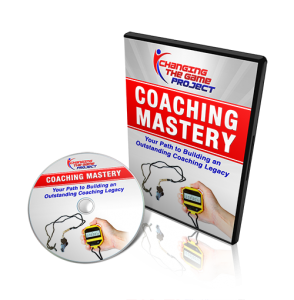
Coach Sullivan is offering a FREE video series which is part of his Coaching Mastery program which includes motivational and team building techniques used by some of the top coaches in the world. To gain access to his free video series click the link below or the image at the left.

Coaching Mastery

Filed Under: Leadership

  • « Previous Page
  • 1
  • …
  • 3
  • 4
  • 5
  • 6
  • 7
  • …
  • 22
  • Next Page »

© Copyright 2026 Athletic Performance Toolbox

Design by BuzzworthyBasketballMarketing.com

Privacy Policy