Athletic Directors Toolbox

  • Home
  • Leadership
  • Mental Toughness
    • Mental Skills
  • Motivation
  • Professional Development
  • Program Building
  • Sports Performance
  • Team Building

Everybody Wants to Be Somebody

March 22, 2018 by

Everybody wants to be somebody. Once this becomes a fundamental way of viewing your teammates, classmates, and everyone you meet, you will become a person of influence.

Dr. Cory Dobbs

Homelessness is a complex problem. Not just because a person without a home needs money and other essential resources—but because the psychological consequences are crippling. A homeless person must confront society’s perception of their worth. When an individual first encounters homelessness they experience a radical shift in their identity. They begin to struggle with basic life questions such as who they are and what the future will bring. The homeless person’s sense of self worth deteriorates quickly.

There isn’t a person in the world who doesn’t want to be someone, to have significance and be considered worthy and valued by others. Everybody wants to be somebody.

“One day I was in Tucson, Arizona putting gas in my car when I witnessed a homeless man asking if he could wash peoples windows for money and people would yell at him and push him away like he was some kind of animal. I felt for that man and even though I’ve never been homeless or put in the position he was in I could relate to him.”
–Steven Lopez, State Champion Wrestler

How do you treat the last person on the bench? Is it different from the way you treat the star player on the team? Why? Is a person’s worth determined by their value on the court or playing field? How do you treat every person you meet?

Everybody wants to be somebody. Once this becomes a fundamental way of viewing your teammates, classmates, and everyone you meet, you will become a person of influence.

As he walked towards me with his head down I was expecting him to ask me if he could wash my windows and I was going to say yes but he kept walking. So as he passed me I asked if he could wash my windows and he said “yes” so he began to do so. After he was done he started walking away not even asking for money which took me by surprise. But I felt he did a service and should be rewarded so I called him over and said I was going to pay him. His eyes opened wide and I could just see the joy on his face. I checked my wallet and all I had was a $10 bill. My first thought was $10 for a simple window wash seems too much but I looked towards the bigger picture; do I need that $10 more than he does? And my answer was no, I felt he needed it more than I did. So I gave it to him and he said that it was too much and he couldn’t accept it but I insisted and the look on his face will be something I’ll never forget.
–Steven Lopez

Almost everyone knows what it feels like to be accepted, connected, trusted—a friend—and what it feels like to be rejected, judged, and outside the group. When people feel disconnected they feel a sense of worthlessness.

He told me it would take about 2-3 days worth of washing windows to make $10 and was very grateful. He gave me a hug and I could see other people staring but I didn’t mind, I helped the man out with what I could. As amazing as that felt what happened after made me feel so much happier. People would go up to him and give him money without him doing anything and some of them were the same people who were yelling at him, so that’s when I realized sometimes all it takes is just one person to start something and I could be that first person.
–Steven Lopez

To be a person of influence you need to truly care about people. Great team leaders are student-athletes that influence teammates by showing others that they care. The high performing team leader knows that everybody needs friendship, encouragement, and help. What people can accomplish by themselves pales in comparison to what they can accomplish working with others. Everybody needs somebody to connect with and help them grow.

I felt for that man and even though I’ve never been homeless or put in the position he was in I could relate to him.
–Steven Lopez, State Champion Wrestler

Everybody wants to be somebody. Today at practice take a long look at your teammates and identify somebody who needs you to build up their confidence and sense of self-worth. Let them know that they are welcome in your house.

Team Discussion Questions

«Do you believe that luck plays a role in your life?

«What do you think about luck? How might a little luck change a person’s life?

«Should empathy be a part of one’s mindset? How can you show empathy through your designated role?

«What role do relationships play in your personal success? Your team’s success?

«What can you do today to invest in the future of a teammate?

To find out more about and order Sport Leadership Books authored by Dr. Dobbs including a Leader in Every Locker that this post was taken from, Click this link: The Academy for Sport Leadership Books

About The Academy for Sport Leadership 

The Academy for Sport Leadership’s underlying convictions are as follows: 1) the most important lessons of leadership are learned in real-life situations, 2) team leaders develop best through active practice, structured reflection, and informative feedback, 3) learning to lead is an on-going process in which guidance from a mentor, coach, or colleague helps facilitate learning and growth, and 4) leadership lessons learned in sport should transcend the game and assist student-athletes in developing the capacity to lead in today’s changing environment.
Filed Under: Leadership, Motivation, Program Building, Team Building

When (Key) Players Clash: Turning Conflict Into Strength

March 11, 2018 by

by Cory L. Dobbs

John chose Yoko over Paul, George, and Ringo.  Shaq couldn’t stand Kobe.  Steve Jobs was fired by John Scully, his hand-picked CEO.  Relationships between people of high status often prove challenging.  It not need be this way.

Have you ever been on a team where the players can’t get along?  How about having coached such a team?  Maybe it’s simply a matter of personalities.  Or the circumstances, such as a losing streak, over- power the desire to get along with one another.  Conflicts easily erupt when team relations become dysfunctional.  Yet, many coaches I’ve witnessed seem to think everyone will get along because they are forever preaching teamwork.  This is not so.

The Facts of Life

Your team is only as strong as its weakest relationship.  Yes, I know that’s a strong statement, so let me say it again.  Every team is only as strong as its weakest relationships; and great teams—players and coaches—never assume everyone will get along.  Oh, almost every coach says they spend enough time on relationship building.  Yet when I’ve asked coaches to journal their activities, slowly but surely team building and internal (player) leadership take a back seat to the tasks “necessary” to practice and master the game plan.

Two Sides to Every Story

In an effort to be transparent, let us agree that we like to think of ourselves as being reasonable, mostly right, and when in some level of conflict we often make negative attributions about the other person’s intentions.  Indeed, in the privacy of our own minds, we hold, with white knuckles, our position with a high degree of confidence and certainty.  We must be right, we reason.  The problem is, the other person we are engaged in conflict with is holding tightly to their “reasonableness” too.

Thus a dance of defensive routines emerges.  Each participant—combatant to be sure—thinks that their conclusion is factual, that their view is complete (rather than partial), and the other person is the problem.

The result: conflict.  The condition of the team changes at that moment.  The one-sided nature of each player’s perspective can, and often does, set in motion a roller-coaster of irrationality which invariably will snare more players into its trap.

Nip this in the Bud

You know that to solve a conflict requires slowing things down.  It’s crucial to find out how we got from “there” to “here.”  But the game plan doesn’t allow for this, “We must continue to move forward” you’re likely to think, say—and do.  While you might get back on track, this is why and how things get swept under the carpet.  You know relational issues will catch up with you, but you think if you run fast enough you might out-run the fall-out.  The questionable news is, you just might get away with nipping the problem in the bud.  But it will get you.  It’s just a matter of time.

The Vulnerability of Relational Blindness

Several years ago I worked with a successful high school basketball team.  After a deep run in the playoffs the team wanted to understand how to get over the hurdle and get to the proverbial “next level.”

During a leadership training exercise a senior-to-be, a starter and major contributor, broke down and apologized to his teammates.  He acknowledged the team’s loss should be attributed to him.  As the team’s point guard, with the clock running and down by one point in the state semi-final game, he had the ball in his hand and an opportunity to pass to either of two open teammates.  One teammate was not a scorer (1.5 ppg), while the other was the team’s leading scorer (19.0 ppg) and best shooter.  Down by two, he crosses half court and sees the two teammates open in each corner.  He had a choice.   And he knew the team’s best option.  So do you.  He passed it to the non-scorer, coincidently his best friend, who put up a shot with time expiring.  Air ball.

The caring young man, in his desire to be transparent, admitted that personal bias led to the sub-optimal choice of shooters.  He said it was rooted in a fight he had with the leading scorer around mid-season.   And after the fight was broken up by teammates, he willingly “recruited” the underclass team members to “side” with him.  They did.  And in effect they split the locker room into upperclass vs. underclass; seniors against the juniors.  No coach witnessed the fight, never heard that it happened, and the coaching staff was completely unaware that the locker room split.  The players, in a twisted show of team work, hid the division—the fault line—that ultimately cost the team a shot at the State Championship.

Any time you talk about relationships it’s easy to gloss over the fact that people create and sustain them.  People matter.  Relationships matter.  Student-athletes make a wide range of choices that affect relations, mostly unconscious as in the incident mentioned above.  Importantly, it’s utter folly to think that you, or any coach, will know all that goes on with team member interpersonal interactions.  This, of course, is a reason for team leaders—you need your players to engage in detecting and correcting problems encountered as they build the team.

Over the course of a season incidents like this pile up and drag down practices, film study, and in-game behavior.  Don’t get me wrong, I’m not suggesting coaches are blind to such deviant behavior.  What I do know though is that when the choice for spending time is either better spent on direct team building or the game plan; it is the relationship side of things that usually falls by the way side.  Relationship building is sorely neglected during the course of a season.

Hit the “Pause” Button: Rebuilding Trust

The good news is that when conflicts and dysfunction rear their ugly heads, you can, and should, turn them into team building teachable events.

When two players (or more) clash, you need not throw your hands up and declare the issue unsolvable.  Actually, this is the moment to explore the “honesty” in perspectives.  Most coaches ignore this moment.  It stresses them out.  But if you’re willing to, you can use the “argument” to strengthen the relationship.

In the dictionary, the antonym of honesty is lying.  Thus a participant in any conflict is going to protect himself.  In most cases differences of opinion arise out of one’s desire to feel respected, appreciated, and needed.  And the opposite of arguing is agreement.  The curious thing is that the conflict participants are, for the most part, seeking agreement—however one-sided it is to begin with.

You can capitalize on this moment of truth by harnessing honesty and agreement.

You task, and goal, is turn the adversarial relationship into one in alignment with the team’s mission.  Now is the time to hit the pause button—literally.

Give the participants their own quiet space in which to reflect and respond to the following questions.

  • What is the outcome I want here?
  • Do I want a relationship with this person?
  • What is the outcome our teammates want?
  • What goals do we share?
  • How do I want this to end?

These reflective questions help the student-athlete learn to see themselves as architects of their own experience.  They determine the need and desire to shift to acting on the end they want and the future they’re trying to achieve.

During the course of a season the absence of interpersonal conflict is unlikely.  Conflict is natural.  What you do with conflict will have much to do with the growth, or stunting the growth, of your team building efforts.

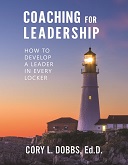
COACHING FOR LEADERSHIP RESOURCE

Coaching for Leadership: How to Develop a Leader in Every Locker. ($24.99)

The Academy for Sport Leadership  

About the Author

Dr. Cory Dobbs is a national expert on sport leadership and team building and is the founder of The Academy for Sport Leadership.  A teacher, speaker, consultant, and writer, Dr. Dobbs has worked with professional, collegiate, and high school athletes and coaches teaching leadership as a part of the sports experience.  He facilitates workshops, seminars, and consults with a wide-range of professional organizations and teams.  Dr. Dobbs previously taught in the graduate colleges of business and education at Northern Arizona University, Sport Management and Leadership at Ohio University, and the Jerry Colangelo College of Sports Business at Grand Canyon University.

Filed Under: Leadership

Unlock Your Coaching Potential

March 5, 2018 by

by Dr. Cory Dobbs, a national leader in providing leadership resources for coaches and student-athletes. The most recent resources include Coaching for Leadership and Teamwork Intelligence: a workbook for the student-athlete along with a facilitator’s guide for the coach.

Excerpt from “Coaching for Leadership”

Are you a talented coach on the rise? Do you want to be an “A‐Level” coach? Are you interested in becoming an elite leader? Think deeply about these three questions before moving on.

Instead of assuming leaders are born with the “right stuff” to lead, I start with the assertion that leadership is a talent. If that talent is to be advanced the coach needs a context that supports the development, get the experiences they need to cultivate their leadership ability and possess the drive to master learning to lead.

Let me make another claim: talented people want to be challenged, not coddled. As a coach to coaches I know this to be true. And as a coach I’m sure you will agree success isn’t something you simply hope happens. It is high achievement accomplished by consistent, deliberate, and intense preparation and commitment to a goal with a daily plan of action based on choices you make.

If you really want to stand out, lift your performance to its peak, break into the small circle of elite performers, then accept that life is not a do‐it‐yourself project.

In your version of reality you may have “high potential” stamped on your forehead and be successful in your own mind. All this may be true, but don’t be deluded. Odds are you’re nowhere near where you want to go and who you want to be. If you really want to stand out, lift your performance to its peak, break into the small circle of elite performers, then accept that life is not a do‐it‐yourself project. If you surround yourself with winners—or are fortunate enough to have a skilled and caring mentor in your corner—you are likely on a winning path toward the success you covet. We all need people who help us look at situations from a different perspective.

Today, top athletes, actors, musicians and corporate leaders have begun to use performance coaches to help them reach their potential. They’ve chosen coaching as a way to shorten their path to sustained success. What they know is that good coaching will get them where they want to go, help them achieve what they want to achieve, and transform them into who they want to be.

REALITY BITES
Here’s your first bite of reality. As determined as you are, you might never get to where you want to go. You ask; why is this?

The answer: blind spots. All coaches have blind spots. Yes, we all have blind spots, but this is about you.

I know how badly you want to be good—no great! So it’s important for me to let you know that blind spots are real and really capable of derailing your efforts to reach your potential.

You’ve spent most of your life committed to particular ways of thinking, doing, and being, and that’s a good thing; and a bad thing. It guarantees blind spots. Don’t checkout yet. Let me be clear about this: it is never easy to bring about a mindset change. But that’s not enough. Another bite of reality is that it’s more difficult to replace a simple way of thinking with a more complex way; which of course, is likely necessary to become an elite coach.

So, what is a blind spot? A blind spot is a weakness that other people see but we don’t. The crazy thing is, because a blind spot is not known to us, we simply don’t know what we’re doing wrong and what we can do to get better outcomes. We have no idea how a certain coaching behavior of ours is coming across to our stakeholders—players, parents, coaches, and administrators—but it is. A blind spot is an outer reality. That is, it exists outside of us, yet inside of others.

A behavioral blind spot is the unproductive or destructive behavior that undermines or erodes interpersonal influence and the building of durable and enduring relationships.

There are various sorts of blind spots that can lead to ineffective coaching to some degree or another, but one particular form holds many coaches back from great success. That is, a behavioral blind spot. A behavioral blind spot is the unproductive or destructive behavior that undermines or erodes interpersonal influence and the building of durable and enduring relationships.

To ease into the idea of blind spots think of it as something similar to the blind spots we encounter when driving a vehicle. Several years ago while driving a large truck I bumped up against a car in the other lane, hidden in my blind spot, without knowing it. The car sped up to get alongside me. I spotted a crazy man pumping his arms and screaming at me. I pulled over and, sure enough, unbeknownst to me I had sideswiped the driver‐side door of the crazy guy’s car. Yes, I failed to use the tool built for reducing blind spots—the mirror.

Getting a grip on reality requires a heavy dose of reality. Here’s a start: Deep changes in how people think, what they believe, and how they see the world are difficult to achieve. Experts will tell you such change is downright impossible to bring about through compliance. You’ve got to want to change.

THE EDGE OF REALITY
Self‐awareness has limits. Taken in isolation, the problem with self‐awareness is that what others think of our behavior takes place outside of our awareness. The built in constraint is that self-awareness only reveals what we can see as what we can know, not what we can’t see and not know. We are essentially disconnected from the effects of our behavior; we are blind to the internal reality of the other. All this makes it difficult to know there’s a need to change our behavior. I think this is what author and psychologist R.D. Laing meant when he said, “The range of what we think and do is limited by what we fail to notice. And because we fail to notice that we fail to notice, there is little we can do to change; until we notice how failing to notice shapes our thoughts and deeds.”

Because people don’t know blinds spots exist, they aren’t searching to understand how others’ experience them. Consequently, if someone tries to bring a blind spot to one’s attention, it’s likely to be brushed off. The message will be disregarded and discarded. Let’s be clear, if someone told you that you are behaving in a way that is having a negative impact on others, your initial reaction will be to take a defensive posture.

Our ability to confront ourselves is crucial to building insight and understanding and tackling the truth of our blind spots. Our willingness to venture out of our comfort zone and see things from others’ perspectives is vital to achieving peak performance. This takes courage but offers great rewards.

Reality demands change. The biggest threat, the most resistant barrier, to personal change is you. Please do not take this to mean that you’re not motivated or talented. You wouldn’t be where you are, in position to get to the peak of your mountain, if that were the case. It’s just that desire and motivation aren’t enough. The reality is that the ability to initiate and persist with deep change is often exasperatingly elusive for most of us. Grasp that reality!

Yet, as the world maddeningly changes, so must we. The greatest power we have is the ability to envision our own fate and to action to change ourselves. However, the unavoidable question is can you do it by yourself?

A team is a human community. It is a living system, like a plant. So, all teams are made up of people. And people are emotional. When engaged emotionally people easily lose perspective.

REALITY CHECK
Like the rest of the world—government, medicine, education, and business— sports has relied on the doctrine of scientific management: the theory that any task process can be broken down to its component parts and then reassembled in an efficient “scientific” manner. That sort of thinking, a mechanistic view of management, fostered assembly lines and military hierarchies. And it’s fostered a social preference in which building relationships is not as important as task accomplishment—winning trumps all.

Today, we still have many assembly lines (such as schools) and hierarchies are still a favored organizational structure. However, more frequently these industrial age artifacts are adapting to and changing how the individual, the organization, and society interrelate. Change invariably reveals blind spots, and blind spots are deep and difficult impediments to growth.

Let me step onto thin ice. Every coach utilizes “constructive yelling” (my quotes) under the theory that if a player can’t survive a spirited “talking to,” the opponent will kill her. This idea may work, sometimes. And other times it might not. Rather, it’s simply a taken‐for‐granted coaching behavior, a “coaching style,” a way of “motivating” athletes. But until we have the courage to explore such coaching behaviors from a variety of frameworks—certainly to include the athlete’s perspective—we might just be feeding a blind spot.

Here’s how it happens. A team is a human community. It is a living system, like a plant. So, all teams are made up of people. And people are emotional. When engaged emotionally people easily lose perspective. Because people are emotional and lose perspective things are not always as they seem. In a nut shell, to lead effectively involves the need to recognize and acknowledge the importance of dealing with both one’s own feelings and emotions and those of the others in an interaction.

Now, stay with me. Every relationship involves reciprocal relational dynamics such as trust or distrust, respect or disrespect, liking or disliking, and dominance or autonomy. Consequently, these dynamics either reinforce relational growth processes or introduce limiting forces that impede the development of a durable relationship.

Here’s a reality check. Without recognizing how certain behaviors negatively impact others, you won’t be able to change your unproductive and destructive behaviors. Most of us fall into this trap, thinking we are always acting in the best interests of the student‐athletes. That’s just not true. Unfortunately, we continue unaware of the negative impact our behaviors create. The causal chain is clear: the fastest way to cause cohesion and morale to erode is to deny that a behavioral blind spot exists or to ignore it.

Discipline and determination are necessary, but it is the discovery of behavioral blind spots that is essential to unlocking your coaching potential. The better you know your strengths and weaknesses, your likes and dislikes—the better you know where you’ve been, where you want to go and what it will take to get you there—the better you can set your goals and craft a plan to get there. However, if you have a faulty behavioral blind spot you are destined to limit your growth and development into the great coach you want to become.

To find out more about and order Sport Leadership Books authored by Dr. Dobbs including Coaching for Leadership, click this link: The Academy for Sport Leadership Books

Click here to read Part 2

About the Author

Cory Dobbs is the founder and president of The Academy for Sport Leadership, a national leader in research‐based curriculum for coaches and student‐athletes. Dr. Dobbs is a college educator, a coach to successful coaches (helping coaches attain a higher level of success), and an accomplished human performance specialist whose expertise is in the field of leadership, team building, and creating a high‐performance culture in the arena of team sports. Cory blends social‐personality, psychology, and applied social psychology, which means he studies how people’s thoughts, behaviors, and preferences are influenced by both who they are and the situations they’re in. He uses Teamwork IntelligenceTM to help teams explore how the mix of perspectives brought by their individual members influences their work together.

What to do: Contact Cory directly. Start a conversation on how you can reach your coaching potential.
Dr. Cory Dobbs
(623) 330.3831 (call or text)

Filed Under: Leadership

Building a Culture that Values People

February 17, 2018 by

This article was written and submitted by J.P. Nerbun of Thrive On Challenge Sports

Forget about setting uncontrollable mid-level goals this season. Make these six commitments and build a transformational culture in your program that values people.

Commitment 1: Be authentic and vulnerable with your team.

Start the process to become a transformational coach AND open up with your team about the journey you are setting out on.  Buy “Transformational Leadership” by Joshua Medcalf and Jamie Gilbert or “Inside Out Coaching” by Joe Ehrmann. Don’t just read one of these books, but fully engage with the activities they outline to help you become a transformational coach. And then be authentic and vulnerable by sharing with your team (coaches and players) that you are setting out on a process to become not just a better coach, but a better person. Explain how transformational coaches use their platform to help mentor and serve the people in their care. By sharing your journey with them throughout the season they will gain a greater respect for you and be more more apt to forgive you when you do fall short and make mistakes as a leader. Model the transformation and openness you want to see in others!

Commitment 2: Read and journal together as a team.

Purchase a book and a journal for every member of your team, then commit 20-30 minutes at the end of every practice and game to read and write as a team. Jon Gordon says, “A team that reads together grows together.” Spend 5-10 minutes reading aloud and then have THEM discuss what they learned from the reading. If you need recommendations for books suitable for this exercise please contact me. After the team reads, everyone gets out their journals and does a success log or a what went well diary. Everyone writes down 5 things that they did well in their practice, 1 area of improvement, and 1 thing they learned. “10 Minute Toughness” by Jason Selk outlines the many benefits of this activity. We need to train our minds to see the good not just the bad, and THEN focus on learning and growth.

Commitment 3: Stop using conditioning as punishment.

Stop using running or other physical conditioning as punishment. Instead start to use it to develop mental toughness and create positive associations with conditioning. Mistakes should be embraced as part of the learning process, not reprimanded or punished. Conditioning our players hard and then getting them to execute when tired helps build mental toughness. One activity you can employ to change the negative connotations with conditioning is what I call a GUT CHECK. Put everyone on the line and have them run a sprint. Whoever comes in last stands on the sideline to cheer everyone else on. Continue until only one man is left standing. The team cheers and praises the people who run the most and give their best. You will even start to see other players continue to keep doing the sprint because they start to value  conditioning!

Commitment 4: Use boundaries and consequences to develop self-discipline.

The best discipline is self-discipline. People will not develop self-discipline if they never experience consequences for their actions. So stop yelling and using conditioning to discipline, it only motivates through fear. Henry Cloud’s book “Boundaries” discusses the importance of this principle to building healthy relationships. Motivate through love, not fear. Set a really high standard for their attitude, work ethic, and respect for others. When they fail to be striving towards or living up to that standard, encourage them. If they continue, let them know they have lost their opportunity to get better and send them home for the day. Instead of reinforcing a culture of entitlement, most of them will come to actually appreciate the boundaries and develop greater self-discipline.

Commitment 5: Give your players a voice at every opportunity.

Talk less, listen more. Use questions! Stop with the pre-game and halftime lectures going on about what they need to do! For example, instead of huddling together with your coaching staff at halftime and “making adjustments”, go ask your players what is going well and what adjustments they think need to be made. You can still help steer the focus of these conversations, and they will be much more engaged and committed if they are allowed to speak up.

Commitment 6: Stop chasing talent and start investing in grit.

Stop determining your lineup, playing time, or even cuts based on the talent level of a player. Start rewarding and valuing players with the traits you claim to believe to be the most important. Angela Duckworth’s book “Grit” discusses the naturalness bias. Research shows leaders believe they value strong workers over the naturally talented, but when it came to actually selecting people, they favored the “naturals”. What do you believe is most important for your team to reach your potential? Attitude, work ethic, respect, body language, selflessness? Start to favor with actions, not just words, the people who display a commitment to the process and the character traits you claim to value.

You can check out his Podcast “Coaching Culture” on iTunes.

Visit the coaching forum at or subscribe to his email list for more resources at thriveonchallenge.com

Filed Under: Leadership

Why Student-Athletes Don’t Lead

January 28, 2018 by

Dr. Cory Dobbs
Academy for Sport Leadership

Why is it that student-athletes fear leadership roles and responsibilities?How then can you change the outcome of inaction? Practice, practice, practice.  Just as you practice your offensive and defensive systems, you must practice your leadership system.

One of the deepest needs within people is belonging.  If you’re a coach you belong to the coaching “fraternity” or “sorority.”  And it feels good to belong.   These are your people, your friends, colleagues and confidants.  They think much like you do which makes it easy to be around one another.  There are coaching and administrator associations that hold annual events that you love to attend to be around others just like you.  Belonging is natural.

Your student-athletes—team captains or team leaders—want to belong too.  They seek an inner congruence for order, harmony, and peace with their teammates.  They too want the team to be like a fraternity or sorority.  They want to belong.  So when it comes time to lead, the typical team captain or team leader is afraid to do something that seems incongruent with their values and beliefs.  Their first thought is “Who am I to tell her she needs to stop doing that.”  They feel a real mental conflict.

Dr. Leon Festinger, a researcher and professor at Stanford University, coined the term “cognitive dissonance” to explain this mental conflict that the team leader feels.  Cognitive means the mind, the way we think.  Dissonance means conflict.  Cognitive dissonance literally means to have a mental conflict.

According to Festinger, and subsequently many other researchers, when an individual experiences cognitive dissonance they quickly search for a way to reduce the incongruence causing the dissonance.

The person with the conflict is motivated to reduce the inner turmoil in some manner.  For example, the thirty-five year old factory worker who smokes a pack a day on his breaks knows (doesn’t everyone?) that smoking is bad for you.  So to reduce the psychological tension he adopts the position, “My aunt lived to one-hundred and she smoked a pack a day so it must not be that bad for you.”  This cognitive maneuver reduces the internal tension caused by his actions—smoking—and his knowledge of facts—smoking is bad for you but it can’t be that bad if my aunt could smoke and live to one hundred.

Why is it that student-athletes fear leadership roles and responsibilities?  Simply put, when a student-athlete is asked to perform a peer-to-peer leadership action, it is, by default, inconsistent with his or her existing values, beliefs, and perceived skills.  This causes a conflict—dissonance—that inhibits the likelihood of the peer leader taking action.  The internal dialogue of “Who am I to do this” will generally rule the day.

How then can you change the outcome of inaction?  Practice, practice, practice.  Just as you practice your offensive and defensive systems, you must practice your leadership system.  To change internal beliefs is a challenge, it takes time and commitment.   Is it complicated?  Yes, of course!   But if you don’t make a deliberate effort to address the issue of cognitive dissonance, your team is vulnerable to the costs that come with the lack of team leadership.  «


To find out more about and order Sport Leadership Books authored by Dr. Dobbs including a Leader in Every Locker that this post was taken from, Click this link: The Academy for Sport Leadership Books

This article was written by Cory Dobbs, Ed.D., President of The Academy for Sport Leadership.  The Academy for Sport Leadership is a leading educational leadership training firm that uses sound educational principles, research, and learning theories to create leadership resources.  The academy has developed a coherent leadership development framework and programs covering the cognitive, psycho-motor, emotional and social dimensions of learning, thus addressing the dimensions necessary for healthy development and growth of student-athletes.

About the Author

Cory Dobbs is the founder and president of The Academy for Sport Leadership, a national leader in research‐based curriculum for coaches and student‐athletes. Dr. Dobbs is a college educator, a coach to successful coaches (helping coaches attain a higher level of success), and an accomplished human performance specialist whose expertise is in the field of leadership, team building, and creating a high‐performance culture in the arena of team sports. Cory blends social‐personality, psychology, and applied social psychology, which means he studies how people’s thoughts, behaviors, and preferences are influenced by both who they are and the situations they’re in. He uses Teamwork IntelligenceTM to help teams explore how the mix of perspectives brought by their individual members influences their work together.

About The Academy for Sport Leadership

The Academy for Sport Leadership is a leading educational leadership training firm that uses sound educational principles, research, and learning theories to create leadership resources.  The academy has developed a coherent leadership development framework and programs covering the cognitive, psycho-motor, emotional and social dimensions of learning, thus addressing the dimensions necessary for healthy development and growth of student-athletes.

The Academy for Sport Leadership’s underlying convictions are as follows: 1) the most important lessons of leadership are learned in real-life situations, 2) team leaders develop best through active practice, structured reflection, and feedback, 3) learning to lead is an on-going process in which guidance from a mentor coach helps facilitate learning and growth, and 4) leadership lessons learned in sport should transcend the game and assist student-athletes in developing the capacity to lead in today’s changing environment.

Filed Under: Leadership

  • « Previous Page
  • 1
  • …
  • 4
  • 5
  • 6
  • 7
  • 8
  • …
  • 22
  • Next Page »

© Copyright 2026 Athletic Performance Toolbox

Design by BuzzworthyBasketballMarketing.com

Privacy Policy