Athletic Directors Toolbox

  • Home
  • Leadership
  • Mental Toughness
    • Mental Skills
  • Motivation
  • Professional Development
  • Program Building
  • Sports Performance
  • Team Building

Healthy Coaching Staff Conversations

October 19, 2020 by

Focus on the Coaching Staff

HEALTHY CONVERSATION: THE STARTING POINT

The most valuable resource in any organization is the human resource.  The second most valuable resource may just be the way we talk to one another.  That’s because we spend a considerable part of our work lives in conversation—it’s the way we get things done.  And the way we talk and relate to one another is expressed in conversation.  So it’s appropriate to suggest that conversation determines the quality of our work and our work life—for better or worse.

To that end, while it’s self-evident that we have more tools for communication than ever before, our exchanges seem more fragmented and our relationships more disconnected causing us to miss out on the promise of conversation.  Therefore, we need to get smart about how we talk to one another.

Over the past decade and-a-half I’ve witnessed many dysfunctional coaching staffs.  The primary dysfunction is rarely a result of coaching strategy, tactics, or philosophy.  Rather, it is manifested in the way the staff members talk with one another.  The complexity of coaching a team requires a coaching staff to think together, which is accomplished through conversation.  Unfortunately this is often where the wheels fall off the team bus.

Think of a conversation as a dynamic, interactive process that unfolds over time among individuals.  For the most part, the objective of deep conversation (we’ll save shallow conversation for later) is to solve a problem—either task related or person and performance.  The implied goal of communication is to “share” one’s reality.  The flaw is that reality is produced by our individual filters and colored by our unique experiences.

To build a high-performance coaching staff necessitates conversational participants connect rigorously (intensity) and relationally (intimately).   Rigorous conversation is communication that is authentic and stimulates a search for reliability, while relational conversation is designed to promote healthy working relationships and a stimulating environment.  The essence of rigorous and relational conversation is not only to share one’s reality, but to create a reality that includes the voices of all participants.

The coaching world resides in a complex setting—mixing human behavior and real-time decision making.  Most coaches (head and assistant) don’t want merely to survive the decision making process; they want to be effective, or even excellent at what they do.  To do so requires the coaching staff to understand that conversational experience is a vital part of the message.  That is, communication occurs from an emotional, ego-driven perspective as much as it does from a logical mindset.

The emotional aspect of conversation often is a trigger to a quick death of communication.  When someone disagrees with us, we get angry or defensive, and, depending on the status difference, we are likely to dismiss the other’s input.  After all, we simply want the other person to see the world as we see it.

I believe we can transform the way your coaching staff works.  I think rigorous and relational conversation is the answer.  I make this assertion because I know that small-scale conversation is the beating heart of any team.  One conversation, moment, or incident, can have a profound impact on an individual or a team.  One comment, question, or discussion can inspire and provoke fundamental change.   Truth be told, rigorous and relational conversation is the only way to build harmonious, constructive, and mutually beneficial relationships that produce high performance.

New to the Second Edition of Coaching for Leadership!
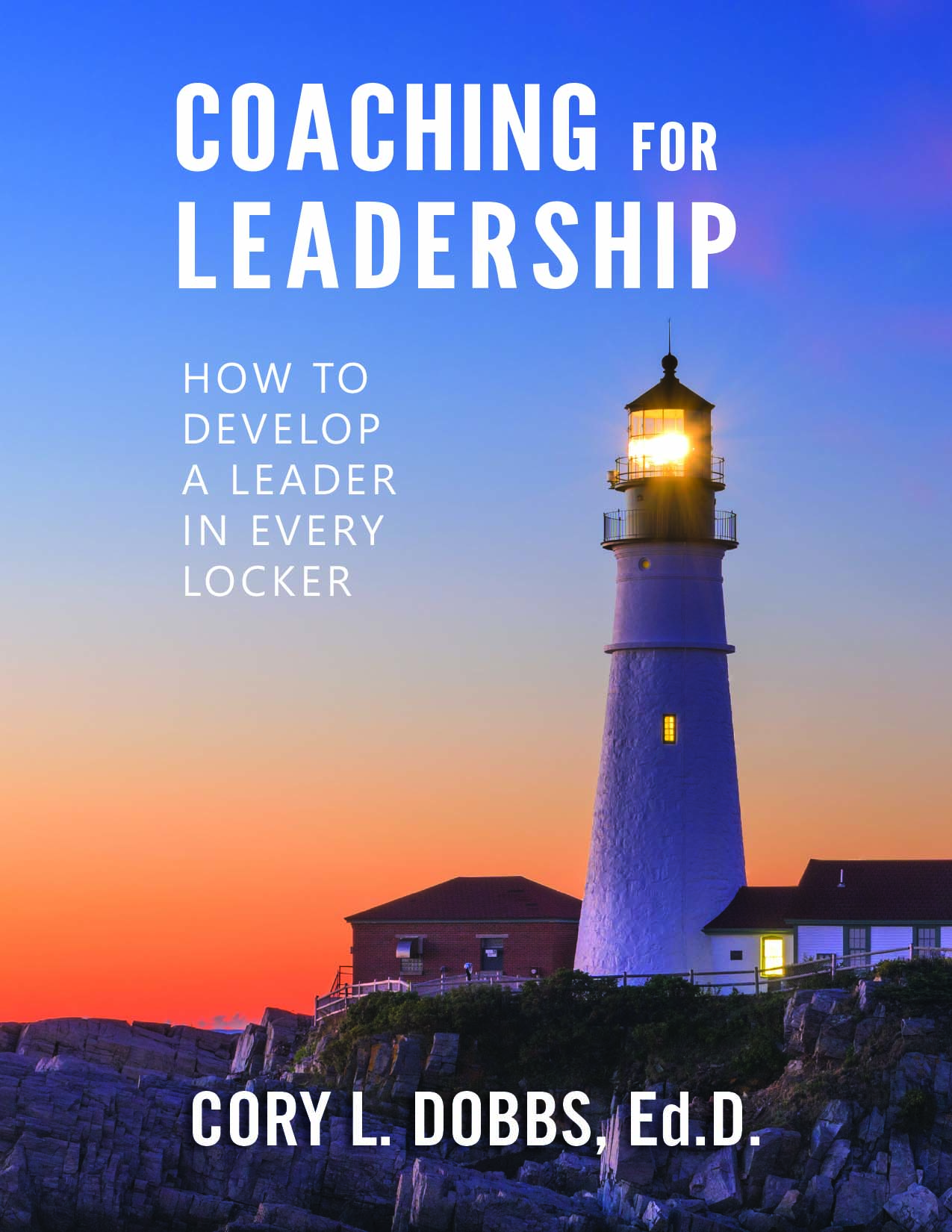
We are pleased to announce a new chapter to the second edition of the best-selling Coaching for Leadership. The chapter, The Big Shift: Unlock Your Team’s Potential by Creating Player-Led Teambuilding, connects the previous edition of this book to its origin, as well as to the future of team sports.

The new chapter sets forth a practical and applicable agenda for change and improvement. The reader is introduced to seven vital elements of change; seven shifts of traditional mental models that lead to the new core principles necessary for creating a player-led team culture. Click here for more information about Coaching for Leadership

About Cory Dobbs, Ed.D.

Cory Dobbs is the founder of The Academy for Sport Leadership and a nationally recognized thought leader in the areas of leadership and team building.  Cory is an accomplished researcher of human experience. Cory engages in naturalistic inquiry seeking in-depth understanding of social phenomena within their natural setting.

A college basketball coach, Cory’s coaching background includes experience at the NCAA DII, NJCAA, and high school levels of competition.  After a decade of research and development Cory unleashed the groundbreaking Teamwork Intelligence program for student-athletics. Teamwork Intelligence illuminates the process of designing an elite team by using the 20 principles and concepts along with the 8 roles of a team player he’s uncovered while performing research.

Cory has worked with professional athletes, collegiate athletic programs, and high schools teaching leadership and team building as a part of the sports experience and education process.  As a consultant and trainer Dr. Dobbs has worked with Fortune 500 organizations such as American Express, Honeywell, and Avnet, as well as medium and small businesses. Dr. Dobbs taught leadership and organizational change at Northern Arizona University, Ohio University, and Grand Canyon University.
Filed Under: Leadership

Are You Really Leading?

May 26, 2020 by

Slow Down and Take a Look at How You are Leading.

Dr. Cory Dobbs
The Academy for Sport Leadership

The primary purpose of leadership is to create more leaders, not more followers.  Pause for a moment, think deeply about this declarative statement.  More leaders.

Now…

How are you doing as a leader? The answer is how are the student-athletes you lead doing? Do they learn?  Do they lead? Do they manage conflict? Do they change—grow and improve? Do you really create more leaders? When reflecting on how you are doing as a leader, find out how the student-athletes you lead are doing.

In their best-selling book, _The Leadership Challenge_, authors James Kouzes and Barry Posner set forth a fundamental ingredient of all leadership endeavors—that of modeling the way. The authors contend that “Your value as a leader is determined not only by your guiding beliefs but also by your ability to act on them….To be a leader, you have to Model the Way for others by demonstrating intense commitment to your beliefs with each and every action.”

Team leadership is not an easy role for many young student-athletes.  Peer leadership is often an uncomfortable challenge.  The desire to be liked has been the downfall of many adult leaders.  So don’t gloss over the fact that a student-athlete will often be driven by their need to be liked by teammates.  Expect the first hurdle for your emerging team leaders to be overcoming the need to be liked.  Young leaders will also have to overcome emotional issues such as the internal conflict that might occur because of their desire for acceptance. As a leader they will at times need to take actions that temporarily separate them from their teammates—the followers. This is but one example of some of the inherent difficulties in peer leadership.

As a coach, you present a compelling model that young athletes will intensely observe.  They are constantly seeking cues on how they should lead (wanting to please you) and informing them how to act in a given situation. Team leaders will imitate many of your behaviors and attitudes. They will, for example, watch what you do and then imitate or adapt what you do. The less experienced the team leader the more likely they’ll study you closely to help them figure out “how” you want them to lead. When faced with inconsistencies between what you say and what you do, the young and developing team leader will tend to give greater reliance on what you do.

Your status as a model increases the necessity of having a healthy interpersonal relationship with all your players, but the relationship with team leaders will generally be a little more involved as you assume the role of leadership mentor.  Mentors are role models. As a mentor your impact will come from more than just what you tell your team leaders, they will assimilate and emulate many of your behavioral traits and copy many of your values and attitudes.

A healthy relationship and a positive approach to teaching leadership will shape your team leaders. How you model leadership and mentor leaders will go a long way in helping a young and emerging leader understand leaders and leadership.

New to the Second Edition of Coaching for Leadership!

We are pleased to announce a new chapter to the second edition of the best-selling Coaching for Leadership. The chapter, The Big Shift: Unlock Your Team’s Potential by Creating Player-Led Teambuilding, connects the previous edition of this book to its origin, as well as to the future of team sports.

The new chapter sets forth a practical and applicable agenda for change and improvement. The reader is introduced to seven vital elements of change; seven shifts of traditional mental models that lead to the new core principles necessary for creating a player-led team culture. Click here for more information about Coaching for Leadership

About Cory Dobbs, Ed.D.

Cory Dobbs is the founder of The Academy for Sport Leadership and a nationally recognized thought leader in the areas of leadership and team building.  Cory is an accomplished researcher of human experience. Cory engages in naturalistic inquiry seeking in-depth understanding of social phenomena within their natural setting.

A college basketball coach, Cory’s coaching background includes experience at the NCAA DII, NJCAA, and high school levels of competition.  After a decade of research and development Cory unleashed the groundbreaking Teamwork Intelligence program for student-athletics. Teamwork Intelligence illuminates the process of designing an elite team by using the 20 principles and concepts along with the 8 roles of a team player he’s uncovered while performing research.

Cory has worked with professional athletes, collegiate athletic programs, and high schools teaching leadership and team building as a part of the sports experience and education process.  As a consultant and trainer Dr. Dobbs has worked with Fortune 500 organizations such as American Express, Honeywell, and Avnet, as well as medium and small businesses. Dr. Dobbs taught leadership and organizational change at Northern Arizona University, Ohio University, and Grand Canyon University.

Filed Under: Leadership

Are You Nurturing a Leadership Mindset for Your Athletes?

March 25, 2020 by

Cory Dobbs, Ed.D.

The Academy for Sport Leadership

K. Anders Ericsson, a psychology professor at Florida State University, has spent a substantial portion of his life researching and analyzing expert performers. The question driving much of his research is, “What do you have to do to become the best?” To which Ericsson’s research reveals, “Successful people spontaneously do things differently from those individuals who stagnate. They have different practice histories.”  Elite performers, experts if you will, engage in what can best be called “deliberate practice”—an effortful activity specifically designed to improve individual target performance.

The question you need to ask is, “Can I develop student-athletes into team leaders?”

A valuable lesson from one of the most successful coaches of all time, the late UCLA basketball coach John Wooden, exemplifies the value of practice: “It is quite probable that the success or failure of most coaches is in direct proportion to their ability to devise practice drills to meet their particular needs, and then to properly coordinate them into daily practice program.  A tremendous knowledge of the game is wasted if the coach cannot pass along his ideas to the players.”

So, are you taking the same approach—deliberately practicing—to the development of leadership skills and abilities?  Have you devised leadership drills?  Are you using your practice time to create a context in which your student-athletes feel compelled to lead?

You have choices to make.  Is leadership development a part of your program?  If not, why?  Are you satisfied with the way your team leaders develop?  A growth mindset would take every opportunity to grow leaders.  Are you coaching and nurturing a leadership mindset?

Leadership development makes an important and engaging contribution to the challenges your team will face this season.  Create a game plan for developing team leaders and team leadership.  For the price of time and creative coaching, you can create a team of leaders who play to win—now and in the future.

New to the Second Edition of Coaching for Leadership!

We are pleased to announce a new chapter to the second edition of the best-selling Coaching for Leadership. The chapter, The Big Shift: Unlock Your Team’s Potential by Creating Player-Led Teambuilding, connects the previous edition of this book to its origin, as well as to the future of team sports.

The new chapter sets forth a practical and applicable agenda for change and improvement. The reader is introduced to seven vital elements of change; seven shifts of traditional mental models that lead to the new core principles necessary for creating a player-led team culture. Click here for more information about Coaching for Leadership

About Cory Dobbs, Ed.D.

Cory Dobbs is the founder of The Academy for Sport Leadership and a nationally recognized thought leader in the areas of leadership and team building.  Cory is an accomplished researcher of human experience. Cory engages in naturalistic inquiry seeking in-depth understanding of social phenomena within their natural setting.

A college basketball coach, Cory’s coaching background includes experience at the NCAA DII, NJCAA, and high school levels of competition.  After a decade of research and development Cory unleashed the groundbreaking Teamwork Intelligence program for student-athletics. Teamwork Intelligence illuminates the process of designing an elite team by using the 20 principles and concepts along with the 8 roles of a team player he’s uncovered while performing research.

Cory has worked with professional athletes, collegiate athletic programs, and high schools teaching leadership and team building as a part of the sports experience and education process.  As a consultant and trainer Dr. Dobbs has worked with Fortune 500 organizations such as American Express, Honeywell, and Avnet, as well as medium and small businesses. Dr. Dobbs taught leadership and organizational change at Northern Arizona University, Ohio University, and Grand Canyon University.

Filed Under: Leadership

The Death of Loyalty

August 30, 2019 by

Nothing Sabotages Loyalty Like the Blame Game

Cory Dobbs, Ed.D.
The Academy for Sport Leadership

*Note: This article is to be shared with your student-athletes.  Hold a brief discussion after your players have read the article.

Loyalty is the heart and soul of any meaningful relationship. A sports team provides the perfect platform for loyalty. Giving of one’s self to others is the foundation of loyalty. Many of our greatest experiences in life can be found in our relationships. At its core, loyalty is about reliability. And in the team setting reliability is a necessary ingredient for success.

Loyalty is found in the physical, intellectual, emotional, and social support we provide others. It is the bond of loyalty players have to teammates that forges a coherent team. It is players willingly committing to each other and going out of their way to ensure someone else’s needs are met.

However, getting along with others doesn’t mean the obligation to endure wrongful actions.

The Blame Game
Nothing destroys a relationship faster than blame. When you shift fault to another you cast yourself as a victim. In the court of victimhood what you want is the other person to be wrong and you to be right. No doubt, you feel you have real justification in your specific situation.

When you wrongfully blame others, you lose the right to loyalty. You’ve sacrificed a relationship to “save face,” to “look good,” or to simply hide a weakness. This is not loyalty. It is betrayal.

Let me state it plainly: Playing the blame game is wrong. Blame fuels conflict. It feeds the fire of dissension. It divides people. It can—and will—destroy your team. The blame game makes a mockery of loyalty. Blame is an act of selfishness.

Funny thing, most people that blame others look for at least one other person to align with them, to be an accomplice in the blame game? When a team member complains about what someone else “did to me” (such as a coach not giving you enough playing time), do others look to eagerly rush in and agree with the victim? Should one “cover” another’s back in the name of false victim-hood? After all, “she’s my friend and that’s what friends do for one another.”

These are not real friends. A real friend would say, “Cut the blame game and quit complaining about what “they” did to you. What did you do? What can you do to fix it?” Now that’s a loyal friend. This kind of honesty is what a loyal friend would do.

You need to be honest and direct, willing to confront teammates that violate team norms. Say what you need to say in a manner that shows your intent to solve the problem. Your objective is not to fight, but rather to make a positive impact toward a positive resolution. Your goal shouldn’t be to prove someone wrong, or to make you look good. Rather, your solution should be to cooperate and work toward a common purpose.

If you find yourself playing the blame game, understand that you are limiting your growth psychologically and relationally. Every time you choose to blame someone for a setback or for something negative that’s happened to you, you miss the opportunity to learn how to overcome adversity.

Confidence in one’s teammates is what makes for a tight-knit team. A team of loyal teammates offers a clear way to win. So when blame rears its ugly head, look instead for the courage to build up the moral muscles necessary for growing your commitment to others. Pledge to remain loyal and do the right thing.

And, a second short article from Dr. Dobbs

The Problem with Listening

In their classic Harvard Business Review article Listening to People, Ralph Nichols and Leonard Stevens get right to the point: “It can be stated, with practically no qualification, that people in general do not know how to listen.” Larry Barker and Kittie Watson in Listen Up declare, “Each of us has the power to decide how and when to listen.” Management expert Margaret Wheatley asserts, “I believe we can change the world if we start listening to one another again.” William Isaacs, MIT professor and senior lecturer in the MIT Leadership Center, reminds us that, “Listening requires we not only hear words, but also embrace, accept, and gradually let go of our own inner clamoring. As we explore it, we discover that listening is an expansive activity.”

Why do so few people listen to hear?
Think about it: The listener controls the conversation. Here’s a helpful exercise: Write down the many ways in which the listener controls a conversation. I think you’ll be surprised!

About the Academy for Sport Leadership
Our goal is to continuously create, modify and shape new programs based on research and practice. Our Coaching for Leadership and Teamwork Intelligence programs prepare top-notch coaches with the mindset and skill set to optimize student-athlete involvement, engagement, and performance.

About Cory Dobbs, Ed.D.

Cory Dobbs is the founder of The Academy for Sport Leadership and a nationally recognized thought leader in the areas of leadership and team building.  Cory is an accomplished researcher of human experience. Cory engages in naturalistic inquiry seeking in-depth understanding of social phenomena within their natural setting.

A college basketball coach, Cory’s coaching background includes experience at the NCAA DII, NJCAA, and high school levels of competition.  After a decade of research and development Cory unleashed the groundbreaking Teamwork Intelligence program for student-athletics. Teamwork Intelligence illuminates the process of designing an elite team by using the 20 principles and concepts along with the 8 roles of a team player he’s uncovered while performing research.

Cory has worked with professional athletes, collegiate athletic programs, and high schools teaching leadership and team building as a part of the sports experience and education process.  As a consultant and trainer Dr. Dobbs has worked with Fortune 500 organizations such as American Express, Honeywell, and Avnet, as well as medium and small businesses. Dr. Dobbs taught leadership and organizational change at Northern Arizona University, Ohio University, and Grand Canyon University.

“Tell me and I’ll forget. Show me and I may remember. Involve me and I will care.” -Your Student-Athlete The world of coaching is changing. In Coaching for Leadership you’ll discover the foundations for designing, building, and sustaining a leadership focused culture for building a high-performance team. To find out more about and order Sport Leadership Books authored by Dr. Dobbs including Coaching for Leadership, click this link: The Academy for Sport Leadership Books

Filed Under: Leadership

Are You a Leader of Character?

June 19, 2019 by

Cory Dobbs, Ed.D.
The Academy for Sport Leadership

Time and again, through my own eyes and those of student-athletes, I have seen the impact of poor leadership. Leadership from the ranks of the players and leadership from the coaching staff, when not actions of character, almost always turn out badly. Teams underperform, players drift from the team, coaches ratchet up bad behavior and the result of poor leadership—characterless leadership—destroys opportunities for members of the team to grow, develop, and enjoy their sport.

Today’s most effective coaches do more than win games; they imbue their program with character. Indeed, they lead with character.

Simply put, leaders of character take serious four universal practices: tell the truth, keep your promises, give forgiveness, and treat others as you want to be treated. When coaches and student-athletes commit to these four behaviors, they are viewed as people of character. These traits are respected and admired. Together, they illuminate “leadership character.”

Sports are supposed to infuse participants with character. Indeed, the first requirement to be a coach is to be a person of character. If this sounds like a tough stance on who should coach, it is. Coaches have traditionally been valued for their teaching skills, decision making, and the best always strive to understand and empathize with their players. Great coaches believe that student-athletes have an intrinsic value beyond their contributions on the playing field. But the distance between a great coach and a good coach is quite wide.

No matter what the final record for the season happens to be, if poor leadership, from the coaches or the players, is a part of the process, the experience for each and every participant is sure to be one of disappointment. It’s likely to have included many frustrations for the participants and at times created disillusionment, anguish, and sadness. Characterless leadership is simply that impactful.

Peter Block, author of Stewardship, has defined stewardship as “holding something in trust for another.” In sports, that something the coach holds in trust is the student-athlete’s experience. The coach committed to the growth and development of players recognizes the tremendous responsibility to do everything within his or her power to nurture integrity, hold players accountable to one another, guide them to own their mistakes, and teach the young student-athlete to let go of the past.

Based on all my years coaching, and observing (research from the outside looking in) coaches and student-athletes, I find the coach capable of humility and deep self-awareness to be the one most likely to have leadership character. The capacity to bring out the best in people demands character. The mark of a great coach—teacher—is that he or she lives and models the four universals of telling the truth, keeping one’s promises, letting go of others’ mistakes, and empathizing with others.

And, a second article from Dr. Dobbs:

Pumping Iron: Not-Invented-Here

Today every student-athlete lifts weights.   But this hasn’t always been the norm.  If you look at the black-and-white photographs of athletes from the 1960’s you’ll see mostly underdeveloped physiques.  Weightlifting began on the fringes in the 60s, and mostly in the form of machines for training.  At that time, most coaches assumed that weightlifting would harm an athlete’s fine motor skills.  So weight training remained on the periphery.

But then, a movie released in 1977 exploded on the scene and overnight created the strength industry.  A little-known Austrian bodybuilder, Arnold Schwarzenegger, breathed life into competitive bodybuilding.  Hollywood saw an opportunity and acted quickly.  Pumping Iron, a docudrama, focused on Schwarzenegger and his dedication to lifting weights to build a Mr. Universe body, triggered a movement that spilled over into almost every sport on the planet.

A fatal flaw of sports has been to shy away from training and operating methods that don’t originate within the field of the sport.  This bias is revealed in the aversion to things not-invented-here.  Not-Invented-Here is the automatic negative perception of something (such as an idea or belief) that does not originate in one’s field.  Have you read Moneyball?  Data analytics and those that wanted to explore their value were rejected, until the Oakland A’s on-the-field success proved this new way of building a team.  Today, if you look closely, you’ll see that data analytics have found a comfortable place in the world of sports.

Here’s a short list of ideas about Not-Invented-Here.   Google each and learn a little more.

-CTE (see Dr. Bennet Omalu and Concussion the movie)
-Free Agency (see Curt Flood)
-Sport Psychology (see Thomas Tutko)

-Great Performers are Made, not Born (See Anders Ericsson)

-A Leader in Every Locker (see Cory Dobbs, Coaching for Leadership)

-Karl Dunker, (see Functional Fixedness)

Let me encourage searching for ways to improve your players, programs, and organizations by any means necessary.  Don’t approach improvement and innovation with a fixed-mindset and get caught in the trap of rejecting something because it was Not-Invented-Here.

Cory is the Founder & President of The Academy for Sport Leadership. A former basketball coach, Cory’s coaching background includes experience at the NCAA DII, NJCAA, and high school levels of competition. Cory has worked with collegiate athletic programs and high schools teaching leadership and team building as a part of the sports experience and education process.

“Tell me and I’ll forget. Show me and I may remember. Involve me and I will care.” -Your Student-Athlete The world of coaching is changing. In Coaching for Leadership you’ll discover the foundations for designing, building, and sustaining a leadership focused culture for building a high-performance team. To find out more about and order Sport Leadership Books authored by Dr. Dobbs including Coaching for Leadership, click this link: The Academy for Sport Leadership Books

Filed Under: Leadership

  • « Previous Page
  • 1
  • 2
  • 3
  • 4
  • 5
  • …
  • 22
  • Next Page »

© Copyright 2026 Athletic Performance Toolbox

Design by BuzzworthyBasketballMarketing.com

Privacy Policy