Athletic Directors Toolbox

  • Home
  • Leadership
  • Mental Toughness
    • Mental Skills
  • Motivation
  • Professional Development
  • Program Building
  • Sports Performance
  • Team Building

Goal Setting for Coaches

June 28, 2017 by


This article was provided by Coaches Network

Part of coaching is dreaming big. But it’s not enough to just hope for the best. When you set goals for yourself and your team, there are a number of steps you can take to turn these goals into reality. An article on CoachesTrainingBlog.com is a detailed checklist that will help you achieve your aspirations and get on the path to success.

1. Clarify the goal

When setting goals for the future, it can be easy to leave them as vague and undefined. But this allows for too much wiggle room and doesn’t provide a tangible way to measure your efforts. Start by setting an objective that is measurable. In order to know that you and your team have reached the goal, there needs to be a quantitative way to assess progress. By making a goal clear and identifiable, you are one step closer to making it a reality.

2. Make the goal real

Imagination is just as powerful as reality. Imagine in detail what it will feel like when you reach your goal. Think about where you will, who will be there, and what the moment will look like. Use all five senses to set the scene and truly visualize yourself achieving success. Then use this as constant motivation to keep moving forward and working as hard as you can. Before you can get where you want to be, you have to believe in your ability to get there.

3. Strategize action steps

Once you have a clear and measurable goal in place, it’s time to develop a detailed plan to help you get there. Start by thinking about the first steps you have to take to get on the right path. These may be small but are necessary before you can start taking leaps forward. It may be helpful to think about your ultimate goal and then work backwards to identify all the steps you will have to take to get there. Each action, no matter how big or small, difficult or easy, frustrating or enjoyable, should be treated as equally important.

Click here to read the full article.

4. Strategize accountability

It’s essential that you hold yourself and those around you accountable. This means setting a standard and sticking to it. As a coach, this often requires leading by example and showing your staff and your athletes what it means to pursue a goal and treat everyday as a chance to grow and get close to achieving success. Everyone should be held to the same standard, no matter their contribution or talent level. By staying committed to a goal and to those around you, you will inspire confidence and motivation to take the necessary steps forward.

5. Celebrate each step

A major part of keeping the confidence and motivation alive is to acknowledge every positive gain. This is an essential part of coaching in general and will help you inspire your athletes and fellow coaches to be their best. When you celebrate an achievement, you provide motivation to keep working and achieving more. The road to success is often long and full of challenges, but by celebrating positive step along the way, you can make the road that much smoother.

Click here to read the full article.

Filed Under: Professional Development, Program Building

Program Culture Thoughts

June 8, 2017 by

This article was sent to me by Dennis Hutter Coach Hutter is the Head Women’s Coach at Mayville State University. Dennis also has a coaching website. The URL is http://www.coachhutter.com/

I believe that the vast majority of these points can be applied to coaching any sports.

Six Ways to Create Culture Within an Organization – Andy Stanley

  1. Name It – Create a name for it, easiest part – MSUWBB = “The Comet Way”
  2. Brand It – Phrase, Idea, Terms, Slogans, Images
  3. Wear It – “Model It” – Leader must be seen doing this DAILY
    People can see it in the leader, what the leader sees in them
  1. Teach It – Have to teach it intentionally
    Talk about it enough to get ALL on the same page
  1. Institutionalize It – Make it part of the “rhythm” of the organization, Schedule Daily
  2. Recognize It – When you see something, say something

What is rewarded, will be repeated

Make sure you are always trying to find ways to praise your players, when you find or hear about them representing the team and the culture on a high level:

**What we try to do here at Mayville State WBB, is when we receive an email or a note, or a tweet about a player or players representing our program at a high level we will print off that note and hi lite their name and write a quick note saying ”thanks” and put into their locker room.**

Improvement creates momentum within a culture and organization.

Great organizations are always evaluating and always inspiring:

Evaluate what they are doing.

Inspire what others are doing.

“Pride of Ownership” – if we did not come up with the idea – we don’t want to look like we are copying or borrowing – A BIG REASON WHY SOME CULTURES DO NOT IMPROVE OR MOVE FORWARD.

We are not looking for our best ideas, we are looking for THE best ideas.

Improvement involves change – people are not always excited about change.

There is a big difference between a “personal commitment” to something and a culture of something.  Personal commitment means the person at the top is committed, but no one else it, a culture is an attitude throughout the entire organization.

Culture Defined – Organizational Culture is the personality of the organization “How things are done Here”

In great organizations culture is created, in bad organizations culture is inherited.

Eight Ways to Infuse Passion into Your Team – Cory Dobbs

  1. Keep your fire burning
  2. Take charge of your moods
  3. Listen to teammates and players
  4. Be there for others
  5. Act with integrity
  6. Be genuine
  7. Refrain from excuse-making
  8. Men broken fences

Coaches want players who serve to inspire those around them to do things that will make the team better – WE WANT MORE OF THESE PLAYERS

A fun energizing environment is much more productive than a routine and stale environment

Celebrate and get excited about the successes and accomplishments of your players and teammates

THE SUCCESS OF ANY ORGANIZATION, GROUP OR TEAM IS GROUNDED IN THE EFFECTIVE APPLICATION OF LEADERSHIP – Cory Dobbs

“Arete Hoops” – How Process Praise Makes You More Resilient

Children who receive “process praise” (i.e. – the things within the child’s control:  hard work, effort, perseverance and diligence, etc….) were more likely to develop a resilient approach towards difficult challenges later in life

The children who received “process praise” when they were younger were more motivated learners and ended up doing better in math and reading compared to their peers, who were praised for their talents or innate abilities alone.

When we make it clear to our teams that a commitment to the process is the only key to success, we are giving them the tools to be successful both on the floor and in life

BEGIN TODAY TO HELP YOUR TEAM DEVELOP THE MENTAL TOUGHNESS IT NEEDS TO PUSH THROUGH THE UPS/DOWNS BOTH IN ATHLETICS AND IN LIFE

Are You Absolutely Positive??? – PGC Basketball

If a customer is within ten feet of you, you have ten seconds to speak to them and look to serve them in some capacity – IS THIS A DAILY OCURENCE WITHIN YOUR PROGRAM???

Whether one realizes it or not, each of us is selling something to those around us every day. We are either selling positive or negative – which is it for you????

DO WE CONTRIBUTE OR CONTAMINATE PRACTICE

Wake up every morning with one drive in mind – TO SERVE OTHERS

Set a goal to do something special for someone TODAY, who isn’t expecting it

Attention flows where energy goes

“Quit Being So Stinking Hard to Play For” – PGC Basketball

One coach will impact more people in one year, than the average person does in a lifetime – Billy Graham

Coaches should be passionate about changing the lives of young people every day

Desiring fair treatment – is the mindset of the mediocre

Far too often, our identity becomes wrapped up in our overall win/loss record

As coaches, we fall victim to the power-empower-power cycle

Power-Empower-Power Cycle – that is where coaches start out with the power, and then through trust and time, start to empower some of the players within the team.  Then when things are not going well or at some point, the coach takes the power back from the player(s).

Coaches – giving away our power is one of the greatest gifts we can give as a coach

If we fall into the power-empower-power cycle, the players will view us as the enemy rather than the ally.

When the pressure to win is prevalent, we as coaches, stop directing and start demanding

The best coaches around have the highest level of accountability

If players can discover how to pursue greatness on their own, it will become a life-long virtue

Does your “WHY” match up with your “WHAT”????

We should be in constant pursuit of being the coach that one day players reflect on as a hero!!!!!!

Mayville State Women’s Basketball Culture

Over the past six years we have developed, built and maintained our Program Culture – DAILY

We have branded our Culture as “The Comet Way” – this exemplifies everything we do within our Mayville State Women’s Basketball Culture

A lot of what we do today, was taken from the book “Leading with the Heart” by Mike Krzyzewski

Four “cornerstones” of our “The Comet Way” Culture are:

Academic Development

Leadership/Teammate Development

Player Development

Servant Leadership

Here are some of the ideas that we do within each cornerstone of our Culture:

Academic Development

“Basketball may have brought you here, but it is not why you are here” – getting your degree

Study Tables at least twice per week with players AND coaches

Progress Reports for players

Constant guidance to make sure players stay on track to graduate

Academic Planners

Player Notebooks

Program Weekly Schedule

Leadership/Teammate Development

Players will have a difficult time growing and developing if we don’t give them a chance to lead, have to give some our “power” as coaches away, and allow our players a chance to lead and grow.

Effort & Attitude – Have an “attitude of gratitude” – Have players write “thank you” notes to people/supporters/professors, etc……………….

We are trying to build strong relationships within our program – DAILY – player to player, coach to coach and coach to player.

Relationship Building Ideas:

Sign In Sheet Every day for Players

Personal Notes/Texts to Players praising positive traits

Individual Player Meetings:  Discuss Family, Classes, Basketball – IN THAT ORDER

Leadership Council for Players

Academic Involvement with the Players

Trust = Character + Competence – Character is who you are as a person, competence is your ability to do your job

Communication is the “glue” that keeps our Family together

Peer Coaching – Player to Player Coaching

Player led practice sessions

Post Workout/Practice Notes to players & staff

Player Notebooks

Team Meals

Player Development

“The single best way to improve the team, is to improve the individual skills of the players on that team”

When I get better, WE get better

Individual Development Workouts

Game/Practice Film Sessions

Player Notebooks

Tough Competitive Practices built around player/team improvement

Servant Leadership

Campus/Community Service Projects – Find a way to get players involved with campus/community

Be the “Helping Team” both on and off the floor

Vets/Rookies – Veterans helping the rookies become a part of our family

Summer Camps

Must read Books for Culture & Leadership

The Power of Positive Leadership……………………………………………….Jon Gordon

You Win in the Locker Room First……………………………………………….Jon Gordon & Mike Smith

The Hard Hat………………………………………………………………………………Jon Gordon

How Lucky You Can Be………………………………………………………………..Buster Olney & Don Meyer

Inside Out Coaching…………………………………………………………………….Joe Ehrmann

Relentless……………………………………………………………………………………Tim Grover

The Big Book of Belichick…………………………………………………………….Alex Kirby

The Legacy Builder………………………………………………………………………Rod Olson

Filed Under: Program Building

Step by Step Goal Setting

May 21, 2017 by

This article and other helpful coaching tools can be found at Coach Dawn Writes

By Dawn Redd-Kelly, Head Volleyball Coach at Beloit College.

There is always a huge gap between the birth of a dream and the achievement of that dream.
–Put Your Dream To The Test

Every team starts out the year with high goals…things they’d like to have accomplished by season’s end.  What every team does not have is the desire, tenacity, and motivation to keep pursuing the goal when (cliché alert!) the going gets tough.  Let’s discuss how to keep our teams and our athletes on track in this third of a three-part series (click here to read parts one and two) while examining the last five questions from the book, Put Your Dream To The Test by John Maxwell.  I believe that guiding them through this goal setting process can help them to accomplish individual and team goals put them on the path to having a successful season.

The People Question:  Have I Included the People I Need to Realize My Dream?
“Convincing others of the significance of your dream can happen only if you are convinced of the significance of your dream.”  This question is for people who need to build a team around them in order to be successful, but our athletes come with a ready-made team!  Now all you’ve got to do is remind them that the goal can only be accomplished through daily work.  Everyone’s fired up at the beginning of the season, but what about when you’ve suffered a heartbreaking loss, or midterms are kicking their butts, or it’s just harder than they thought?  That’s when we can remind them that they’re not alone and that they’re in it together.

The Cost Question:  Am I Willing to Pay the Price for My Dream?
“All dreams are outside our comfort zone.  Leaving that zone is a price we must pay to achieve them.”  What’s the price, you ask?  Criticism: what if one of your players thinks that she can be in the WNBA and has decided to make that one of her goals?  When she tells people, they may try to dissuade her from pursuing that goal…not to be mean or negative, but in protecting her feelings.  Fear: using our same example, that’s a big out-of-her-comfort-zone goal…and it’s scary.  If she’s not willing to work through being afraid that she’s bitten off more than she can chew, then she should get a smaller goal.  Hard work: athletics is hard work on its own.  Adding a big, huge goal heaps a whole lot more work to their plate…are they willing to pay that price?

The Tenacity Question:  Am I Moving Closer to My Dream?
“The only guarantee for failure is to stop trying.”  Your athletes have to be finishers, not just starters.  It’s really that simple.  As Dory from Finding Nemo says, “just keep swimming.”  Don’t quit, don’t give up.  As long as they keep putting in work everyday, their goals are getting closer and more real.

The Fulfillment Question:  Does Working Toward My Dream Bring Satisfaction?
“If you want the pursuit of your dream to be sustainable, it needs to bring you satisfaction.”  Maxwell says that there’s a gap between stating the goal and achieving the goal…and it only gets bigger with a larger goal.  If your athletes appreciate the process of working toward a goal, they will discover how tough they are.  And that toughness will serve them well and keep them from wavering.

The Significance Question:  Does My Dream Benefit Others?
“Start doing what is necessary; then do what is possible; and suddenly, you are doing the impossible.” I think the answer to this question is two-fold.  For the individual, the team will benefit from their goals.  For the team, future teams will benefit from the current team’s goals.  And I just love this quotation!  If our athletes and teams just do what is necessary…at least they’re working toward the goal.  What is necessary?  Coming to practice and working hard, supporting their teammates, and giving their all in each and every drill at each and every practice.  And if they do what is possible, then they’ll challenge themselves…because how do they know what they’re capable of or what is possible for them if they don’t try new things?  If they do what is possible everyday, all of a sudden those things that they thought were impossible are possible.  And they just keep pushing the envelope and keep getting better and those goals are getting closer and closer.

That’s the end of our goal setting series and I hope you found at least one thing that you can put into action with your team right away.  Every team and every person will have different goals, but we coaches can have one plan to guide them along that goal setting process.


Filed Under: Program Building

Engineering Your Culture: 5 Keys to Team Excellence

May 17, 2017 by

By Ralph Isernia, Head Football Coach, Rensselaer Polytechnic Institute (RPI)

I would like to thank you for inviting me to share an article with the readers. It is extremely humbling after 27 years of coaching and 8 different teams, someone is asking for advice in building a team. This article contains some of the keys that I believe are key components in building ‘Championship Culture and Team Excellence.’

“Excellence is an art won by training and habituation. We do not act rightly because we have virtue or excellence, but we rather have those because we have acted rightly. We are what we repeatedly do. Excellence, therefore, is not an act but a habit.” – Aristotle

All coaches know about the importance of creating a dynamic culture for their football team. In order to understand what it is we are trying to develop, start at the beginning and define what culture is, how we can develop it and how it can produce team excellence. I define culture in four aspects:

* The ideals that a particular group values as an expression of who they are.

* How the group implements and upholds those ideals.

* How the group works in concert with those ideals to achieve their ultimate goals.

* How those ideals and their importance are passed along to succeeding groups.

Coaches know the importance of team development as it is reflected in discipline, work ethic, competition, accountability, teamwork, trust, togetherness and love. As coaches, it is our responsibility to establish and develop the culture of our teams. We “engineer” that culture – as it refers to designing or building something, such as a machine or a structure. Our team culture is a living, breathing organism. It is a machine that grows and changes as our team’s dynamic changes. The five keys described here help engineer your culture to develop team excellence.

1) Start with You

If you follow the advice of sports psychologists and performance coaches, they would tell you to “start with the end in mind.” Examine yourself from another’s perspective. If your life were to end today, what would others say about you? How would you be rememberd? What impact would you have had on others’ lives? It is a morbid thought, for sure, but

one that deserves attention. If we desire a life that is fulfilling, rewarding, in the service to others, one that is dedicated to the ideals that we hold dear, then we need to live with intentionality and integrity in serving those ideals. So, start with you. Get clear with your vision. Your ultimate vision will forever drive you and your entire program. Once you have uncovered that vision, everything else will begin to fall into place. But first, get real with yourself.

Pursue the best version of yourself that you will ever be. Maslow said, “What a man can be, he must be.” So, you might as well do what you love, love what you do and do it your way. Stick to your vision, for it was forged from your character – who you truly are. Your character is the result of your values being habituated.

Self-discovery and introspection may take some time and deep reflection, but the results will be uniquely yours and deeply meaningful. What is your identity? What is your vision? Who are you and what are you here to do? Develop your Plan for Success – your 3 P’s: Purpose, Passion and Principles.

* Purpose: Who are you and what are you here to do?

* Passion: What are you excited about and why?

* Principles: What do you truly value in your life?

If you want more, you must become more. You must discover and define your Purpose, Passion and Principles in order to live a life of integrity; one that is in harmony with your true principles and values. Only then can you fully actualize your life. Start with “I” statements and just write, don’t over-think. Fire, ready, aim. Just get it down on paper, then refine and revise. Ultimately, you are asking yourself the questions, “What kind of coach do I want to be and what will it take to get there?” The answers will drive your philosophy and shape the culture of your program.

2) Mission Statement

The Mission Statement is the ultimate structure of your organization. It is derived from your vision and personal plan for success. Remember to lead within your style and beliefs because a team will always take on the personality of their coach.

Your mission statement will characterize how your plan for Success drives the fundamental core of your program. Be deliberate and detailed with the characteristics or your program. Do not ask your team to do that which you would not otherwise do yourself. Direct the behaviors that you want your team members to exhibit. It must be MEAN-ingful:

* M: Memorable

* E: Easy to teach & learn

* A: Accountability is demanded

* N: Never let up

I have found that a Mission Statement of 1-3 sentences is most effective. A 5-7 sentence statement can be used as long as there is some rhyme or rhythm to the text. This statement is a fundamental of your program. Just like football fundamental skills, it must be practiced over and over again. Demand commitment until automaticity. Team members and coaches should eventually be able to recite your statement on command. Memorize it, believe in it, and own it. Remember, thoughts become things and constant repetition and deliberate practice will ingrain the fundamentals of your program. Be deliberate with your teachings, direct your team and demand full accountability.

3) Buy-in

The “Buy-in” stage is the most important component of building your culture. It involves more moving parts than the previous ones. The members of your organization (players and coaches) must completely commit to the direction of the program. You will encounter three groups of people when implementing your plan:

* “One Guys”: They are with you from day one, they are your elite leaders, they yearn for change, committed to the cause, they want the discipline, structure and commitment. They believe in your vision and are aligned with your values.

* “Some Guys”: They will side with the view that is most popular or can give them the greatest reward, they are swaying with the breeze, they dare not go against the breeze for fear that they may break, so they bend to the side that has the least resistance. This may be the largest group, so the coaches and Bunker guys must get them to buy-in because it is right.

* “Un Guys”: Un-interested, un-reliable and un-caring. Use ultimatums, commit or quit. There may be some skilled players in this group or guys that could really help your team. One bad apple can spoil the whole bunch. You cannot compromise everything you believe in for short-term success. Committed members will see right through your intentions and view you and your ideals as a fraud. Remember, character counts.

Once your team is formed and full commitment is established, you must train every day. Ask the question, “What type of player do you want to be and what will it take to get there?” You have provided a blueprint for their success. All you need is their commitment to the team. Everyone must be speaking the same language in order for you to accomplish your goals. Members will feel that they are making sacrifices for the team. Get them to understand that they are making choice instead of sacrifices.

The result of their collective “buy-in” will be a force greater than any one individual alone. Synergy, where 1 + 1 = 3. The sum is greater than its parts. Where one board is strong by itself, two boards together are exponentially stronger. In engineering terms,

they are not only sharing the load, they are supporting each other at the same time. Synergy is hard to calculate or quantify, but you know it when you see it in your team.

4) Relationships

Your team will never care what you know until they know that you care. So, sail the right ships – relationships. Never overlook the opportunity for a “teaching moment.” This could be anywhere, on the field, in the office or in the hallway. Sometimes the most-meaningful interactions are the ones that are unexpected, unintentional and unscripted. Embrace positive coaching that emphasizes discipline, character, grit and togetherness. Coach and teach within your personality and your genuine care and love for your individual team members will shine through.

* What do you value in a player?

* How do you recognize it?

* How do you drill it?

* How do you reward it?

* Reward the behavior you want.

Every member of your organization has value and a voice. No one person is bigger than your program. Provide constant communication, evaluation and feedback. Be honest and compassionate. Give them a plan where they can see themselves having success. You must trust them and they must trust you. Trust is a must. Help them plan out their goals and ways they can strategically take small steps to achieve them. Help them cultivate willpower and determination knowing that their achievements will take time. Small, smart choices done consistently over time will produce amazing results. In order to become a vehicle of excellence, they must become a machine of routine.

5) Evolution

Every day, you are either growing or dying. You must evolve as a coach, teacher and mentor. Adopt a growth mindset, constantly learning new systems, paradigms, and dynamics that will enhance your program. If you grow, your team and players will grow with you. Understand that where your focus goes, your performance and energy go. As you keep moving forward, remember you can only control what you can control:

Your…

* Attitude: Solutions-based not problem-based. Proactive not reactive.

* Actions: Be true to yourself.

* Preparation: Have a plan, work the plan. The Process.

* Performance: Demand your best.

* Energy: “Bring it” every day. People will feed off your energy.

* Effort: If you are not working on culture every day, then you do not have one.

* Determination: “Unwavering commitment to finish the job, stay the course and never, ever quit.” – Mark Devine

We attend clinics, visit coaches, learn new schemes and examine football systems to win on the football field. We read books from Lombardi, Wooden, Bryant, Summit, Auriema, Sabah, Carroll, Meyer, Belicheck, Walsh, Dungy and Parcells. These people are icons in the coaching profession and we can glean a wealth of knowledge from their experiences. To help us grow in our relationships, build our teams and understand how to help others, we should study the works of Maslow, Erickson, Cuddy, Duckworth, Galloway, Dweck, Canfield, Locke, Hardy, Covey, Kight and Cain, among others. The lessons learned from these experts can help us grow as individuals and fully engineer our success.

Filed Under: Program Building

Video Helps Bring Hawaiian Club Closer to the Mainland

April 27, 2017 by


Optional Blurb: What once started as a recruiting tool became a full-fledged coaching weapon for Pilipa’a Club Volleyball.

Do a quick Google search and you’ll find the distance between Hilo, Hawaii and Los Angeles, California is about 2,500 miles. Expand that search to any city that has a collegiate volleyball program and that number grows drastically.

An ocean separates the small island town from the lower 48, and it can make recruiting difficult to navigate. In a hyper-competitive space like club volleyball, everyone is competing for the eyes of scouts, so getting in-front of coaches on the tournament trail is priority.

“When you live in Hawaii, and any tournament travel that you do is long distance, it adds quite a bit of cost,” said Chris Leonard, one of the coaches at Pilipa’a Volleyball Club. “We travel once or twice a year to give our kids the chance to play against some of the best teams in the country, and hopefully give them an opportunity to be seen by college coaches, but that’s not enough.”

Most colleges outside of the elite have tight recruiting budgets. Some can’t justify traveling to see certain players halfway across the world. In spite of the obvious distance obstacles, Leonard and the club make it a point to bridge the gap between college recruiting and the players that play for him by opening doors. “[Hudl] gives our players an opportunity to be seen by coaches year-round,” said Leonard. “It has opened opportunities for discussions with collegiate programs that would not otherwise be able to see our kids play.

“I don’t want to make it sound like a huge thing, but Hudl is a part of that process for our kids to be seen. It’s difficult to say it’s only because of Hudl, but I do think it’s an important part of what we do.”

Over time, however, Leonard saw that video could be so much more to his coaches and players.“I’m at the point where I’m trying to use Hudl now as a coaching tool and as a recruitment tool for our players,” said Leonard.

“Hudl has become more valuable for me each year that we’ve used it.”
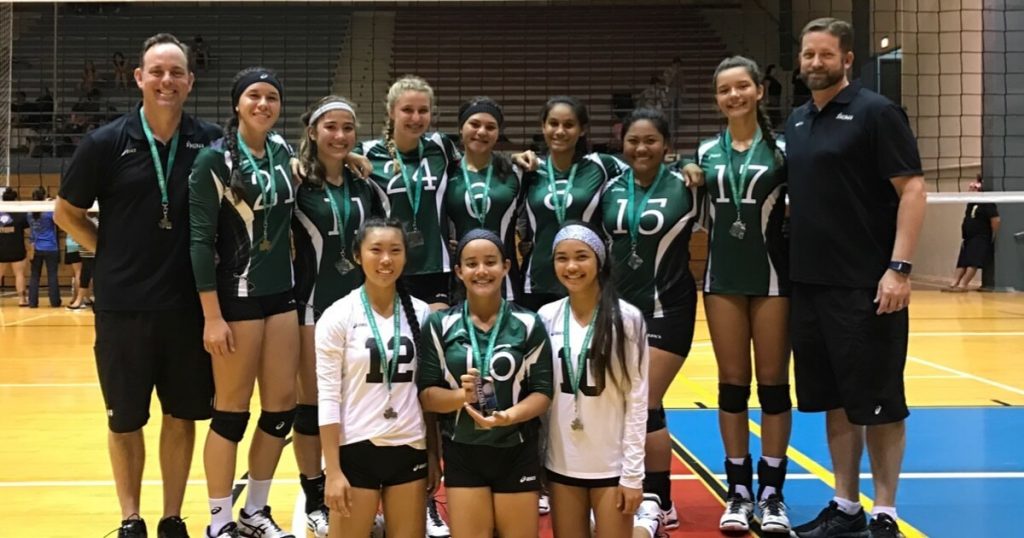
Implementing review sessions at the individual and team levels has helped his players elevate their game. Coaching individual technique in the scope of the team’s overall play can be difficult, especially when you can’t see what went on during a specific point in a match. “The analytics give us insight that was previously unavailable while the the tagged video captures many teachable moments for our athletes,” said Leonard. “It allows us to generate comprehensive playlists of just about every aspect of the game for our team and individual athletes to review.

“It’s a tremendous learning tool, and we’re preparing our kids to play at the next level.”

Click here to see their film session and goal setting meeting

What began as a recruiting aid has become an integral part of the clubs day-to-day process. “It’s provided opportunities in video that once upon a time were only available to large collegiate programs or international programs, and made it accessible for a small club like ours that doesn’t have big financial resources to work with,” said Leonard.

Hudl is doing great things for volleyball and I would highly recommend them if you are looking to make your club, high school or collegiate program better.”


Filed Under: Program Building

  • « Previous Page
  • 1
  • …
  • 9
  • 10
  • 11
  • 12
  • 13
  • …
  • 22
  • Next Page »

© Copyright 2026 Athletic Performance Toolbox

Design by BuzzworthyBasketballMarketing.com

Privacy Policy