Athletic Directors Toolbox

  • Home
  • Leadership
  • Mental Toughness
    • Mental Skills
  • Motivation
  • Professional Development
  • Program Building
  • Sports Performance
  • Team Building

Get Better at Following Through

March 28, 2018 by

This post provided by Busy.Coach

Coaches often have a handful of great ideas about how to improve their program. For many coaches it is difficult to put those ideas into action. Here are some thoughts getting better at following through.

By Mandy Green

I just finished up speaking at the United Soccer Coaches Association National Soccer Convention.

A big thing that coaches were talking to me about this weekend is that they always have a lot of new ideas for how they can work better, but after the initial excitement wears off, they struggle to follow through and take action.

Although you start the day with the best of intentions, of course, you know what happens right? Life throws you a curveball. Maybe an administrator, another coach or somebody on your team stops by for an unexpected conversation.

Or maybe even for you, an addiction to distraction kicks in. Sorry if this sounds a little harsh, but coach, when you allow yourself to get distracted for long enough, you’ve essentially trained your brain to underperform. As a result, you likely struggle from a lack of focus, perhaps an inability to concentrate for long periods of time, and this near constant feeling of being totally overworked and overstretched and overcommitted.

But here’s the deal: if you want to create and contribute and experience extraordinary things in this life — and I believe you do because you are reading this newsletter — then you have to buck the status quo. You have to break cycle of these addictions and really push back against all these other distractions. You need to develop an unshakable ability to follow through on what is most important to YOU.

I mean, just think about it. When was the last time that you really completed a goal that truly mattered to you? When was the last time you set an important goal and you made it happen? I mean, doesn’t it just feel GREAT to check something off your list or complete an important project or say that something is finally DONE?

You see … no matter how enthusiastic we are at the beginning of any new day or with each new project, there’s one crucial habit that makes all the difference in the world: follow-through. And the ability to finish what we start.

As I continue to try to help you decide what’s most important, then to eliminate what’s not important, and to make doing the work that you need to do as effortless as possible, I can tell you without hesitation that THIS ability — the ability to focus on what matters, to finish what you start — has been invaluable to me as a coach, as a business owner … and quite frankly, as a human.

From my own experience, I have found that there are two big problems that get in our way of following through:

First, most of us are working on way too many things at once. We allow ourselves to be pulled in too many directions. Instead of making meaningful progress on a single project that really, really matters, we wind up feeling constantly overloaded and overstretched and get stuck doing maintenance tasks all day.

Now the second problem? Oftentimes we are fuzzy about our outcome. Meaning, most of the time, we’re just working hard and trying to keep our heads above water without a clearly defined, achievable result that we’re working towards.

The good news here is we have the power to fix both of these problems. And when we do, we gain some serious momentum and we train ourselves to become masters of follow-through.

So the very first step is this: we must decide.

Meaning, DECIDE what’s truly most important. And, to be clear — I’m not talking about several things here, I’m talking about choosing just ONE thing. One TOP priority. One single goal.

For you to develop the habit of finishing what you start – you’ve got to be willing to choose ONE important goal or ONE project that you want to get done.

Did you know that the word “decide” comes from the Latin word, “decidere,” which means “to cut off”? So when you decide on one thing, you cut yourself off from everything else except from that which you’ve said is most important.

As it is Sunday and you are hopefully preparing for kicking ass in the office this week, I want you to think about this question: What’s one thing you could focus on (a single project or goal) that, if you finished it, would make a tremendous positive impact on your program and life?

If you’re having trouble committing to JUST one thing, if you’re unwilling to commit to one thing, I want you to remember this: you’re most likely going to be distracted by EVERYTHING.

Shut off your phone, close email and eliminate all distractions. Have a great week!

If you want to challenge yourself to a Busy Coach 30 Day Productivity Challenge this month, go here to get the details.

Email me at [email protected] to let me know how it goes for you. I love hearing all of your success stories of how this is working for you!!!!!

If you are interested in having me help you get your program and staff organized and firing on all cylinders this year, email me at [email protected].

Win the day!
Filed Under: Professional Development

Thriving as a Coach

March 10, 2018 by

How can you keep yourself refreshed and excited every season? How can you keep yourself excited despite the repetitive lifestyle?

This article and other helpful coaching tools can be found at Coach Dawn Writes

By Dawn Redd-Kelly, Head Volleyball Coach at Beloit College.

Coaches, our lives are like that movie Groundhog Day, where the main character relives the same day over and over again. That’s us! Our off-season comes at the same time every year. As does our regular season. And also our non-traditional seasons. The athletes change, we change (hopefully getting even more awesome)…but the years are the same.

So how do we keep ourselves refreshed and excited each year? Of course our athletes keep us excited and motivated, but how do we keep ourselves excited about the drudgery of a repetitive lifestyle?

Have fun: Whenever you have a crisis of spirit and wonder why you’re putting in these crazy hours, remember that you love your sport. You love your athletes. And you get to lead, mentor, coach, and learn from these young people every day…that’s pretty fun!

Be yourself: When I first started coaching, I was acting the way I thought a coach was supposed to act…more specifically, a female coach. Only when I was true to myself (pretty serious, assertive, high standards) did I become more successful and have dynamic and successful teams.

Enjoy life: While we do spend lots of hours with our work, I encourage you to lead a full life…not just a coaching life. Hang out with your fam, grab drinks with your friends, workout, play candy crush. Whatever’s your thing.

Stay positive: Control your brain. You have a choice each day to be positive or negative…choose positivity.

A coach’s life is repetitive. Let’s be sure we’re repeating the good stuff!


Filed Under: Professional Development

Confessions of a Coach

February 26, 2018 by

This article was written and submitted to me by Björn Galjaardt. The article has application to coaching regardless of the sport that you coach.

Bright reflections playfully explore contemporary topics and aim to make you think. They are always teasing, sometimes provoking, but never judging. 

With a flirt to sport and business…

It’s like losing weight, in the beginning the results are amazing, but once you are getting closer to your desired weight it’s getting harder to see the differences. That’s the same for coaching. The reward and progression in the beginning of a training(cycle) is highly noticeable, but once you start working closer to the end goal there is more effort required to perform…

Confession 1: Motivation

What’s better than getting supported by motivated stakeholders? Working with highly motivated athletes. No matter what age, gender or level… for a motivated athlete, a coach will give away a thumb or an index finger. It’s crucial to read the word motivated and not talented athlete. There is a big difference between the two and the way to select or identify is a different chapter on it’s own. I wrote about that in earlier articles. In the book ‘My Olympic Mission’ by 2008 Olympic gold medal coach Robin van Galen, he writes about making the tough decision for the last spot on the women’s water polo team. Motivation translated in working hard, being a good fit for the group (Van Galen uses Action Types from Peter Murphy) and always the first and the last to leave for training and games, amongst some other indicators. Making sure the coach remembers your name for the better reasons. Van Galen selected not only on skills… “Motivation is like bathing, we recommend it daily” – Zig Ziglar.

Confession 2: Responsibility

Former Australian representative Amanda Leeson-Smith told a story once about one of her coaches: “He told the team that he was a businessman and that we were not good business, he left the team”. Shortly after, the team became World Cup winners (1986). What does this tell you about responsibility, roles and tasks? I do compare business and sport a lot. There are so many learnings from both worlds. When I have to push you into the pool, then why are you there? When your manager needs to push you behind your desk then why bother going to work? As a coach, it’s your responsibility to know personal interests, ask why more often than any other question. The drivers* need to be connected with the goal set by team or the personal goals of the athlete. However, it is a shared responsibility, the athlete also needs to keep personally inspired. Both need to interact to understand what the drivers are, it’s not just a given. In sport, coaches supply feedback on a weekly if not daily basis, that is another responsibility. The feedback has to be constructive and supportive towards the improvement of the athlete. Feedback and coaching are in my opinion a form of social recognition. You basically have the ability, till a certain extent, to break or make athletes. I would choose the latter. Use that in your advantage and don’t wait till the end of the season evaluation. Document your findings, testings and interaction with the athletes. It’s your responsibility to clearly communicate these outcomes, goals and targets, but also be open for the goals of each individual athlete in your team. “The price of greatness is responsibility” – Winston Churchill.

Confession 3: Winning

Sport is defined by winners and losers. In recreational games, you can participate and there is an entertaining factor. In sport most coaches want to win. However, winning only goes as far as the team goes. When you are an A division coach, you have to adapt your coaching style towards your new C division team. You can still win, but you need a different approach. The same applies from an athletes’ perspective. Many athletes want to make regional, state or national teams, but they are just not up to it (yet). Realistically they have to see if their skills meet the standard to ever reach that goal. Ask for a conversation with your coach, but also sit down with your athletes if you know that this is a their goal. Establish a plan. Alternatively look for a coach or club that does bring the best out of you. For more senior athletes it’s mostly up to them and their coaches. They still need support in regard to their study, work, social life, financials, etc. For junior athletes, it’s also their parents and school that have an impact. Perhaps they have other goals in life and they play because they have different values. Even when winning is the essence, it should not compromise the progression in training. A coach should work respectful with athletes and look at each individuals’ progression. I see a ‘win’ when athletes learn from a loss or a mistake and they train to improve and execute it in times after. In addition, I see a ‘win’ if a team tactical combination works, where normally there would have been a hesitation. “Winning is not everything, but the will to win is” – Vince Lombardi.

Confession 4: Culture

What would you do differently? Sometimes I receive this question. The first expectation is change. However, I would assess the current situation and then have a look into the drivers of change or challenges. Using tools and techniques I would adjust them in order to create a fostering culture to perform in. In business, it would be customer validation. Using different formats to understand the feedback, team profiles and placemats. From there we can look into guidance tools in order to work on the operational side of the program. Using frame works and short or long-term athlete development models to suit the game plan for tournaments and competition cycles. In clubs, it often comes down to coaching coaches. My advice is to have team bonding sessions and design game like training. Practice what you preach. Every training, even if there are only 3 athletes, should be the best training of their life. Why? Quality goes up and this lays the foundation for the future and the culture. Create a feeling of belonging where athletes can develop in training, hone skills and use a growth mindset, rather than a fixed mindset. Coaches need to be properly guided, have feedback sessions, write a team plan for each age group and build your team. “Culture eats strategy for breakfast” – Peter Drucker.

Confession 5: Fame

There is a difference in between a well-known person promoting your club, or promoting your well-founded program. It doesn’t necessarily say that they can transfer the information to the age group appropriately in front of them, adjust exercises accordingly to the level and create the environment essential to grow. It’s good to promote for example well-known athletes or coaches, as a lot of times they don’t get acknowledged or supported. Credit to those that achieved tremendous results. On the other hand, there are many examples in sport of great coaches who didn’t represent the highest level, but have achieved amazing things with individuals or teams. When you are in the position of learning from athletes’ experiences or other coaches, by all means do so or take them onboard. Be careful of putting the pressure on, for example, a former athlete and having high coaching expectations. Don’t let them drown, but nurture and support them. I suggest doing courses every year, they don’t all have to be specific to your sport, as long as they are related. Watch videos, attend sessions of other coaches and take notes. Try things out and make sure to ask for feedback. “Knowing is not enough, we must apply. Willing is not enough, we must do” – Bruce Lee.

In summary, the 5 confessions are key indicators to support coaching. Most certainly there are many influences and factors to consider. Every coach has their own confessions to make, these were the top 5:

1.    Working with motivated athletes, looking how they would fit and what skills they need;

2.    The responsibilities the involve communication, understanding drivers of athletes and the role of feedback and social recognition;

3.    Winning and adapting to a respectful and realistic environment and approach;

4.    Culture, people and process followed by results;

5.    Leverage of fame whilst taking away pressure and up-skilling coaches and the club or program.

ABOUT THE AUTHOR

Björn is the coaching and pathway manager of i4bright (www.i4bright.com). He leads teams from Grass Roots to (High) Performance. Björn is a coach and content master with a flirt to business and sport. His passion includes water polo and development of the sport.

*Drivers in this example fall either in one of these categories: rational, emotional (desire), opportunity, commitment and support.

Filed Under: Professional Development

10 Ways to Boost Your Coaching Motivation

February 19, 2018 by

Coaching is difficult. The job demands that you have knowledge, skill, patience and a drive to succeed. Most of you have these attributes or you would not be in this career. The stress and demands of the job can, however, drain your energy and enthusiasm. When that happens, how can you boost your motivation?

The article below is from InnerDrive, a mental skills training company

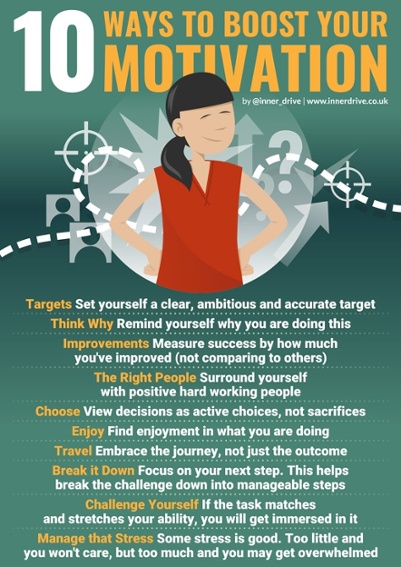
10 WAYS TO BOOST MOTIVATION

Ways To Boost Your Motivation

  1. Targets – Set yourself a clear, ambitious and accurate target
  2. Think Why – Remind yourself why you are doing this
  3. Improvements – Measure success by how much you’ve improved (not comparing to others)
  4. The Right People – Surround yourself with positive hard working people
  5. Choose – View decisions as active choices, not sacrifices
  6. Enjoy – Find enjoyment in what you are doing
  7. Travel – Embrace the journey, not just the outcome
  8. Break it Down – Focus on your next step. This helps break the challenge down into manageable steps
  9. Challenge Yourself – If the task matches and stretches your ability, you will get immersed in it
  10. Manage that Stress – Some stress is good. Too little and you won’t care, but too much and you may get overwhelmed

Filed Under: Professional Development

Build a Support Crew

February 19, 2018 by

Coaching is a difficult career. You should not try to do it alone. Build yourself a network of  support to help. This support crew can help you be more successful and stay in the profession longer.

This article and other helpful coaching tools can be found at Coach Dawn Writes

By Dawn Redd-Kelly, Head Volleyball Coach at Beloit College.

I think most of us know that we shouldn’t operate in a silo, but that ends up happening a lot.  As I’m sure won’t surprise you since I write quite a bit about coaching, I try to fight that tide in our department.

Coaching is hard work, yet addictive. Exhilarating, yet soul crushing. Discouraging, yet hopeful.  It’s this odd confluence of contradictory actions and emotions…it’s hard to go it alone.  But yet, we try.  I don’t know if it’s because a coach is new so they don’t want to seem as if they lack knowledge.  Or maybe it’s a seasoned coach who doesn’t want to look as if they don’t have all the answers.

My advice? Stop it.  We need a crew of people who have our backs.

What should that crew look like?

Seasoned coach:  It’s nice to bounce ideas off of other coaches who’ve been in the game for a while.  I will talk to any coach of any sport to pick their brains.  I always learn something that will help me become better at what I do.

New coach:  Look, I’m hesitant to say that I’m an “old” (use air quotes) coach, but I’ve been doing this for a while.  A few years ago, I went in to talk to a young assistant football coach and said, “So my players are always on this thing called Snap Chat (I’m sure I said it with a question mark)…do you know what that is?”.  After he stopped laughing, he explained and I learned.

Coach in another sport:  As you can see from those examples, I’m a huge fan of reaching outside my immediate circle of volleyball coaches.  My first year as a head coach, the men’s basketball coach at that school took time to sit down with me whenever I had questions…this man was amazing!  The way our team handles scouting reports is still based on his influence all of those years ago.

People who can help us:  Having folks higher up on the food chain who will fight for us is important.  Cultivate relationships with your boss, your boss’s boss, and anyone on campus who will champion your program and the positive impact of your team.

You don’t have to go it alone…you shouldn’t.  Find your crew!


Filed Under: Professional Development

  • « Previous Page
  • 1
  • …
  • 3
  • 4
  • 5
  • 6
  • 7
  • …
  • 24
  • Next Page »

© Copyright 2026 Athletic Performance Toolbox

Design by BuzzworthyBasketballMarketing.com

Privacy Policy