Athletic Directors Toolbox

  • Home
  • Leadership
  • Mental Toughness
    • Mental Skills
  • Motivation
  • Professional Development
  • Program Building
  • Sports Performance
  • Team Building

Thoughts on Extending Your Coaching Career

May 31, 2017 by

This post came from Bob Starkey’s (Longtime D1 Assistant Coach–currently at Texas A & M) Basketball Coaching Blog, hoopthoughts.blogspot.com.

Editor’s Note from Brian: I believe that this post has lessons for both Head and Assistant Coaches of all sports.

Last night I was talking to a colleague about our profession.  At times it can certainly seem like a roller coaster.  He wanted to know what the key was for having an extended career in coaching.  I was reminded off a presentation I gave a few years back at the A Step Up Assistant Coaching Symposium.  The topic given to me by Felicia Hall Allen was “The Art of Extending Your Career.”

I opened with this:

THE GOAL IS NOT THE GOAL

“While I am assigned to talk to you about extending your career, I’m going to go a different direction saying that extending your career should not be the goal.  The goal is to become the best assistant coach you can become on a daily basis and an extended career will follow.”

I think the first thing we need to decide in coaching is what is our “Why.”  We must have an overriding purpose for coaching — it has to be the centerpiece of our culture and what we stand for.  For me, the growth of the student-athlete has to be #1 on the priority list.

“It doesn’t matter where you coach,  it matters why you coach.”
-Don Meyer

I spoke about studying Nick Saban and the philosophy he has in regard to the process.  The process is keeping focused on the task at hand — executing as well as you can with what directly lies in front of you at that very moment.   Coach Saban does not want his players looking at the scoreboard.  His belief is that the time and score have absolutely nothing to with the intensity and concentration you need to utilize on the very next play.

I believe the same is true with our careers.  If we are getting up in the morning thinking about extending our career or looking ahead at that next job than we are taking away energy that we need to utilizing on what is really important — today!  The absolute best way to move of the ladder as well as extend our career is to own and master that which has been given to us at this very moment.

One of the areas that I spoke about was Professionalism.  I firmly believe that ethical choices are a full-time job.  It must be character over victory.  Don’t let a short-term gain for a win be overshadowed by a poor choice you made to try and get an edge.

THE TRUE IMPORTANCE OF WINNING

Of course, our biggest obstacle is winning.  We are expected to win immediately and constantly.  And don’t get me wrong, winning is important as the following thought from Vince Lombardi points out:

“No leader, however great, can long continue unless he wins battles.  The battle decides all.”
–Vince Lombardi

It’s true.  If we want to continue to impact young people through coaching…if we want to have a positive contribution to our communities — we have to win — to keep our jobs.

I gave the example of a coach being hired at a BCS program and having a record of 38-47 after his first three years.  The last home game of his third season, he lost to his rival by 24 points.  He then went to his conference tournament and lost by 43!

I asked the coaches at the clinic “What do you think the athletic director did the next week?”

Of course, they all answered “Fire the coach.”

They were stunned when I told them the AD gave the coach an extension.  I then told them the AD was Duke’s Tom Butters and the coach was Mike Krzyzewski.

Those days are over.  The days when an administrator can see through the losses to see that a coach is doing the right things and building something.  I’ve heard Coach K speak at clinics and he even admits that if he were hired today and got off to the same start that he’d never see his fourth year.

Still, we can’t let winning be a conflict of interest.  We can’t be overly consumed or blinded so much in trying to win that we turn our head to discipline and our culture.  The best coaches are willing fight for the culture even if it might cost them a victory.

That’s not to say winning isn’t important.  Certainly we have to teach winning to our teams.  As a young student at Marshall University, the basketball coach at the time, the late Stu Aberdeen spoke about the importance of winning.  As he explained, when we are on the operating table fighting for our life, we better hope that the doctors and nurses have a strong desire to win.  Coach Aberdeen explained that should we ever be falsely accused in a court of law, that we better hope our attorney has driven to win.

As I mentioned earlier, ethical choices are a full time job — and I do believe there is a right way to win and a wrong way to win.  If you are a principled person that means a great deal.  I posed the question to the coaches at the symposium — “are you willing to lose your job?”  Do you believe so much in the principles of integrity that you would walk away from a job that did not share in your beliefs?

BE A CONTINUAL LEARNER

The second part of the process of staying in this business is becoming a continual learner.  There must be a fire within to constantly be seeking knowledge to help you grow as a person and a teacher.

My suggestion to the coaches in the audience was to become an expert at something in your sport.  Pick something and learn it at the highest level.  I think it is always important to be a good recruiter but don’t be labeled as such because you don’t excel in other areas.

Today there are so many clinics to attend: Coaching U, Nike, PGC/Glazier.  There are tons of great blogs and Youtube loaded with information.  Have you attended a practice session of another coach? If not, you are missing out on some of the game’s best teachers.

One other factor in being a continual learner today is the not just accept but to embrace technology.  Whether it’s social media, apps for our phones and iPads or every improving methods of watching and breaking down video — it’s all there in front of us to help us improve.

FIND BALANCE

The next part of extending a career is to find balance.  I spend a great deal of time in my office — always have and always will.  But I find a way to incorporate my wife with our program.  She has always been a big part of our culture.  Whether it’s having the team over to decorate our Christmas tree, throwing a Mardi Gras party in February or just having them over for an occasional home cooked meal, Sherie has always been active in helping us serve our student-athletes.

It’s also important to plan family time.  Schedule time for your spouse and children throughout the season — and honor those commitments.  I learned most of this the hard way.  I once coached eight consecutive summers without a vacation.  I stayed up all night in the office two nights a week during the season watching video and getting scouting reports ready.  Then my wife was diagnosed with breast cancer!  It was an amazing paradigm shift for me and give me instant perspective.

Coach Don Meyer also talking about having “your time,” where it is just you.  It can be a time of meditation or reflection.  For me, I like to do it early in the morning while everyone is still asleep.  I can catch up on some reading or spend some time writing in my journal.

Yet another example of helping you with balance is creating a circle of influence.  A handful of people that your believe in and trust.  Most importantly, these people need to be someone that love you enough to tell you the truth. Someone that can tell you you’re full of crap when you are.  Some can be coaches but it’s always good to have some non-coaches in your circle.

TAKE CHARGE OF YOUR FINANCES

Part 4 of an extended career is the handling of your finances.  I shared with the coaches, and especially tried to get through to the younger ones that my biggest regret in coaching wasn’t a decision on the floor but it was not getting involved with a financial planner early in my career.  I have had one the past 20 years and the results (and security) are amazing!  Many young coaches don’t think they make enough money to work with a planner — that’s actually all the more reason you should.  One of the first things that Kay Martin of Ameriprise did was talk to me about short-term and long-term goals.  Part of that process was to create an emergency fund that I would pay into gradually to where we would have three months worth of salary to live on should anything happen.  Well, we have far more than three months now and its a great feeling to have that type of security — not just for me but for my family.

I also have a special tax accountant that understands my profession and helps to keep that organized and more importantly, helps me maximize all of the possible exemptions and write offs available to me.

“You must gain control of your money or the lack of it will forever control you.”
-Dave Ramsey

BE FLEXIBLE

Next on the list of theories for having a long career is your ability to have flexibility.  It is a game, no a world, that is constantly evolving and changing. As assistant coaches we have to adjust to changes on our staff…we tend to change jobs a couple of times we must adjust to head coaches…we must adjust to administration…we must adjust to the times.  The best way to adjust is to stay open minded — be a good communicator (which means a lot of listening as an assistant coach).

We must also adjust to the players.  This does not mean give in and allow the players to dictate policy.  But I firmly believe every player has a story and it is our job as coaches to learn that story.  Our ability to know them at a deeper level is critical for us to help them.  At UCF, we utilized Bill Rogers (who worked with Pat Summitt’s Lady Vols along with some professional teams) in order to learn about their personalities.  What was their leadership potential? What were the primary motivators for each individual?  How did they best learn — were they audio, visual or physical learners?  And then we adjust how we teach to meet them in the middle, where they can best be taught.

BE A PROBLEM SOLVER

 Whether at clinics, via email or phone conversations, I often get the question “what are the attributes for being a successful coach?”  There are several in my opinion, most of them are obvious.  But one that is critically important is that you must be a problem solver.  Coaching is about solving problems.

Not enough resources? Solve it.
Not enough post players or shooters? Solve it.
Lacking in facilities? Solve it.
Team chemistry problems? Solve it.

I’m not sure that there is not at least one minor problem per day in coaching — but you have to solve it.  Solving problems to me begins with attitude.  Working for Coach Dale Brown I learned that we were not to use the word “problem” but we were to use the word “opportunity.”  Coach Brown would tell us not to come in his office with a problem unless we were ready to offer a solution.  When people ask me what made Coach Brown so successful, again there are several reasons.  But one was he was a solution-oriented person when it came to problems.  He would amaze me with his attitude — almost excited that a problem had arisen because he loves the challenge of defeating it.

HAVE A SYSTEM OF ORGANIZATION

The final area I touched on was to become organized and primarily I was talking about improving your ability to document everything.  All conversations I have I follow up with the person I was speaking to with a short email of bullet points.  I do this with my players as well.  If I meet with a player to go over video, we both take notes and I email them to her.  Of course discussions of behavior — both positive and negative — are followed up with an email.

I’m a big believer in writing handwritten notes — even with all the technology today.  I love to write a handwritten note to a player and stick it in her locker.  I also screen shot text messages — positive and negative with players for my files.  I want as complete a written file on dealings with players, coaches, administrators, media and anyone else on the professional level.

We live in a time where you need to have your bases covered.

The final suggestion for extending your career?  Enjoy the ride! Embrace the grind — even the problem solving.  The best coaches I’ve been around get a rise out of solving a problem.  You must be passionate about what you do but you still need a plan — the role of an assistant coach is never easy but it is important.  Accept that role and challenge yourself to be the very best your can be.
Filed Under: Professional Development

Know Your Coaching Personality

May 23, 2017 by

This article and other helpful coaching tools can be found at Coach Dawn Writes

By Dawn Redd-Kelly, Head Volleyball Coach at Beloit College.

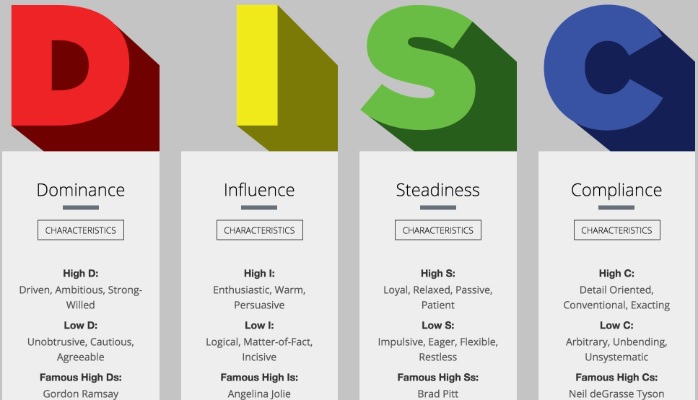
I think personality assessment should be a must for every team. Why? Because I think the cause of most conflict is expecting others to act like you do. I’d written before about the DiSC assessment I use, focusing on your team’s interactions with one another. Now I want to talk about coach-player interaction. Even though most people are a mixture of more than one letter type, see if you can find your top one or two personality types here. I believe it will help you as you work with your student-athletes.

The 4 DiSC personality types and how they impact your coaching style

D’s are dominant and like to be in charge. I’d hazard a guess that a lot of coaches are D’s. On the positive side, D’s enjoy solving problems and trust their ability to produce results. At their best, D’s can mobilize teams to solve a problem or achieve a goal. That sounds awesome right? As Newton said though, for every action there is an equal and opposite reaction. D’s can be blunt to the point of being rude and may make rash and reckless decisions. At their worst, D’s can be bullies, loud mouths, and tyrants.

What to do: Understand that not everyone thinks as quickly as you do…give them time to mull things over. D’s could do well to build bridges and relationships rather than expecting people to comply just because they say so. I mean, your team will comply because you’re the boss. But if you want your team to play for you and not in spite of you, D’s should see the value of cooperation.

I’s are influential and the life of the party. These are your extroverted folks who love to be around people. I’s are charming, optimistic, and outgoing…those we’d call a “people person”. At their best, I’s can be inspirational and communicate a vision or goal in a manner that motivates others to work toward it. I’s see the best in others and help them to believe in their abilities. Sounds like an awesome coach, huh? On the other side of the coin, I’s dislike details and can seem scattered. I’s can sometimes lack follow-through, rarely finishing what they begin…they overpromise and underdeliver.

What to do: Understand that you can get folks super fired up with your words…so that means that you’ve got to deliver on those promises. You don’t want to have a group of ten freshmen who you told would be starters…and your sport only starts five! I’s should try to listen more and talk less.

S’s are the steady Eddy’s out there. S’s are loyal, friendly, and supportive…they are team players. At their best, S’s can calm tensions and stabilize unsettled situations. S’s work hard to create stable and harmonious environments. Does this sound like you, Coach? Well, on the flip side, S’s are too hard on themselves and take criticism other their work very personally. Creatures of habit, S’s enjoy their daily routines and are resistant to change.

What to do: Understand that flexibility is the name of the game. It’s great that S’s will have a routine and a to-do list prepared for each day…you’ve just got to be prepared for things to go sideways every now and then. One of your players might get sick (on the day where she’s a big part of your practice plan!) or it may rain when you were planning on taking your team outside. S’s can have their beloved plans…just be willing to adjust it.

C’s are conscientious and careful. If you’re a C, you like to be right and are a stickler for details. You have very high standards for yourself…and those around you. Where I’s are outgoing and boisterous, C’s are quiet, reserved, and business-like. C’s are fair and objective and will always maintain high standards, even when asked to compromise. That’s pretty good, right? At their worst, C’s can get bogged down in details…some would call them a nit picker. C’s prefer to work alone and need to analyze all available options before making a decision.

What to do: C’s should understand that some decisions have a timeline and need quick action. Your assistants understand that you’ve charted stats for all practices during the season and the numbers say that you’ve got the right lineup out there. But right now it’s not working and you’ve got to make a change. C’s are cautious by nature, so you should surround yourself with folks who are more adventurous.

Each season, we try to create team chemistry among our athletes and help them to get to know one another, but it’s just as important that the coach knows their personality type…and how it’ll interact with each player.

source


Filed Under: Professional Development

Self Evaluation

May 6, 2017 by


This article was provided by Coaches Network

By Mike Davenport

If you’re like most coaches, the end of each season is followed by a performance review. Your supervisor will typically look at the win-loss record, complaints or problems that arose, your ability to stay within budget, and if you reached preseason goals—all important stuff.

But often those postseason evaluations don’t get at the heart of the matter: Are you thriving as a coach or merely surviving? Are you connecting with your athletes and making them better? Or are your daily frustrations keeping you up at night?

These are the types of questions we need to ask ourselves every once in a while as coaches.  After coaching and working with coaches for more than 35 years, I cannot express how strongly I believe in the importance of periodically taking a time-out to do a self-review. Our competitive drive can sometimes get in the way of being honest with ourselves.

I have created a list of nine questions for you to answer that will give you a deeper insight into the job you are doing as a coach.  The first five questions are presented below.  The remaining four questions will be presented in next week’s edition of the “New World of Coaching.”  Considering these questions will allow you to take a step back from the day-to-day grind, so you can take a step forward in your career.

Do I talk with my boss?

Regardless of the level you coach at, there is a person who is your supervisor, usually an athletic director. What is your relationship with this person like? Is it based on trust or obligation? Are the conversations you have with your boss supportive and positive, or negative and critical? Or do you ignore each other most of the time?

You may not have thought about it before, but your relationship with your supervisor is a critical factor in keeping your job and improving as a coach. For example,  let’s say you have an argument with an athlete’s parent. You are sure the parent is in the wrong and you are in the right. If you’ve developed a good relationship with your athletic director, he or she will likely have your back and help you through it. But without that support, you may have a crisis that pushes your coaching career several steps back—regardless of how well you handle the situation.

Maybe you feel like you don’t want or need help from your supervisor. Know this: a big part of athletic directors’ jobs is to manage coaches, and they often have insights into ways any coach can improve. Your boss might have a big-picture perspective you can’t see or understand unless you talk to each other.

The relationship with your boss doesn’t need to be based in friendship, but you do want him or her to like you. It’s human nature to help someone you like, and it’s common for a supervisor to go the extra mile for an employee when there’s a positive relationship. A healthy partnership of mutual respect can lead to job advancement, and provides you with an important advocate in your corner.

How do I view my athletes?

Positive rapport with athletes means you can lead them to greatness, while discord may be a significant source of stress. If there are conflicts between you and your team, it may be due to the way you view your athletes.

For example, are there times when you don’t care all that much about them? Do you have moments when you feel the athletes are solely to blame for the team losing? Perhaps you only see them as a means to advance your career.

If you find yourself viewing the athletes as objects, it’s likely that you are withdrawing from the critical athlete-coach relationship. That could have significant negative impact on your job performance. It is often a sign of stress, overwork, and possibly burnout.

If you find yourself in this boat—not interested in answering your athletes’ questions and not caring enough to ask them about their lives away from the sport—one solution is to take some time away. As the saying goes, “Absence makes the heart grow fonder.” Absence can also help you rediscover what kind of coach you really want to be.

Am I getting into the “flow” at practice?

How often do you become fully immersed in practice? I mean totally engaged—so deeply that you need to be reminded when practice is over. I’m not talking about contests. It is easy to get absorbed in the excitement of a competition. Coaches spend most of their time in practices, and they can morph into a monotonous grind.

In Flow in Sport, Susan Jackson and Mihaly Csikszentmihalyi write about a phenomenon called “flow.” They characterize it as, “a state of consciousness where one becomes totally absorbed in what one is doing, to the exclusion of all other thoughts and emotions.” Flow is a harmonious experience, an immersion, leaving the coach feeling that something special has happened.

A sign that you’re in a flow state is forgetting the time. Practice starts, and two hours    go by without you once looking at your watch or thinking, “How much longer?”

Flow is important because it indicates you have achieved a balance between the challenges you face and the skills you have to handle those challenges. When there is a positive challenge-skills balance, deep immersion can happen. When the balance is negative, flow will be elusive.

Am I taking care of myself? 

It is not uncommon for coaches, who focus so much on the conditioning of their athletes, to neglect their own physical condition. Being on the road and constantly feeling the pressure to succeed can derail even the most well-intentioned health goals.

But you must make yourself a priority. Here are two big reasons why: your team is watching, and your health is at stake. The bonus is that taking care of yourself reduces stress, which can help you perform your job better.

This means making time to exercise and eat right, as well as handle any mental health issues you may have. For example, if you easily become angry with your athletes and don’t always use your passion in a positive way, it’s critical to work on anger management with a counselor.

Do I have support, socially?

When you map out your day, do you schedule time for socializing? We are so busy and caught up in the next practice and contest, we often believe we can’t afford to shoot the breeze with friends or peers. But, in reality, we all need to socialize.

Research suggests a strong connection between lack of social support and burnout for coaches. One study found that the stronger the level of social support a coach has, the better he or she will be able to reduce stress.

Social support is essential at particularly tough times. Having positive people rally around you during a down season or after a big loss can resupply a coach’s mental reserves. And that is crucial to staying upbeat for the athletes.


Note: This story is adapted from an article that was published in Coaching Management magazine.  Click here to read the story.


Mike Davenport, EhD, is Director of Rowing, Head Coach of Women’s Rowing, and Assistant to the Athletic Director for Professional Development and Compliance at Washington College.  Coaching for more than 35 years, he has worked on the staff of several national and Olympic rowing teams and writes about professional sustainability for coaches at www.coachingsportstoday.com.

Filed Under: Professional Development

9 Requirements of Success

April 26, 2017 by

By Dawn Redd-Kelly, Head Volleyball Coach at Beloit College.

This article and other helpful coaching tools can be found at Coach Dawn Writes

Sometimes social media gets a bad rap for being a time sucker, which it can be. But most times, I find good stuff there.  Whether it be a good leadership article, a timely motivational quote, or (like this time) a great tweet from team building expert Jeff Janssen.

How can we be successful coaches?  Or maybe a better way to put it is how can we measure, at the end of the season or school year, that we’ve been successful?  Janssen has some ideas.

9 requirements of success:

  1. Purpose: Why do you coach? As I mentioned in my another post, loving the sport isn’t your purpose (it’s your passion)…why do you coach? Why do you have player meetings?  And stress about your practice plans? Why do you watch so much film? What is my why?  I believe that athletics creates better humans (I’m biased, I know) and I believe us coaches equip our athletes with the tools they’ll need to make the world a better place and I’m honored to have a part in it.
  2. Passion: Do you love your sport? Is there a fire in your bones for it?  Then that will translate over to your players and they’ll be infected by your zeal.
  3. Perspiration: I feel like this is obvious, but you should be working hard, Coach. Like, really hard.  You’ve got to work hard to create relationships with your players.  You’ve got to work hard to know the different personalities on your team and how to motivate them.  You’ve got to work hard to keep your team chemistry balanced.
  4. Plan: How will you handle the inevitable quarrels between teammates? How will you handle having to bench a starter?  How will you prepare your team to be clutch at the end of a competition?  How will you make sure they’re ready for post-season?
  5. Patience: Can you wait for your “potential player” to bloom? Can you try different ways of teaching your leaders how to lead? Can you trust the process?
  6. Persistence: I think it’s a great idea to write down your coaching goals. That way, when you hit the inevitable speed bump, you won’t be moved.
  7. People: Coaches don’t succeed alone. We need mentors and assistants.  We need recruits to buy into what we’re saying.  We need families who support the coaching staff in the background.  We need an administration who’ll advocate for us.
  8. Principles: Do you want to be a win-at-all-costs coach? Do you want to sacrifice your values in order to win more games?  I think a coach’s goal should be to win with honor.
  9. Perspective: My guess is our definition of success will change as we grow as coaches, as we gain a bit more life experience, and as we’re humbled by our profession.

It’s hard to feel successful.  It requires a lot of work.  Let’s get ready to put the effort in so that we can be whatever our version of success looks like!

And, here is a second post from Coach Dawn…

Creating Brave Players

Fear is the reason today is like yesterday.”—Leadership Freak

That quotation sucker punched me!  Our goal as coaches is to create an atmosphere where our athletes feel comfortable taking risks and are brave in the face of fear.  Those who aren’t involved in athletics may scoff, but the fear is real when the bases are loaded and coach doesn’t have another pitcher warming up.  The fear is real when it’s game point and the server is walking back to the endline in volleyball.  And the fear is real when the fourth runner in a relay receives the baton at the same time as an opponent.

Here are three things we can do right now to crush fear on our teams:

  1. Stop saying crunch time is the same as the beginning of a competition. One of the reasons we believe certain players are “clutch” is that they execute late in the game, in pressure filled situations.  Yet we, as coaches, continue to say things like: the scoreboard doesn’t matter.  Yet…it does! Our players are watching time tick away and their heartrates are increasing.  Our players are watching the opponent create a bigger and bigger gap in the score…and it’s starting to feel like the game is getting away from them.  I think it’s better to acknowledge that pressure and not be afraid of it, but welcome it and give your athletes tools to handle what the scoreboard is saying to them.
  2. Celebrate effort. Each day we have an opportunity to fill our athlete’s reserves with success.  I know Yoda says, “do or do not, there is no try”, but I believe in applauding the process, not necessarily the result.  So if a player hustles to close a block or dig a ball—even if they aren’t successful in their attempt—I’m going to get fired up about the effort.  It’s risky to go all out (what if they fail?), so we need to cheer those players who are willing to flop…because they believe they’ll eventually succeed.
  3. Be intentional about making our yesterdays. Today is tomorrow’s yesterday.  What are you going to do today to put your athletes in a position to draw on their bravery reserves?  Decide what your focus of the day/week/month is going to be and make it happen!  If your focus is tangible (we need to convert more turnovers into points), then devote the majority of practice time to it.  If your focus is intangible (your team needs to be teamier), then design drills that bring that skill to the forefront.

I can’t think of a sport that doesn’t require its athletes to be willing to take risks. Those risks could be failing in front of their friends and family, it could be letting their teammates down…but it could also be succeeding when they weren’t entirely confident they would.  There’s a saying that says, “fortune favors the brave”.  Sure, our athletes could fail, but they certainly won’t succeed if they’re unwilling to be brave and take a risk.

Filed Under: Professional Development

5 Key Ways to Effectively Communicate with Sport Parents

April 12, 2017 by

Greg Winkler
Fond du Lac High School, WI.
Head Boys and Girls Soccer Coach
Assistant Athletic Director

Coach Winkler starts his presentation explaining the dropout rate for High School coaches and then discusses the reasons why with parents being the main reason.

Coach shares his thoughts on what the model sport parent should be, must coach the parents.

Coach shares his pre-season Parent meeting and how it is structured, shares his coaching philosophy, playing time, winning / losing and competing.

He also shares his points on how the chain of command works first
1. Player to Coach,
2. Player to Head Coach,
3. Player / Parent to Coach,
3. Player / Parent to Head Coach,
4. Player / Parent to Principal,
5. Player / Parent to Superintendent.

Coach explains that the chain of command must always start with rule 1.

This presentation is an excellent presentation for organizing any program.

Filed Under: Professional Development

  • « Previous Page
  • 1
  • …
  • 11
  • 12
  • 13
  • 14
  • 15
  • …
  • 24
  • Next Page »

© Copyright 2026 Athletic Performance Toolbox

Design by BuzzworthyBasketballMarketing.com

Privacy Policy