Athletic Directors Toolbox

  • Home
  • Leadership
  • Mental Toughness
    • Mental Skills
  • Motivation
  • Professional Development
  • Program Building
  • Sports Performance
  • Team Building

How to Promote Your Athletic Program with Hudl

August 24, 2021 by

Coaches at all levels of competition rely on Hudl to develop their athletes, grow their team and promote their program. Here are ways you can use Hudl to share your team’s best moments and rally the community.


Show off with a team profile.
Every team gets a public profile page when they join Hudl that includes your team’s high­lights, the sea­son sched­ule and your ros­ter of ath­letes, with links to their indi­vid­ual pro­file and high­lights. Now all you need to do is customize your team profiles. Start by adding your school logo as the team profile picture. Once that’s saved, include a tagline to share the team’s philosophy with fans. We’ve seen quotes, hashtags, links to Twitter accounts, you name it.

Get your teams and fans hyped.
Highlight videos are a great way to pump up athletes and fans. Encourage your coaches to create a highlight from their last game to watch as a team. And if they have Hudl Assist, it’s easy to use the stats and reports they get back from our analysts to find highlight-worthy moments. With spot shadows, photos and the right kind of music, they’ll have no trouble rallying everyone together for a win.

Leave the game highlights to us.
Teams with Hudl Assist get access to detailed stats and reports, saving their coaches time to focus on developing their athletes and promoting their team. Hudl Assist teams also get auto-generated highlight reels of their team’s best plays based on their Assist stats. 

Note: Available for football, basketball, volleyball, soccer, lacrosse and ice hockey teams.

Celebrate the season.
Take time to remember each game’s best moments by creating season highlights. You (or your coaches) can add team photos or slides with season stats and athlete awards—whatever information is most important to your teams and fans.

Embed a highlight reel.
When you embed a highlight reel, all your fans have to do is click play. Create an athlete of the week series and embed their most recent highlight on your school’s website. Make your own version of SportsCenter Top 5 each week with team or athlete highlight reels. Or tweet the auto-generated highlight from your most recent win with #WinOfTheWeek. The possibilities are endless.

Share it out on social.
With the click of a button, you can share a highlight reel or the link to a team’s profile to Facebook or Twitter. Want to push it somewhere else? Copy the URL and paste it wherever you please—in an email, a text message, Instagram or your school’s athletic website.

Livestream your next game.
Don’t let bad weather, bumper-to-bumper traffic and late nights at the office stand in the way of your players’ biggest fans missing their games. Hudl Focus not only automatically records and uploads your film, but it also streams it so fans, family and friends never miss a home game. You can embed a stream directly on your school’s website or stream them to YouTube. And use Twitter to get your fans watching the livestream like this team did.
Filed Under: Program Building

The Power of an Athletic Department That Focuses on Culture, Relationships & the Extra Mile

July 6, 2021 by

Former coach and athletic director Cory McCarthy shares how focusing on three main priorities made a huge impact on New Mission High School — and how they can do the same for your school.

Basketball transformed my school, New Mission High School (Boston, Mass.). We were once an alternative education school with low student growth. Our basketball teams had jerseys with numbers made of tape. We had to take public transportation to the games. Practice was running two miles to a train station and back. Having gym time was about as impossible as shaving while skydiving.

But we had players who believed this chance to play was their opportunity to survive. I remember sitting in the back of a bus from Somerville fielding questions like, “Cory, you think I can make it? Can you tell us about college? Why you still here man? We’re terrible.” We weren’t talking about basketball, we were talking about life.

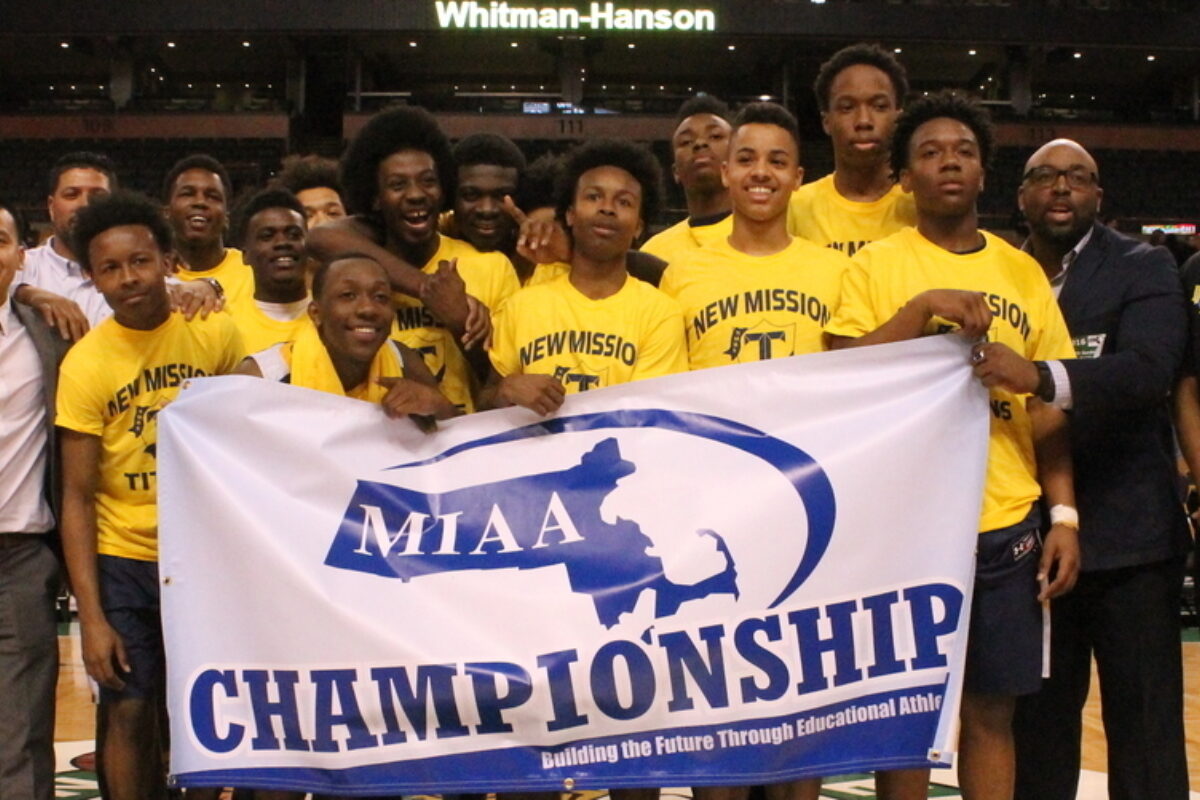
Two years later, that same team was in the state championship game with only six players, one just eight post-op from hernia surgery. Our small alternative education school with the taped jerseys won a state championship, and our entire school was there to witness it.

Two state championship teams in two years.

Another year later, we had attracted even more students and clinched another state championship. And finally, when a school on the other side of town closed, we got a gym of our own.

Because of sports, we cemented our identity. Because of sports, I began to see more parents at games and meetings. Coaches can easily see the inherent value of sports—our challenge is to get kids to believe in themselves, change their course and inspire others.

Throughout my years as a five-time state championship coach, I’ve learned there are three major components in building a program that will provide student-athletes the best experience and character development possible.

Culture

Not only do coaches need to do whatever it takes to help players believe in their own value to the team, they must also understand that it’s not always the game plan that wins the game—it’s the team’s identity and philosophy.

Think of culture as a loose ball. You gotta dive for it. My focus is on making sure my players handle the honorable variables of being an athlete, like time on task, engagement, random acts of kindness and, most importantly, the two “extras” that help you win in the classroom—extra credit and extra help.

There are so many things coaches can do to build a strong culture. I spent my first paycheck as a basketball coach on making 300 t-shirts with our team logo and mantra. I handed those out to anyone who would listen. Months later, many of our freshmen showed up to school with New Mission t-shirts already on their backs. These kids had never played for me, but they were already connected to our team culture. They were Titans.

My focus is on making sure my players handle the honorable variables of being an athlete.

Relationships

If you have no idea what your players’ home situations or backgrounds are, how can you expect to coach them? Player development is not exclusive to skills and drills anymore.

It’s the conversations that happen after practice. It’s the bus ride to or from games. It’s the impact a coach can have on a player in their most vulnerable moments. You don’t even have to talk—it’s more important to listen.

Relationships help players buy in. I always kept an identity chart of my players so I could help them understand the value of being their best self even when it was hard. Be the example—teach them how to show who they are by showing them who you are.

The Extra Mile

Coaching is a job where when you win, someone else gets the credit, and when you lose, “It’s on you bruh.” It’s full of ups and downs. But when all else fails, trust in your players.

As coaches, we need to remind ourselves of the impact going the extra mile can have. It matters if I drive the 20 miles to take a player to a college visit or show up to a parent meeting. It might be the difference between life or death if I don’t check up on a kid in the summer to make sure drugs or violence hasn’t swallowed them whole.

How to Get Started

  1. Build relationships with all of your players.
  2. Have the NCAA qualifying conversation with them in 9th grade, and use the guidelines to help them in their academics.
  3. Create an environment that reflects success and family. Develop mantras, post quotes about your program philosophy or create incentives—whatever it takes to help them understand that who they are on the court is who they are off of it.
  4. Be intentional about your goals. Every step forward is a step closer to a championship.

Everyone seems to hate the phrase, “Ball is life.” But from my experience, it is.

Filed Under: Program Building

How to Boost Team Morale Off the Court

July 6, 2021 by

Being a coach is much more than teaching proper volleyball techniques. See how to stay connected and show compassion to players during uncertain times.

When their playing days are over, athletes aren’t going to remember the box scores or hitting percentages. They’ll recognize who was there for them during the most vulnerable times of their lives. Here are a few tips for keeping team morale high from a distance.

Check in on your team

Your players’ health and well-being should always be a priority, but especially in times of crisis and isolation. Set a reminder in your calendar to reach out to them. Ask how they’re doing physically and mentally and let them know how important they are to you.

Avoid phrases like “you’re a hard worker” or “you’ve been a great asset.” Instead, choose affirmations that are specific to who they are and the unique impact they have on your team. “I love the way you cheer for your teammates,” and “I appreciate how you always take the extra time to shag balls between drills,” are great examples.

Create space for socializing

While virtual position training and at-home workouts are important, your players are probably missing the casual conversations and team time. Facilitate these by hosting coffee or tea breaks for your players to get together and talk about life outside of volleyball.

Have fun together

By now, you’ve probably seen the team pepper challenge on platforms like YouTube, Twitter and Instagram. But there are so many other ways to keep your team connected and break up the monotony. At VCNebraska, teams made their own versions of popular songs and got to know each other better through virtual talent shows.

You can also challenge players to come up with the best trick shot. Or host a Netflix watch party. No matter what you decide, just remember that teams with chemistry off the court, perform better on it.

Send a care package

If your budget allows, send players something to let them know you’re thinking about them. Tailor it to each individual’s interests and hobbies, or keep it general with a mix of fun and useful trinkets. Items like hand sanitizer (if you can find it), masks, snacks, scrunchies and card games are all great contenders.

Or send a handwritten note to let them know you care.

“I sent each of my players a handwritten note to not only let them know that I was thinking of them, but to encourage them as they were about to head into their finals week. Each note made them feel special and they know that I care for them as more than just volleyball players,” said Ruth McGolpin, head volleyball coach at Westmont College (Calif.).

Celebrate your players

Last but not least, keep everyone focused on the positive by celebrating wins at the team and individual level. Create highlights of your team’s best moments or make one for each player to applaud their successes. This might sound time-consuming, but it’s a breeze with Hudl’s highlight tools.

Not all celebrations are about in-game moments. You can also throw a virtual party or award night to recognize your team. If you have the budget, send pizza or another treat to your players’ homes so it feels like an end-of-season banquet. Create the awards you normally would and play that highlight reel you made. Most importantly, enjoy being together and give your players a small sense of normalcy.


Filed Under: Program Building

AD Insights: Everyone Is a Student of the Game

June 17, 2021 by

Learn how an independent college prep school in Tennessee used Hudl to teach athletes and parents the value of video analysis.


Things at McCallie work a little differently. As an independent school, they have more opportunities than usual to give their students the very best, including access to premier academic curriculum and superior athletic programs. Do-it-all coach, teacher and administrator Adam Tolar knew Hudl could help them expand this excellence.

McCallie was already using Hudl, but only in an a la carte capacity. “We were recording everything,” Tolar said, “from weightlifting sessions to gameplay.” But having the entire athletic department on Hudl would help McCallie make the most of the suite of products, including benefitting from unlimited storage. Tolar went to the school board to champion the athletic department package. It has since transformed McCallie’s athletic potential.
 

The ‘Hudl’ Guy

Tolar is now known as the “Hudl guy.” At first, his main responsibility was assisting with training coaches new to Hudl. Their upgrade into a full department package came with customized education for coaches that Tolar helped organize. This training enabled coaches to apply what they learned into game plans.

Now, almost every sport at McCallie has a coach educated in Hudl’s products. But Tolar still thinks they haven’t unlocked its full capacity. He’s excited about the ability to get better.

Accountability is McCallie’s mantra, and it works both ways for coaches and athletes. Hudl’s text effects feature allows Tolar to pose questions directly on film clips. If an athlete doesn’t answer a question, he knows they haven’t completed their assignment. Conversations through video ensure athletes found and understood corrections so they could make them in practices and games.

Hudl has also created a growth pipeline for McCallie’s young athletes. “Middle school athletes don’t know how to watch film,” said Tolar. With their athletic department package, McCallie could begin the film education process at the middle school level.

The younger teams can access practice film to help them learn proper techniques. With Hudl, they’ll understand earlier on what they need to do to reach the varsity level.


You Never Stop Learning

Teaching is a cornerstone for Hudl with the entire McCallie sports community. “It’s brought players and parents into the fold, and created transparency,” said Tolar.

At the start of term, Tolar meets with parents to educate them on Hudl’s features, and the right things to look out for. That way they can cheer on their athlete from afar and play a role in their development.

Hudl’s easy-to-use features help hold athletes accountable for their actions. They can watch, analyze and use footage to focus on the important aspects of their game. Products at Hudl have made McCallie athletes true students of the game.

The Right Way

For Tolar, Hudl provides peace of mind and confidence. He knows their products offer McCallie’s athletic programs the best. And with superior customer service, he has a whole entire team of assistants ready to support him.

In a world where the standard is changing, and learning is crucial to success, let Hudl help your school learn the right way.

Filed Under: Program Building

Is Building a Relationship with Your Athletes on Your Preseason Checklist?

June 17, 2021 by

Long story short, it should be. Head volleyball coach Lindsay Peterson explains the structure she uses to get to know her players.


Here we go again. The high school volleyball season is upon us. Like every good coach, you’ve meticulously planned out your season…right? Actually, if this is you, then I’m impressed—and also jealous!

As I began laying things out, getting my thoughts and ideas together for the next year, I’m reminded of one of the most important things I have to plan for: getting to know my players and building these relationships.

Let me stress to you that, even though I know this is very important for our players, there’s always a part of me that’s wondering if our time would be better spent in the gym, getting ready for our first match. But I also know building a team begins with building bonds between players and coaches.

So I thought I’d share with you something I’ve found helpful over the years, something I make sure to do every year with every player on my team.
 

Set up role meetings

 
I like to do these individually with my players. I sit each one of them down and ask them what role they see for themselves for the year.
 

Do these several times a year

 
My cadence is usually three meetings a year, but I meet with some players even more. I like to hold them at the beginning, somewhere in the middle, and at the end of our season. That way it’s easy for them to see how they’ve changed and grown over the year. We look at what we wrote down last time and whether it looks the same or has changed dramatically.

Here’s an example

 
This is a role meeting my assistant and I had with a former player. (Her name has been changed.)

——————————————–

Name: Leanne

Position: Rightside

Name three positive things about yourself as a player:

  • See the court well
  • Defensive right side
  • Organized

Three downfalls you have as a player:

  • Impatient
  • Offense
  • Poor facial expression

Three things you want to improve before you graduate:

  • Stronger
  • Faster
  • Communication

Three things you’ll bring to the team:

  • Leadership
  • Energy
  • Calmness

Where do you see yourself in your position?

As a right side, second in line behind Emily

What do you need from us as coaches?

  • Feedback
  • Encouragement

——————————————–

My takeaways

Player’s mentality

It’s so interesting to sit with each kid and go over these questions with them. Like many of us, it’s hard for them to articulate their own positive impact. But when it comes to their downfalls, they seem to have a list a mile long!

Creating relationships

These questions enable us to have an open dialogue about where they see themselves, and more authentic conversations about where we, as coaches, see them.

Documentation

Writing down the details of these conversations has also been helpful when speaking with parents and players about playing time. An added bonus!


Filed Under: Program Building

  • « Previous Page
  • 1
  • 2
  • 3
  • 4
  • 5
  • …
  • 22
  • Next Page »

© Copyright 2026 Athletic Performance Toolbox

Design by BuzzworthyBasketballMarketing.com

Privacy Policy