Athletic Directors Toolbox

  • Home
  • Leadership
  • Mental Toughness
    • Mental Skills
  • Motivation
  • Professional Development
  • Program Building
  • Sports Performance
  • Team Building

Developing Inclusive Teams

December 1, 2021 by

This article was originally published on www.sidelineinteractive.com

This post is a summary of our key takeaways from Volume 2 Episode #97 of The Educational AD Podcast, hosted by retired high school Athletic Director Jake Von Scherrer.  This summary of the podcast episode is posted with permission of Coach Von Scherrer.

You can watch the 27 minute interview on YouTube at this link:  Deepjyot Sidhu Interview

Deepjyot Sidhu is the Director of Equity & Inclusion at the Global Online Academy. She is also a former cross country coach.  The discussion today includes dome practical steps that we can take as coaches to be aware of the differences

Whose voices do you hear in your head when you are working with coaches, teachers, students, athletes, or parents?

Those voices are the sum of what you have heard from your mentors–from both your experience as a student athlete and as an adult educator.   They are the what is still with you from how your parents, teachers, coaches, and other leaders from throughout your life who influenced you.

Regardless of our own personal programming and life experiences, we can decide to do our best to make every encounter a good one.  That doesn’t mean to make everything superficially pleasant.  It does mean that we can make our own choices as to how we act during all interactions both in our personal and professional lives.

Some of the athletes that we work with have far more athletic skill than we had.  Coaching is not only about imparting our knowledge to them, but rather thinking about each athlete individually, what they bring, how they are developing, how they are growing.

Equity and inclusion should be a priority for all coaches and athletic administration.  Making it a priority means developing and designing (or better year redesigning) systems, structures, and practices in the interest of equity and equitable experiences and outcomes for all kids.

Key questions that we all need to ask ourselves as individuals and as staffs collectively.  What does inclusion mean?  How do we design for equity?  In part, it means insuring that we focus on every kid as an individual and their individual athletic experience.  It means disrupting neutrality to bring intention to an environment that fosters a culture of belonging for all kids.

THREE Specific actions that ADs and coaches can take:

1) Start by reflecting on ourselves–who we are and what our experiences, where we grew up forms our perspective.  Starting with self is being aware that your athletes are experiencing things that you aren’t thinking about and are not even aware of. We need to be intentional about expanding our perspective and our lenses.  So that we are not inadvertently leaving anyone out

We have points of focus and points that are in our margins.  We need to be more aware of the margins of the lenses that we see the world through.  It will always be true that you will not have experienced everything that your athletes have experienced.  These experiences that your athletes have had or are having are not always physically apparent.

Here is an example that can be extrapolated to our own specific situation.  A coach or teacher has not had the experience or even taken the time to consider what it is like for one of their student athletes to have a close family member serving in the active military.  Because I have not experienced that, I don’t know what it feels like for one of my athletes who is experiencing that in their lives.

2) Prepare for the ongoing–We all know that team building is not a one-time thing that will last forever.  It requires ongoing attention and intentionality.  That same intentionality is required to be an ongoing equitable practitioner.

Consistently giving some sustained thought to questions such as: Who is new to our team that we haven’t designed structures and systems for to support them?  What can we do to ensure equity for them?

3) Prioritize the Impact You Want to Have–When the goal is to eradicate all inequities, it can be so overwhelming that we might want to give up before we get started.

Always remember that we don’t have to be perfect.   We are doing it for our athletes, so it is important to do as much and whatever we can.

When an athlete shows up to your team for the first practice or call out meeting, they are determining in their own mind if they do or don’t fit in with your group.  That conclusion they are reaching is based on their life experiences to a great extent.  That is why it is important that we consciously and deliberately work to empathize as much as we can.

As coaches and ADs what are we doing to promote belonging?

How do we do a better job of finding the balance of the old school wanting athlete’s to be tough and be aware and sensitive to the challenges that athletes are facing?  It starts by reframing what toughness, mental strength, and courage are.  It takes both of those to face up to and publicly admit what you are going through.

Knowing what the limit is and how to navigate that limit.

Pressures are increasing on young people in athletics and academics and that stress impacts areas of their lives such as sleep and motivation which allow them to be at their best.

We need to be more intentional about the circumstances we create for our athletes.  All while being focused on supporting athletes and less focused on forcing them to comply and to meet unreasonable and often unnecessary standards that don’t help with mental health or performance.

Athletes don’t perform in a vacuum at school or in practices or games–they bring their outside life with them every day.

What advice would Deep have for a new Athletic Director?   Have the agency to make every encounter a good one.  You do that by thinking about EVERY athlete, EVERY team, and EVERY coach.

If you are interested in contacting Deep for further information or discussion on the topic of inclusion, you can reach out to her on Twitter or at the Global Online website:

@deepjyot

www.globalonlineacademy.org

You can watch the entire interview by clicking the play link below
Filed Under: Program Building

AD Insights: Every Sport Gets The Royal Treatment

November 4, 2021 by


Every sport is on an equal playing field at this Texas high school, thanks to their Hudl Athletic Department Package.

As a former head football coach, Max Kattwinkel learned firsthand how Hudl Assist could be both a competitive advantage and a time-saver for a coaching staff.

“It’s very time-consuming to get film broken down,” he said. “[Hudl] cut our time in half as far as preparation.”

Assist was only the beginning. Now the athletic director at Lubbock Cooper ISD (Texas), Kattwinkel brought those benefits program-wide by upgrading to Hudl’s athletic department package.

“Football is king in Texas,” he said. “But we have a lot of other sports that deserve that same type of preparation, ability and efficiency.”

Two sports in particular have really blossomed while using the athletic department package under Kattwinkel’s watch. “Our soccer programs are in love with it as far as filming and preparation,” he said. Kattwinkel also mentioned baseball as a surprise beneficiary. “I wasn’t familiar with how they’d use it, but they’re raving about it and what it does for them.”

“Football is king in Texas. But we have a lot of other sports that deserve that same type of preparation, ability and efficiency.”

An Indoor and Outdoor Solution

Lubbock Cooper started using Focus Indoor last year and immediately saw the benefits. The hands-off nature and easy usability of the camera are embraced across the program. Coaches have especially loved the ability to record practices—having all the different phases of each practice on film is invaluable to them.

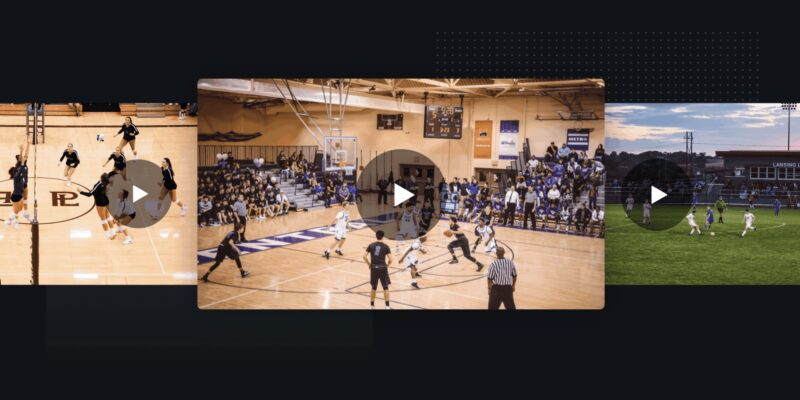
Kattwinkel is excited to bring the same capabilities outdoors. “Sign me up,” he said of Focus Outdoor, which Lubbock Cooper will install this year. With how much basketball and volleyball enjoyed the automatic filming of their practices and games, his decision to bring those capabilities to their outdoor sports was a no-brainer. “The ability to get all our sub-varsity games covered and livestream them as well is a huge, huge component for us,” said Kattwinkel.

https://www.coachestoolbox.net/wp-content/uploads/2021/11/Grow-Program-v2.mp4
Max Kattwinkel and other Texas athletic directors discuss how Hudl’s athletic department package has been key in helping them grow their programs.

Bringing Sports into the Community

Both Lubbock Cooper and the broader community have felt the impact of Hudl. During a challenging year filled with capacity restrictions and distancing measures, livestreaming events to the public was vital.

Lubbock Cooper broadcasts their games for free, giving fans both near and far the ability to tune in safely. “It’s been received very well,” Kattwinkel said.

Parents and athletes alike have also bought into Hudl’s recruiting tools. Many young athletes at Lubbock Cooper have intentions of playing at the next level, and Kattwinkel points to Hudl highlights as an important way to get them noticed. “It’s a good way to broadcast those kids—parents are very receptive to that.”

When talking to Kattwinkel, his vision for running the athletic department comes down to two things: Save time and be efficient. Hudl’s athletic department package has helped Lubbock Cooper do just that.

Ready to take your school’s athletics to the next level? With Hudl’s athletic department package, it’s easier than ever.

Learn more about our Athletic Department packages.

Filed Under: Program Building

Four New (and Successful) Ways to Fundraise

October 14, 2021 by


Most athletic departments need fundraisers to fill the gaps in the budget. Athletic director James Coffey shares some out-of-the-box ideas that have worked for him.


In my last blog, I discussed how booster groups can be the answer to a sports team’s fundraising problem. But even once you have a booster club, you still need to come up with successful ideas for fundraisers and events.

So in this blog, I’ll highlight some of the most profitable fundraisers I’ve been a part of in the last fifteen years. These are all large scale fundraisers that produced strong returns.

Sell a Locker

When you can tie the fundraiser to what you need the funds for, it only makes sense. We once needed to upgrade our boys’ and girls’ varsity locker rooms. The benches, flooring and lockers all needed replacing—we basically had to gut them.

We got quotes for the project and divided it by how many lockers we needed to install to get a locker price. Then we gave alumni the opportunity to “buy” a locker for $250, which included a nice plaque on the back of “their” locker.

Many donors put their name, the sports they played, and the years they attended the school. Some local businesses donated to have their business name on the plaque. Families with kids who played sports would get together and put their family names on it. We even had plaques in memory of former students and athletes.

It was a great way to renovate an existing area for our kids and honor the tradition of the town’s athletic department.

Raffle a Car

For this fundraiser, we were trying to raise $50,000 to pay for new stadium lights. Having a specific, simple goal is the key to a successful fundraiser.

We decided to get there by having student-athletes and community members sell $50 dollar raffle tickets for a new car. In this case, the dealer gave us the car under cost, but in return got great publicity for his dealership. And we got to keep all of the funds raised over that initial cost.

Now this was fairly easy for us to set up because the organizer had a friend who owned a car dealership. Remember to work your network for these sorts of fundraisers. You might be surprised by the big response you get!

Wrestlemania

This one was my favorite fundraiser while I attended high school, and while I was employed by my hometown school. Our special education department would rent a wrestling ring and put on “Wrestlemania” every two years. It was a big production, which took quite a bit of work, but they have raised thousands of dollars over the years.

Here’s how it worked: students could create tag teams of two, with personas, uniforms, the whole thing. There’d be 10 tag team wrestling matches, with students as wrestlers, managers, round card holders, etc. Teachers were the referees and ring announcers.

In the lead up to the event, the “wrestlers” would go down to the middle and elementary schools and sign autographs in their costumes. There’d be teams like “The Pizza Boys” and “The Dorks.” They’d have theme music and make a big production of it, which the little kids loved!

The biggest expense was the ring—the rest was just volunteer hours. Tickets were $10 to get in, and believe me, the gym would be packed.

At the end of the matches, there would be a “Royal Rumble,” which a student in special education always won. This wasn’t just a fundraiser, it was a community-wide event that everyone looked forward to.

The Great Reunion

This is exactly what it sounds like. All classes in school history got to be part of this reunion. Alumni could come alone, mingle with friends from town, or even organize with their class to rent several tables and hold their own class reunion at the event.

There’s a few logistics with this size of an event. A 50 x 50 tent would be rented and set up on our stadium field. The school board even approved a one-time allowance for liquor to be sold on school property, so beer and wine could be sold with dinner. We made it 21+ and had a Hawaiian theme when I was there. There were silent auctions, raffles and a live band.

We had hundreds of attendees, and even created sponsorship opportunities for local businesses. This event regularly brought in tens of thousands of dollars for co-curricular activities at my alma mater.

Make these ideas your own. Add your school or program’s touches to make these ideas work for you. And if you’re in need of a booster group to help support your fundraisers, here’s my earlier blog on how to set them up.


James Coffey attend­ed Endicott College in Beverly, MA where he got his bachelor’s and master’s degrees in Sport Management. He has spend the last fifteen years as an ath­let­ic direc­tor at three dif­fer­ent high schools. Coffey was named the Massachusetts Secondary School District A Athletic Director of the Year in 2012. He has also spoke about the pos­i­tive effects of social media on ath­let­ics at sev­er­al New England conferences.

Filed Under: Program Building

AD Insights: When It’s Not Too Good to Be True

September 17, 2021 by


When Don Kurth was first introduced to Hudl, he was dubious. “When things are too good to be true, they usually are,” he stated. After a year with an athletic department package, he’s singing a different tune. 

Expanding the Opportunity

Last year, technology use exploded. Every industry was affected by the power the internet gave consumers during a pandemic. With this change came a learning curve, especially for those who never had this digital connectivity before. 

This was the case for Brookfield Central High School’s athletic programs. Kurth needed to find a solution that would help all of his sports teams maximize their development, even when they couldn’t be on the field or court. That’s when he turned to Hudl. 

He was immediately impressed by the ease and reliability Hudl’s school-wide package provided. Though some sports had used Hudl before, this upgrade allowed new teams to experience the impact of video and data. 

As Kurth’s coaches adjusted to this new opportunity, their adoption accelerated. Anyone who used Hudl got more time back in their day—for teaching their players and personal time. It was a win-win scenario for continued development and work-life balance during a very hard year.

“People Were Watching”

Hudl also changed the game for Brookfield Central’s livestreaming. 

After upgrading to the athletic department package, Kurth was able to receive, set up and use his Focus cameras to stream games to a school YouTube channel in no time. Since Nov. 1st, 2020, there have been over 100,000 views. In short, “People were watching,” Kurth said. 

Even with the school’s internet interruptions, the benefits of livestreaming were extraordinary. It scaled the reach of their teams’ games, providing access to all community members for both home and away contests. 

Not only did the community appreciate the new video service, they now expected it. Livestreaming will continue at Brookfield Central, even as in-person attendances begins to return. And as Kurth looks to meet these fan goals, he knows Hudl will be a staple of Brookfield-Central’s athletic system.

New and Next 

In fact, coaches are already discovering how Hudl’s products complement other technologies. Take Brookfield Central’s women’s soccer coach Daniel Makal, who combined Focus camera footage with GPS wearables. This enabled athletes to recognize how their on-field movements could be more efficient.   

So now what does Kurth say about these products? “This is no longer an old guy using VHS,” he laughed. He’s right. It’s an army of resources to help programs, athletes and coaches adapt, innovate and connect. If those are your goals, learn how you can bring Hudl to your athletic department today. 

Learn more about Hudl Athletic Department packages.

Filed Under: Program Building

A Flawed Reality: When it’s Time to Reflect

September 17, 2021 by

Two years after landing the head coaching position he so badly desired, Coach Jones (not his real name) was quietly fired. The administrative staff realized they’d made a mistake hiring Jones. They weren’t quite sure why he didn’t work out. They did their homework.

Well, enough to consider him a solution to their coaching needs. However, what they couldn’t see is what did him in. After spending a month analyzing Jones, here are the flaws I uncovered:

  • Is overly demanding
  • Doesn’t listen
  • Is intolerant of dissent
  • Takes the credit for success
  • Blames others for mistakes
  • Is untrustworthy—doesn’t do what he says he’ll do
  • Is aloof—seen as arrogant
  • Has a dictatorial style
  • Is abrasive

It’s fairly obvious, after the fact, that Coach Jones has some serious flaws related to interpersonal interactions (he is comfortable with a transactional style of conversation) and relationship building. Nowhere in his flaws will you find a glitch in his knowledge of the sport. He has a great command of the X’s and O’s. But he has some serious team-building flaws.

The two primary blind spots that emerged are: 1) his need to be right in all situations, and 2) avoiding accountability to his players and staff. Coach Jones’ “I know” attitude produced such flaws as taking credit for success and his unwillingness to listen. The desire to avoid accountability (to the stakeholders) produced his blaming of others and his dictatorial leadership style and abrasive attitude toward relationship building created cool relationships between him and his staff and players.

The prognosis for Coach Jones is not good. If he fails to discover his fatal flaws his coaching career will never recover. As a prominent coach told me, “We’re pretty good at directing our players to change, but not so great at changing ourselves.”

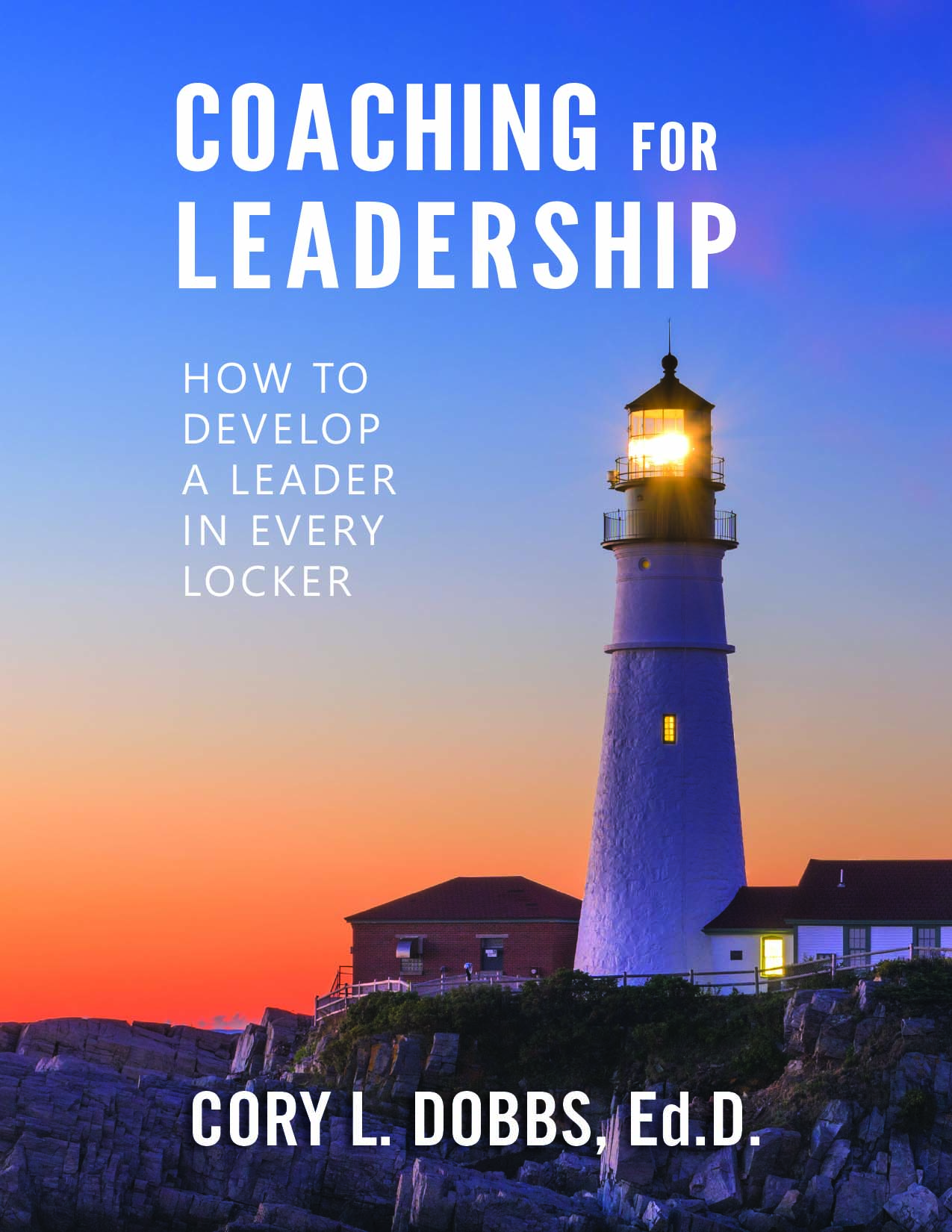
New to the Second Edition of Coaching for Leadership!

We are pleased to announce a new chapter to the second edition of the best-selling Coaching for Leadership. The chapter, The Big Shift: Unlock Your Team’s Potential by Creating Player-Led Teambuilding, connects the previous edition of this book to its origin, as well as to the future of team sports.

The new chapter sets forth a practical and applicable agenda for change and improvement. The reader is introduced to seven vital elements of change; seven shifts of traditional mental models that lead to the new core principles necessary for creating a player-led team culture. Click here for more information about Coaching for Leadership

About Cory Dobbs, Ed.D.

Cory Dobbs is the founder of The Academy for Sport Leadership and a nationally recognized thought leader in the areas of leadership and team building.  Cory is an accomplished researcher of human experience. Cory engages in naturalistic inquiry seeking in-depth understanding of social phenomena within their natural setting.

A college basketball coach, Cory’s coaching background includes experience at the NCAA DII, NJCAA, and high school levels of competition.  After a decade of research and development Cory unleashed the groundbreaking Teamwork Intelligence program for student-athletics. Teamwork Intelligence illuminates the process of designing an elite team by using the 20 principles and concepts along with the 8 roles of a team player he’s uncovered while performing research.

Cory has worked with professional athletes, collegiate athletic programs, and high schools teaching leadership and team building as a part of the sports experience and education process.  As a consultant and trainer Dr. Dobbs has worked with Fortune 500 organizations such as American Express, Honeywell, and Avnet, as well as medium and small businesses. Dr. Dobbs taught leadership and organizational change at Northern Arizona University, Ohio University, and Grand Canyon University.

Filed Under: Program Building

  • « Previous Page
  • 1
  • 2
  • 3
  • 4
  • …
  • 22
  • Next Page »

© Copyright 2026 Athletic Performance Toolbox

Design by BuzzworthyBasketballMarketing.com

Privacy Policy