Athletic Directors Toolbox

  • Home
  • Leadership
  • Mental Toughness
    • Mental Skills
  • Motivation
  • Professional Development
  • Program Building
  • Sports Performance
  • Team Building

“I See You”: Three Words Athletes Need To Hear

September 11, 2017 by

This article was provided by Changing the Game Project

By James Leath

“STOP LOOKING AT YOUR PHONE!” yells Tasha, a point guard on the 6th grade YMCA basketball team I was coaching.

Immediately, I smile and start to explain to her that I forgot my watch and I needed to make sure we were on schedule. Tasha rolled her eyes, clearly unimpressed with my response.

“No big deal,” I had thought to myself on the way to practice when I realized I forgot my watch, “I’ll use my phone.” Fifteen minutes into practice, I had pulled out my phone to make sure we were on schedule. Big mistake.

“Can you believe the nerve of that girl?” I thought. “Here I am, the volunteer head coach, staying up late watching videos on drills and strategy, planning practices on my lunch break, staying late for players who parents are delayed picking up their child…and now some kid is telling me to put my phone away when all I am doing is making sure practice is on schedule?”

Reflecting back on that practice later that night, though, I asked myself what did Tasha really want? What was she really asking for?

I realized that she was looking for the one thing kids crave more than anything else. She wanted me to be there, in that moment, in that drill, watching her and her teammates. She wanted my attention.

She didn’t simply want me to care for her, or love her, or teach her how to play the game. She wanted more.

She wanted me to see her!

Have you ever seen the movie Avatar? During the film, the Na’vi race express their affection for each other not by saying “I love you,” but by saying, “I see you.” Isn’t that beautiful? Isn’t that how we should coach our athletes? We can love someone and still be less than present at times. But to “see” someone requires us to be fully engaged and present.

When a child knows you see them, they want to impress you. Changing the Game Project Founder John O’Sullivan’s TED talk teaches parents to say five simple words to your child after a game or practice, “I love watching you play.”

The key word is watching.

Watching is being present and engaged. See the good. See the bad. And yes, it’s OK to even see the ugly. Just see all of it!

“I see you” does not mean coaching from the sideline. It does not mean constantly critiquing or second-guessing. It does not mean only pointing out mistakes. It means simply being present, engaged and watching.

“Were you watching when I made that goal?”

“Were you watching when the coach put me in?”

“Were you watching when I got fouled and the ref didn’t call it?”

“Did you see all my good passes or only the bad ones?”

We live in a world filled with distractions. We are always connected to email, to text, to social media, and have a phone on our hip 24/7. We have all been out to a nice restaurant and have seen a family at dinner, each on their own cell phone, fully immersed in Facebook, or Twitter, or texting, and not at all present with each other. We go to our doctor’s office and they are not looking at us, but typing on their computer as we speak. Eye contact and full engagement seem to be a lost art.

Kids love presents, but what they need, and what they will remember, is presence. They need to know you notice them. They need to see an example of what it means to pay attention. We set that example with our actions.

When it comes to our kids sporting events I see many parents watching every practice, or attending every single game, yet rarely are they fully present. They are watching through the lens of a camera or a smartphone, or staring at their screen instead of their athlete. I see coaches sending texts, or on the side chatting with another coach instead of coaching their players.

Our kids notice when we are distracted. That’s what Tasha was telling me. Even though my use of the phone was legitimate, I forgot that we judge ourselves by our intentions, while others judge us by our actions. How our athletes perceive our engagement is not necessarily how good our intentions are. We are judged by our kids based upon what they see us do. The message I was sending to Tasha and her teammates was one that said “I expect 100% focus, effort and commitment from you, the athlete, yet I don’t expect that of myself.”

Coaches and parents must remember that our athletes thrive not simply on love, but on being noticed. “Do you see me?” and “Watch me do this,” is child-speak for, “I want to show you I’m worthy of your affection.”

Here are 5 ways coaches and parents can make sure your athletes know “I see you”:

1. Be present

Parents, you are not required to be at every single practice or game. Your kids won’t think less of you for not being there all the time. In fact, many of them will appreciate those moments away from a parent’s attention. It allows for freedom. It tells them the experience belongs to them. But when you do go and watch, shut off your phone. Be a fan (no coaching). When you are there, be fully present.

Coaches, I cannot stress enough how important it is to be fully engaged in practice. Far too many coaches:

  • Fail to arrive prepared, on time, or dressed properly for practice
  • Stop coaching and start talking to a parent or fellow coach about unrelated issues, thereby checking out of practice
  • Send texts or check social media during game or practice time
  • Default to more scrimmage time instead of preparing and teaching

What message do you think these above actions send? Great coaching is hard work and needs your full attention before, during and after training. Your actions speak louder than words. Stay engaged, and so will your players.

2. Catch them doing something right…

…and acknowledge it both verbally and non-verbally. I had a basketball player last season that was afraid to shoot because her previous coach would yell at her when she missed. She needed consistent reassurance it was okay to shoot on her new team. After every shot, she would look over to the bench hoping to catch my gaze. Whether she missed or made the shot, she got a thumbs up from me. By the end of the season, she was my leading scorer. Research demonstrates that people perform best when they get five pieces of positive reinforcement for every one correction or critique. As World Cup and Olympic winning soccer coach Tony DiCicco states, the secret to developing successful athletes is to “catch them being good.”

3. Make it safe to fail…

…especially when you catch them doing something wrong. Athletes know when they mess up. Mistakes are inevitable. An adult’s reaction to a mistake can either encourage or hinder risk-taking. When Lionel Messi was a young player at Barcelona, he would try and dribble past four defenders, often losing the ball. Do you think his coaches yelled at him to pass? Nope. They stopped the play, gave him the ball back, and said, “Try that again.”

Coaches, if your players make a mistake, especially when they are fully focused and giving full effort, acknowledge their effort and encourage them to try again. Instead of taking them out of the game, call them to the sideline, tell them to try again, then send them back out there. That shows you trust them, and trust from a player to a coach goes a long way.

4. Connect with them about things not related to sports

A wise coach once told me “sports will be over and your athletes will have at least 2/3 of their life ahead of them. If your entire relationship consists of talking about sports, what then?” This shook me and made me realize that it was imperative to connect about things away from the field. This connection not only forms lifelong friendships, but it helps athletes perform better in two ways. First, they realize their worth is not simply just a pair of feet or some good hands, but as a human being. And second, this connection allows for a stronger relationship, one that can bear the burden of the hard truths both parents and coaches are required to discuss with the young men and women in their care.

5. Give them ownership of the outcome

World-renowned sport psychologist Dr. Jerry Lynch speaks of the three questions a coach should ask at halftime of a game. (1) What is working? (2) What is not working? And (3) How can we fix it? Do you see how these questions help players take ownership of the good, the bad, and the solution? By allowing them to have some input your players will compete harder because you have acknowledged their ideas and their input, and they are trying to execute their solution. You have seen them.As a parent, you do this by accepting your child’s goals for playing and letting the experience belong to them. Push them toward their goals, not your own, and when they succeed, remind them it was their effort that brought success.

Kids are not mini-adults, and, therefore, do not possess adult emotions, values, or priorities. Yet one thing they do have in common with adults is they want to be acknowledged. They want to be noticed when they get it right and told its OK when they get it wrong. They do not need to be coddled, but they do need a safe place to fail. When you do these things, your athletes will compete harder, take ownership, and excel.

That is why we must be very intentional about the things we do when we are watching our kids play, and especially when we are coaching them.
That’s why we must remember that any parent or coach can tell a child “I love watching you play.”

Great parenting and coaching emphasizes the WATCHING, and letting the child know that yes, “I see you.” Seeing them makes all the difference.

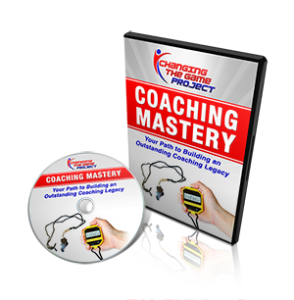
Click on the image at the left for a free video series from Changing the Game Project

Filed Under: Leadership, Motivation

The Relational Leader

September 9, 2017 by

Coquese Washington: The Relational Leader

By Dr. Cory Dobbs,

COQUESE WASHINGTON
HEAD BASKETBALL COACH
PENN STATE, 2007 – PRESENT

In his best-selling book, First things First, organizational expert Stephen Covey opens with an essential leadership question:  “If you were to pause and think seriously about the ‘first things’ in your life—the three or four things that matter most—what would they be?”

Coquese Washington, women’s basketball coach at Penn State, has thoughtfully answered this demanding question.  As a coach of a major college women’s basketball program, a former professional player and collegiate student-athlete, Washington has pulled resources from her vast experience to bring together a set of principles that, while not necessarily complex, are very practical.  Stressing a family approach to team building and a leadership focus on excellence, Washington is clear on her “first things.”

For Washington, relationship building is exalted as one of the most important factors in driving performance and ultimately the success of the team.  In the interest of putting first things first, Washington establishes the relationship building process at the very beginning—recruiting the right people to join her program.

“Relationship building starts right away.  For us relationship building begins in the recruiting process.  We put a lot of effort into identifying what kind of players we can coach well.  There’s a certain type of player I can coach well, given their temperament, personality, and such things as what’s important to them.  We try to do a great job identifying players that can come into the Penn State culture and thrive in the larger community—and in our women’s basketball community.  It’s imperative that we bring in players that are a good fit for the culture here.”

These days the demands on leaders can be crushing.  To survive, many leaders simply look to fill positions with people qualified to perform the work, not necessarily a fit with the organization’s culture.

The problem with hiring only for skills and ability rather than for fit with culture is illuminated in the dynamics of the team building process.  When personalities clash, rather than click, and the culture of your team won’t inspire cooperation and collaboration, you’re likely to end up with a dysfunctional team.

“We have a humorous way of looking at recruiting to our culture.  We say we don’t like to manage drama, so we don’t recruit drama.”

Ultimately, team dynamics will determine the environment in which work happens, and to a large extent, the quality of a team’s results.  For success to be experienced everyday interactions must meet a test: Is the way we communicate together helping or hindering the team’s ability to make progress?

“For us, relationship building—developing relationships—is every bit as important as the game.”

It’s evident, that for Washington, it is the quality of relationships woven into the fabric of teamwork that makes all the difference.  The inherent tension that exists as individuals work to become a team is accounted for and used to develop positive and enduring relationships.

“For me communication is about connecting and building strong relationships.  To connect with my staff and my players I try to communicate in a manner that is respectful and honors who they are.  It’s important to be respectful and honorable even when I disagree or we have different viewpoints.”

Washington’s family approach reduces the complications of bringing together unique personalities and skill sets.  At Penn State, it is the unity that multiplies the strength of the individual.  The team lives together, works together, and wins together.  One thing is clear, unity matters.

A DEEPER LEVEL OF LEADERSHIP

There are basically two ways to execute one’s leadership practice.  One way is that of an order-giver order-taker exchange.  In this relationship the employee serves the interests of the boss.  The other way to execute the practice of leadership is for the leader to serve her followers.  Either way of leading requires aligning actions and values.  The difference lies in the values the leader is aligning.

“Being a leader to me means helping others achieve their goals.  It means being a resource—providing resources or knowledge to help others reach their goals and dreams.  Sometimes it’s setting a vision for the person, and other times it might be serving as an example.”  “You can serve as a model, demonstrating how to do things.  I learned a great deal from Muffet McGraw (women’s basketball coach at Notre Dame).  She provided me an example of how to be a working mom in this business.  We didn’t sit down and have meetings on how to be a mom.  I watched how she lived it.  She provided an example for me to model.”

Relational principles of leadership do not depend on what sector you work in.  In today’s world of work, people want to matter.  They want leaders to improve the team’s performance while raising the quality of life inside the team.  Sport psychologist and leadership writer Jerry Lynch says, “To be a good coach, mentor, and teacher you must be a good student and learn what needs to be known from the student (the athlete) in order to teach them what they must learn.”  Lynch also says that “the way to be a success is not just to win games but to win relationships.

“I can coach and mentor better when I know the person—know who they are.  I want to get to know them.  I’m spending a lot of time with them because I want to know what’s important to them.  What makes them laugh and cry, and what drives them.”

To anyone who cares to lead, whether as coach or a corporate manager, it should be obvious that building positive relationships is one of the foundations for building high-performing teams.  Too often we ignore our common sense when it comes to leading people.  If you want high performance, high commitment, and high involvement, put people first.  By developing deeper levels of relationship with those around us, we create an encouraging environment that shapes our future in a healthy and positive way. 

“So when we get into a rut in practice or a game, I’m going to get on them.  I’ll be very demanding—but never demeaning.  I will express displeasure at the lack of effort or focus or communication on the court. Because we have a strong relationship they trust me, and I trust that they’ll take my coaching as a way to correct problems and get better.  Again, I’m demanding, not demeaning.”

Washington’s commitment to relationship building is highlighted by her willingness to time to get to know her followers and, likewise, them getting to know her.

“We invest a lot of time in one-on-one meetings.  We do this so the players have an opportunity to give me their feedback in a safe environment.  I try to be very mindful of providing them an opportunity to give their opinion without any judgment.  Relationship building is something I’m always looking to do.”

LIVE TOGETHER

Management consultant and organizational expert Margaret Wheatley advises, “Relationships are all there is.”  She says, “We humans want to be together.  We only isolate ourselves when we’re hurt by others, but alone is not our natural state.”

In Western societies, the urge to set one’s self apart from other, to be different, is a compelling force.  However, this sets up a familiar contradiction of human nature.  That is we want both to belong and to stand out from the crowd.

To say that living together is a challenging endeavor does not undermine the desire to live together.  People will act in their self-interest until they see that cooperation with others is beneficial.  Teaming together, then, demands cooperation.  And the nature of cooperation is built on trust.  Washington knows the way to build a high-performing team is through trust.

“Trust for us is a big word.  We talk about it frequently.  I ask my team all the time, “Do you trust me?”  It goes back to the relationship we built before they ever stepped foot on the campus.  They know they can trust me, and because they trust me they allow me to coach them.”

Trust starts when you extend it and communicate openly with your team.

“I frequently tell our team, you can count on me to be honest with you all the time and tell you the truth.  Because they know me and trust me, they can make the appropriate and necessary decisions and changes.”

“We have some really honest conversations.  Players tell us what they want, together we locate where they are and then discuss what we have to do to bridge the gap to get them where they ultimately want to go.”

You also need to make sure your employees are able to build trust with one another.  You do this by establishing a social climate of respect.

“I try to be respectful in my communications at all times.  I’m working on becoming a better listener. I think it’s important to understand what others are saying, but just as importantly what they mean.  And what they mean by what they’re not saying.”

“I tell our players that how you talk to each other matters.  The words you choose to use in conversations with each other really do matter.”

“Words have a huge impact—Huge!   Trust for us is a big word.  We talk about it frequently.  I ask my team all the time, “Do you trust me?”  It goes back to the relationship we built before they ever stepped foot on the campus.  They know they can trust me, and because they trust me they allow me to coach them.”

Trust starts when you extend it and communicate openly with your team.

“I frequently tell our team, you can count on me to be honest with you all the time and tell you the truth.  Because they know me and trust me, they can make the appropriate and necessary decisions and changes.”

“We have some really honest conversations.  Players tell us what they want, together we locate where they are and then discuss what we have to do to bridge the gap to get them where they ultimately want to go.”

You also need to make sure your employees are able to build trust with one another.  You do this by establishing a social climate of respect.

“I try to be respectful in my communications at all times.  I’m working on becoming a better listener. I think it’s important to understand what others are saying, but just as importantly what they mean.  And what they mean by what they’re not saying.”

“I tell our players that how you talk to each other matters.  The words you choose to use in conversations with each other really do matter.”

“Words have a huge impact—Huge power.  So why don’t we use words to uplift, empower, and encourage one another.  And not use words to belittle, demean, or tear people down.  We have that choice every time we speak.”

 “So if we choose our words wisely when communicating with the one’s we love, care about, and spend time with—we’re going to build a heck of a team.”

Rarely can you get the results you want without trust.  Yet, it takes a while to build trust.  Trust is about how people relate to each other.  But it’s also about the outcomes of relationships.

“These young women have to be nurtured, taught how to become adults.  We show them how to become championship students, players, and championship women.  We want them to become leaders who can go into their communities—no matter where it is—and make a difference.”

WORK TOGETHER

It happens all the time.  Teams with members deeply committed to each other out perform teams with superior talent.  For these teams, the whole greatly exceeds the sum of the parts

What brings these teams victory is that team members are selfless—focused on doing what’s best for the team.  They work together to win, submerging ego, statistics, and other personal gain for the opportunity to win as a team.  The coach is at the center of this; getting everyone and everything into alignment, ensuring that the team and its members get the support they need.

“To compete for championships we don’t need someone secretly harboring resentment toward a teammate.  We don’t want a player privately thinking ‘I hope she gets hurt’ or ‘I hope she has a bad game so I can play.’  We want to take that out of the mix.”

“With my staff I want companionship and camaraderie.  A cooperative group that doesn’t care who gets the credit.  We’re not into titles.   We all roll up our sleeves and get the job done.”

Shared values build trust and link team members together.  They establish a team’s identity and support its mission.  Shared values provide guiding principles that everyone on a team can aspire to put into practice every day.  When team members are truly in alignment with one another they create a culture where everyone can go home at night knowing the team is healthy and in good shape.

“We want harmony and camaraderie in the locker room.  We don’t want players feeling like they have to compete with someone else.  When that happens we don’t develop the chemistry we need to develop a competitive team.”

What do leaders have to do differently to build and lead effective teams today?  It’s the smart coach that takes advantage of the individual strengths of her players to develop a strong team.  A wise leader takes stock of what she has and develops and adjusts her plans accordingly.
“We really put a heavy emphasis on the fact that players are not competing with one another.  We want them competing against their best effort and what they’re capable of doing.”

“We recruit complementary pieces.  Everybody has a role.  Players are recruited for a specific purpose.  They are never in competition with anyone on the team.  They’re always competing against themselves, regardless of the position they’re playing.  They don’t compete against each other; instead they complete each other.”

WIN TOGETHER

The success of today’s best business leaders depends not only on inspiring and engaging employees, but finding ways to guide team members into powerful and productive relationships; the kind of relationships where one plus one equals three.

Rather than simply issuing commands and asserting power, outstanding leaders utilize influence to gain commitment and agreement.   Further, leaders like coaches, figure out how to build the next level of capability.  They do this by connecting team member aspirations to opportunities for development.  They know how to enable and support individual and team growth—and they make both enjoyable.

Today, you have to unmask yourself to your people in ways leaders never had to before.   People want leaders that demonstrate real- life vulnerabilities while relating in an authentic manner.  In the past leaders were formal and distant, removed from their people by a hierarchical-based facade.

That’s changed: your employees expect to relate to you in a more informal, egalitarian way—kind of like a family.

“A core value for us is excellence.  We strive for excellence in everything we do.  Another core value is family.  I don’t have a Penn State basketball family and a personal family.  We’re all one big family.  My children come to practice and travel with the team—as do my mom and my husband.  Family is really important to me.  We operate as a family.  We care about each other as family.”

A recent study conducted by the Center for Creative Leadership sought to identify what distinguishes an effective leader from an ineffective leader.  After carefully sifting through mountains of data the CCL found one primary difference: effective leaders truly care about their people.   The most effective leaders are adept at showing they care by listening, publicly expressing positive emotions along with a deeper understanding and acknowledgement of how others are feeling.

“They know what to expect from me.  They know that what happens on the court does not impact how I feel about them and care about them off the court.  There’s nothing they can do on the basketball court that can cause me to love them less.”

Washington, like the effective leaders in the CCL study, understands that caring is best done one-on-one.  This means knowing what each member of your team needs to make her feel valued, appreciated, and unique.  Caring is a highly personal thing.  It’s different for each individual.

“I challenge the players all the time.  I can do this because I know they’re goals and dreams.   They allow me to challenge them.”

“We tell our players that the responsibility of earning playing time is on them.  Tell me what you want—where you want to go—and we will help you map out the road to get you there.  Then you need to put in the time and effort.  You’ve got to decide if you’re willing to put in the work to get where you want to go.”

People want to work for leaders they admire.  At the root of this admiration is showing people you care about their insights, their thoughts, their opinions, and appreciate all their sacrifices for the team.

“It’s important that we give the players opportunities to give their opinions and share their thoughts.  We ask frequently, if not daily, what they think of things.”

“In our team meetings we ask what they think.  I try to validate and honor their perspectives, even if I disagree.”

“I get feedback when I make decisions for the team, for the program.  Some might be minor decisions—others major.  I give them the opportunity to find their voice.  Not only to speak up, but to listen and negotiate and compromise.  These skills are critical to the development of a championship team.”

Effective leaders create strong cultures by putting people first.  They realize that the path to success boils down to deep, close, and trusting relationships creating competitive advantage through people and relationships.  This is the key to winning in basketball and in business.  And this is Coquese Washington’s playbook for victory.

To find out more about and order Sport Leadership Books authored by Dr. Dobbs including Coaching for Leadership, click this link: The Academy for Sport Leadership Books

This article was written by Cory Dobbs, Ed.D., President of The Academy for Sport Leadership.  The Academy for Sport Leadership is a leading educational leadership training firm that uses sound educational principles, research, and learning theories to create leadership resources.  The academy has developed a coherent leadership development framework and programs covering the cognitive, psycho-motor, emotional and social dimensions of learning, thus addressing the dimensions necessary for healthy development and growth of student-athletes.

About the Author

Cory Dobbs is the founder and president of The Academy for Sport Leadership, a national leader in research‐based curriculum for coaches and student‐athletes. Dr. Dobbs is a college educator, a coach to successful coaches (helping coaches attain a higher level of success), and an accomplished human performance specialist whose expertise is in the field of leadership, team building, and creating a high‐performance culture in the arena of team sports. Cory blends social‐personality, psychology, and applied social psychology, which means he studies how people’s thoughts, behaviors, and preferences are influenced by both who they are and the situations they’re in. He uses Teamwork IntelligenceTM to help teams explore how the mix of perspectives brought by their individual members influences their work together.

The Academy for Sport Leadership’s underlying convictions are as follows: 1) the most important lessons of leadership are learned in real-life situations, 2) team leaders develop best through active practice, structured reflection, and feedback, 3) learning to lead is an on-going process in which guidance from a mentor coach helps facilitate learning and growth, and 4) leadership lessons learned in sport should transcend the game and assist student-athletes in developing the capacity to lead in today’s changing environment. 

Filed Under: Leadership

The Little Big Things

August 18, 2017 by

From the Academy for Sport Leadership–Dr. Cory Dobbs
A Note to the Student-Athlete

THE LITTLE BIG THINGS: Excellence Begins by Sweating the Small Stuff

“HEY STUDENT-ATHLETE!”
It’s All About the Locker Room

I recently visited a neighborhood Denny’s. Prior to ordering my meal I visited the restroom. Upon entering I noticed scraps of paper towel all over the floor. The sink basin revealed soap drippings that had probably been there since the day before. No, I’m not a neat freak. It’s just that in a world addicted to mediocrity little things are really big things. I left the restaurant. My experience with the filthy restroom sapped me of any confidence in the restaurant’s ability to deliver a quality meal.

The small stuff matters.

To me, a clean and attractive restaurant is the best indicator that the people running the show—at the restaurant, school, hotel, you fill in the blank, care about the people that use the facilities (and this includes the workers!). Make no mistake, the restroom screams commitment to excellence. It takes great leadership to ensure clean restrooms. If you want to be different—successful—a great place to start is your locker room (And here’s the kicker…each and every one of you will be running a show somewhere and sometime in the future.).

How do you and your teammates care for your locker room? Do you use it and wait for others (coaches, janitors, etc) to pick up the mess? To me, a clean and attractive locker room tells me the people running the program care. Come to think of it, the way you take care of your playing field, court, etc. tells a lot about your commitment to excellence.

The small stuff matters. What little things might you do today to make a big difference in your team?

Humility matters. Every small action reflects not only on you personally but also on your teammates. Act in a manner that honors yourself and your teammates. Act in a manner that will reflect well on you and the others in your life.
Today’s headlines and daily news stories are filled with accounts of self-centered and irresponsible professional athletes. The world of sports often breeds excess—it is noble and ignoble, beautiful and ugly. Sports reveals the best and the worst of human nature in a highly visible action-packed arena dominated by intense emotion.

Humility is the quality of being respectful. It is displayed in conduct that dignifies others. Humility is found in the small stuff. How you talk to your teammates reveals your care and concern. How you listen to others reveals your commitment to them and your team. Model humility: serve and honor your teammates.

Sometimes one minute (a very small thing) makes all the difference.

How long does it take for you to care for your locker room? Your playing field? Your teammate? My guess is you can do a lot in one minute…and when all those small one-minute actions accumulate…

The small stuff matters. What little things might you do today to make a big difference in your team? Select at least one thing. And do it.

You can make excuses for not doing that one thing. If so, then excuses are probably small stuff to you. But remember the small stuff matters.

In the final analysis, it is the small stuff that determines what we draw out of the sports experience. The little things make all the difference.

“Tell me and I’ll forget. Show me and I may remember. Involve me and I will care.” -Your Student-Athlete The world of coaching is changing. In Coaching for Leadership you’ll discover the foundations for designing, building, and sustaining a leadership focused culture for building a high-performance team. To find out more about and order Sport Leadership Books authored by Dr. Dobbs including Coaching for Leadership, click this link: The Academy for Sport Leadership Books

Dr. Dobbs recently joined Jamy Bechler on the “Success is a Choice” Podcast – hear his thoughts on team leadership and developing a leader in every locker here.

Filed Under: Leadership

Big “We,” little “me”

August 18, 2017 by

An Academy for Sport Leadership Case Study–Dr. Cory Dobbs

Instructions: give a copy to every team member.  Read alone.  Answer discussion questions.  Come together as a team and engage in a spirited conversation.  When you’re done, identify two action items for your team.

Big “We,” little “me”
Thinking and Acting Like a Committed Teammate

Introduction
Erin arrived late to her first class of the day.   She was still brooding about not playing in last night’s game.  Consumed with disappointment  in her coaches, teammates, and herself, Erin was contemplating quitting the team.  She reflected on the hours upon hours invested over the past two years simply to eke out a few minutes of playing time each game.  She’d set high goals for herself, and she met most of them.  She improved in the weight room and on the playing field.  She always gave all she had in practice and the coaches were usually pleased with her as a member of the team.  However, she seemed to be stuck on starting.  Playing time.  Seemed little else mattered to her.  She wasn’t quite sure why she felt this way, she’d always thought of herself as a very good teammate.  She enjoyed working alongside everyone, had not grudges and couldn’t muster a bad word about her teammates.  She just wanted to play.  And she’d just realized after last night’s game she really wouldn’t get much playing time this year—her senior season.

Questions for Discussion

  • Why might a team member become discouraged about a lack of playing time?
  • How can you encourage teammates to balance “Me” with “We?”
  • How might you unknowingly discourage a teammate from accepting “we?”
  • How might Erin’s thoughts determine her behavior?
  • What happens when one team member goes in his or her own direction?
  • What might happen when a team member places too much emphasis on themselves?
  • What are the benefits of being a member of a team? (physically, intellectually, emotionally, socially)
  • What “rewards” might a player receive that doesn’t get much playing time?


What’s at Stake?
While we all have to take responsibility for ourselves and our success in life, we need to do so in a way that honors the various wholes of which we are a part.  Thinking and acting “BIG We, little me” is not about denying yourself, your needs, or your individuality.  It is about realizing that you are part of a whole that is greater than you.

Point to Ponder
A famous proverb states, “The best potential in ‘me’ is ‘we.’”

*This case is a part of a portfolio of cases created by The Academy for Sport Leadership.  Case studies legitimize a range of issues by giving the student-athlete an opportunity to explore the physical, intellectual, emotional, and social dimensions of existing or potential problems.

To find out more about and order Sport Leadership Books authored by Dr. Dobbs including Coaching for Leadership, click this link: The Academy for Sport Leadership Books

Filed Under: Leadership

Help Your Captains Lead with Integrity

August 8, 2017 by

This article and other helpful coaching tools can be found at Coach Dawn Writes

By Dawn Redd-Kelly.

“The most effective form of leadership is supportive. It is collaborative. It is never assigning a task, role or function to another that we ourselves would not be willing to perform. For all practical purposes, leading well is as simple as remembering to remain others-centered instead of self-centered.”—Great Leadership Isn’t About You

Teaching our athletes to lead is a big job.  Failing to set the ground rules for what you want leadership to look like can lead to hazing, “mean girl” tactics, cliques, and ultimately ineffective performances. We can’t expect our athletes to know what we want if we haven’t explicitly laid it out for them.  In the absence of a coach’s direction, the athletes are going to fill in the gap and I’m sure we can all agree that that probably won’t go well!

I believe our team leaders want to be taught and I know our teams want to be led by captains who make it easy to follow them.  What leaders are easy to follow? The author listed some characteristics in the quotation at the beginning…those are a good start:

  • I rely on my captains to be a go-between. They work closely with the team as well as the coaching staff.  Ideally, they understand that they perform an important role in the team’s success.  They should be close enough to their teammates that they know when things are going a bit sideways and they need to tell the coaches.  But they should also know when not to tell the coaching staff.  My most effective team captains squashed issues before I even knew what was going on!
  • Our teams are faced with the conundrum of needing to be both collaborative and competitive.  If you’ve got two players who play the same position, they will both benefit from in-practice competition, but surely they know that once the whistle blows at game time, they’re expected to support the team…whether or not they’re on the court.  Collaboration should be built into our team cultures, our captains should always be looking to take advantage of opportunities to collaborate.  Asking the younger players questions and not creating a “captain clique” will help create those collaborative feelings on the team.
  • In the trenches. I don’t want captains who say, “Freshmen always do ________ (insert task here).” Freshmen (or newbies) shouldn’t always carry stuff, be expected to defer to upperclassmen, or be treated in a second-rate manner.  That kind of behavior signals insecurity in the leader.  It’s hard for players to follow a captain that lacks confidence and tries to raise themselves up by pushing their teammates down.  Everyone pitching in helps to create good feelings among the players, regardless of how long they’ve been with the team.
  • Other-centered. I’ve had captains who would stay after practice with a lesser skilled teammate and help them with skill work…that’s great.  I’ve had captains who’ve told me about a teammate who beyond-the-norm homesick…that type of concern is necessary.  And we’ve had captains who, after I’ve announced that perhaps an extended conditioning session would be more productive than working on skills, gather the team together to figuratively whip them into shape.

Of course I’ve had ineffective captains as well, but that’s not what this post is about!  It’s about giving our team leaders the necessary skills that make them easy for their teammates to follow.  If we set the standards high for our captains, they will rise to the challenge.


Filed Under: Leadership

  • « Previous Page
  • 1
  • …
  • 8
  • 9
  • 10
  • 11
  • 12
  • …
  • 22
  • Next Page »

© Copyright 2026 Athletic Performance Toolbox

Design by BuzzworthyBasketballMarketing.com

Privacy Policy